 PetCalcStudio

Senior Pet Vet Visit Checklist for Dogs and Cats
Prepare for a senior pet checkup with a simple record of mobility, appetite, weight, medications and questions for your veterinary team.
3 min readCare guide
Poinsettias are usually only mildly irritating to pets, but other holiday plants are far worse. Here is which plants to keep, which to move, and what to do if your pet chews one.
Educational information. Our editorial policy
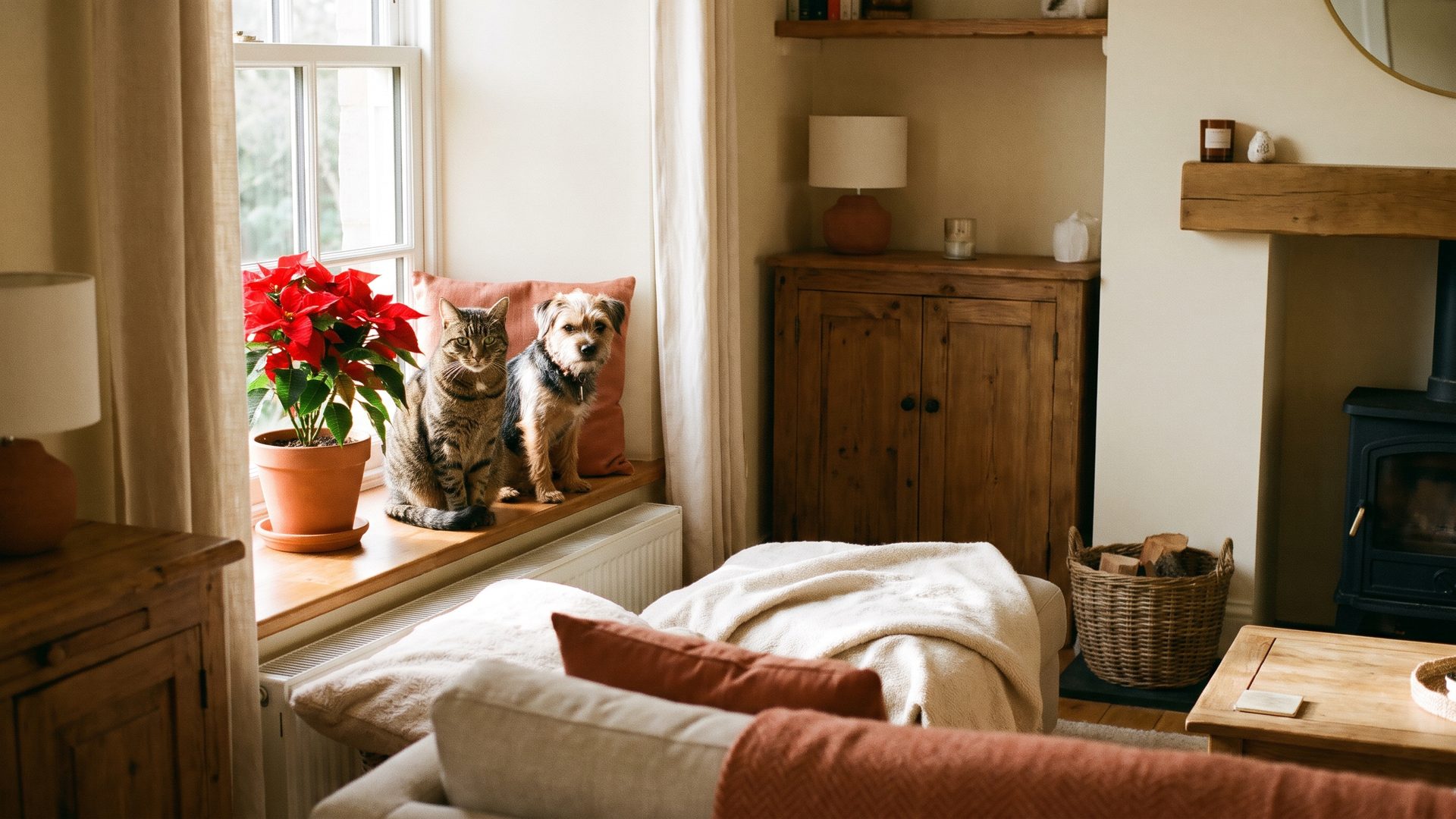
Poinsettias are mildly toxic to dogs and cats, not deadly. The milky sap can irritate the mouth and stomach, and the usual signs are drooling, lip licking and vomiting, with skin irritation if the sap touches fur. The bigger holiday plant dangers are lilies for cats, plus holly, mistletoe, amaryllis, cyclamen and paperwhite bulbs. Use the table below to decide what to display, and call a vet or poison helpline if your pet has eaten any plant you are unsure about.
The ASPCA lists poinsettia (Euphorbia pulcherrima) as mildly toxic to cats and dogs. Chewing the leaves or bracts can cause drooling, vomiting and sometimes diarrhea, and the sap can irritate skin and eyes. The myth that poinsettias are a leading cause of fatal poisonings is not borne out by poison-control reports. In most cases the pet recovers with little or no treatment.
That does not make the plant a good choice for a pet's reach. A cat that chews leaves can be miserable for a day, and repeated vomiting is a problem for small or older animals. If you have a determined chewer, put the plant somewhere your pet cannot get to.
| Plant | Risk to pets | Typical signs |
|---|---|---|
| Poinsettia | Mild | Drooling, vomiting, skin irritation from sap |
| Christmas cactus | Considered non-toxic by the ASPCA | May cause mild upset if a lot is eaten |
| Holly | Toxic | Vomiting, diarrhea, drooling, lip smacking |
| Mistletoe | Toxic | Vomiting, diarrhea; more serious with large amounts or European types |
| Amaryllis | Toxic | Vomiting, drooling, belly pain, lethargy |
| Cyclamen | Toxic | Drooling, vomiting, with root and tuber the most potent |
| Paperwhites and other narcissus | Toxic | Vomiting, diarrhea, belly pain; bulbs are worst |
| Lilies (Easter, tiger, Asiatic, stargazer) | Extremely dangerous for cats | Kidney failure; even pollen or vase water can matter |
| Real Christmas tree (fir, spruce, pine) | Mild irritation | Needles can upset the stomach or cause an obstruction |
| Orchids (moth orchid) | Considered non-toxic by the ASPCA | Little concern |
If your plant is not in the table, search the ASPCA toxic and non-toxic plant list for the name and the species. Many common names cover several plants with different risks.
If you receive a holiday bouquet, check it for lilies. Many true lilies are among the most dangerous plants for cats. A small amount of any part, including pollen groomed from the fur and water from the vase, can lead to acute kidney failure. Call a veterinarian immediately if your cat has had any exposure, even if she seems fine. Our veterinary cost estimator can help you plan if emergency care is needed.
Some "lilies" are not true lilies and have different effects, so the name on the tag matters. When in doubt in a house with cats, skip the bouquet or remove the lilies.
A consultation fee may apply to the helplines. Both are staffed by veterinary professionals and can give advice based on your pet's species, weight and what was eaten.
For food hazards, see our guide to holiday hazards for dogs and cats, and swap decorating tips with other owners on the PawTalk advice forum.
*This guide is general education from the PetCalcStudio team, not veterinary advice. Sources: the ASPCA toxic and non-toxic plant list and ASPCA Animal Poison Control Center, and the Merck Veterinary Manual. If your pet has eaten a plant, contact a veterinarian or poison helpline.
General guidance on this topic from veterinary organizations. This guide is educational and written by a non-veterinarian; check with your own vet before changing your pet's food, medication or care. Editorial policy
Mildly. The ASPCA lists poinsettia as mildly toxic. The sap can cause drooling, vomiting and sometimes diarrhea, and can irritate skin, but serious poisoning is unusual.
Also mildly toxic. Cats that chew the leaves may drool or vomit, and sap can irritate skin and eyes. Keep the plant out of reach, and call a vet if signs are severe or continue.
Lilies are extremely dangerous for cats and can cause kidney failure. Holly, mistletoe, amaryllis, cyclamen and paperwhite or narcissus bulbs are also toxic to pets.
Drooling, lip licking, vomiting, diarrhea, belly pain, tiredness, or reduced urination. Signs depend on the plant, and some, such as lily poisoning in cats, can look mild at first.
The ASPCA considers Christmas cactus non-toxic to dogs and cats, although eating a lot of any plant can still cause mild stomach upset.
Fir, spruce and pine needles are mildly irritating and can upset the stomach or cause an obstruction if swallowed. The tree water may also contain bacteria or additives, so cover the stand.
Remove plant material from the mouth, rinse with water, wipe sap off skin, and monitor. Call a veterinarian or poison helpline if your pet vomits repeatedly, drools heavily or seems unwell.
Poinsettias are usually only mildly irritating and may cause drooling or an upset stomach. Holly and mistletoe can cause more significant stomach upset, and lilies are extremely toxic to cats, so lilies deserve the most caution.
Prepare for a senior pet checkup with a simple record of mobility, appetite, weight, medications and questions for your veterinary team.
3 min readThe 7-year rule was never based on biology. Learn the DNA methylation formula vets now use to convert your dog or cat's age into accurate human-year equivalents — adjusted for breed size and life stage.
7 min readNo, dogs should not eat grapes or raisins. No safe amount is known, and the reaction can be kidney injury. Here is what to do if your dog already ate one.

