 PetCalcStudio

Senior Pet Vet Visit Checklist for Dogs and Cats
Prepare for a senior pet checkup with a simple record of mobility, appetite, weight, medications and questions for your veterinary team.
3 min readCare guide
No, dogs should not eat grapes or raisins. No safe amount is known, and the reaction can be kidney injury. Here is what to do if your dog already ate one.
Educational information. Our editorial policy
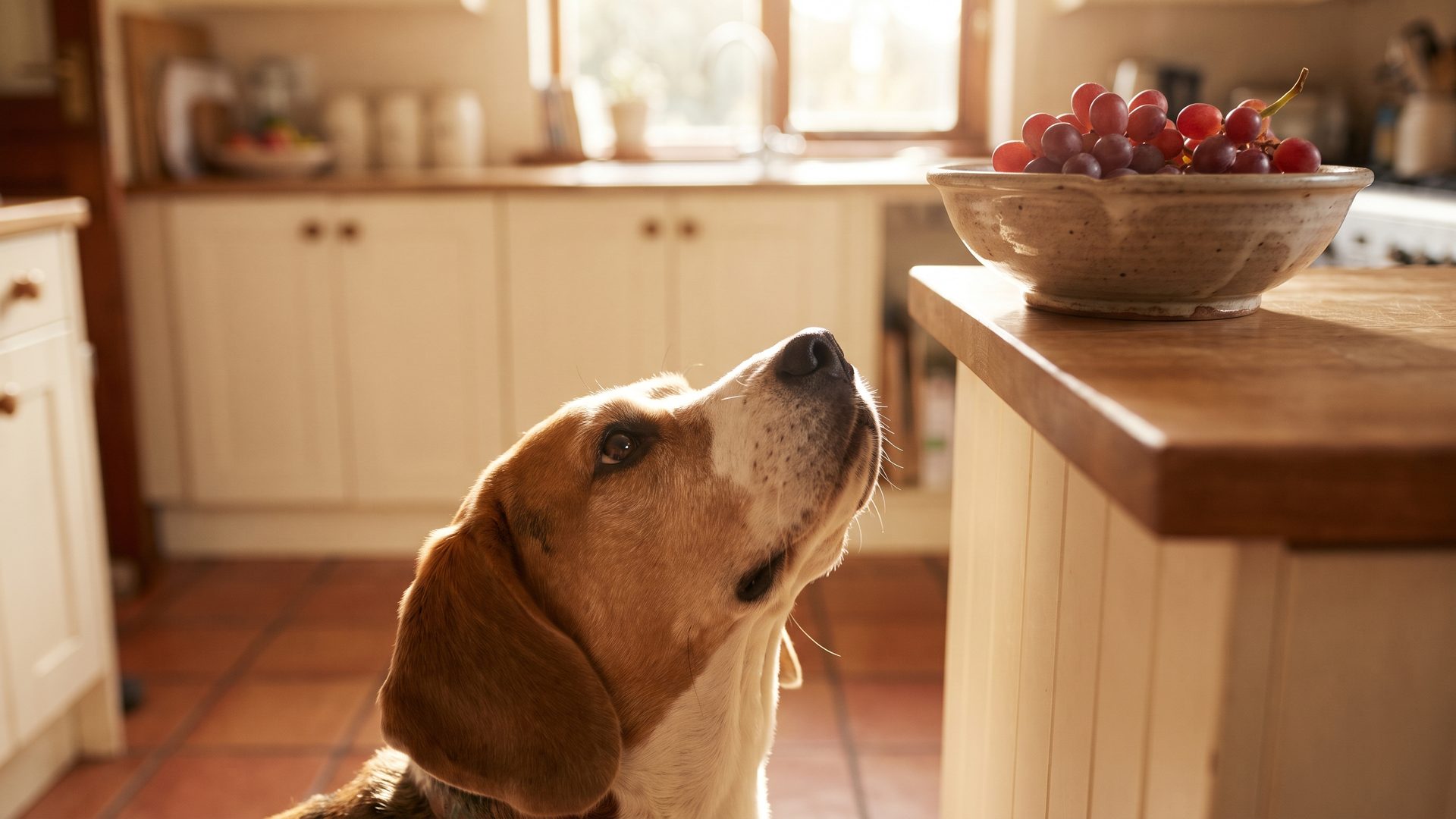
No, dogs should not eat grapes. Grapes and raisins can cause acute kidney injury in dogs, and veterinarians have not found a dose that is known to be safe. Some dogs eat a handful and seem fine, while others become seriously ill after a few. Because nobody can tell in advance which dog is sensitive, the safe rule is to treat every grape or raisin exposure as worth a phone call to your vet or a poison helpline.
Grapes, raisins, sultanas and currants (which are dried grapes) have been linked to kidney failure in dogs for decades. The exact toxin was a mystery for a long time. More recent work has pointed to tartaric acid as a likely culprit, but the mechanism is still described as not fully settled, and that is part of why there is no safe threshold to quote.
What veterinary sources such as the ASPCA Animal Poison Control Center and the Merck Veterinary Manual agree on:
Symptoms usually start within hours, and kidney trouble can follow over the next day or two:
A dog can also have no symptoms early on. That is why waiting for signs is the wrong plan: treatment works best when it starts before the kidneys are affected.
Both helplines are staffed by veterinary professionals and a consultation fee may apply. Your vet will decide whether to make the dog vomit, give activated charcoal, run bloodwork and start intravenous fluids to protect the kidneys. Early treatment greatly improves the outlook, and monitoring typically continues for a couple of days.
Most grape exposures are not a dog stealing fruit from a bowl. They come from food that contains it:
If a dessert includes dried fruit, assume raisins until the label says otherwise. Our guide to Thanksgiving foods dogs can and can't eat shows how often holiday dishes hide them.
One grape is a smaller risk than a handful, but it is not a "no risk" amount. The honest answer is that some dogs eat one and are fine, and that you cannot know whether yours is one of them. For a small dog, a single grape is a larger proportion of body weight, and for any dog the sensible response is to call and ask, rather than guess.
To see how an exposure compares for your dog's weight, use our grape and raisin toxicity calculator. It gives a general risk estimate to help you decide how urgently to phone a professional. It is not a safe dose, and it does not replace a call to your vet.
If you want to share fruit, these are generally considered safe in small portions, with seeds, pits and rinds removed:
Treats should stay within roughly 10 percent of daily calories. Check any food in our food safety checker before sharing, and get your dog's daily target from the dog calorie calculator.
*This guide is general education from the PetCalcStudio team, not veterinary advice. Sources: ASPCA Animal Poison Control Center, the Merck Veterinary Manual, and AVMA guidance on toxic foods. If your pet has eaten grapes or raisins, contact a veterinarian or poison helpline immediately.
Other fruit questions: Can dogs eat blueberries? How many is safe, Can dogs eat watermelon? Seeds, rind and portions, Can dogs eat pineapple? How much and how to serve and Can dogs eat cranberries? Safe amounts by weight.
General guidance on this topic from veterinary organizations. This guide is educational and written by a non-veterinarian; check with your own vet before changing your pet's food, medication or care. Editorial policy
No. Grapes and raisins can cause acute kidney injury in dogs, and no safe amount is known. Treat any exposure as worth a call to your vet or a poison helpline.
One grape is a smaller risk than several, but it is not a known safe amount and sensitivity varies. Call your veterinarian or a poison helpline, especially for a small dog, and have your dog's weight ready.
Vomiting often starts within a few hours, commonly in the first 6 to 12 hours. Kidney problems and reduced urination can appear a day or two later, and some dogs show nothing early on, so do not wait for signs.
Raisins are dried and more concentrated, so a smaller amount can matter. Both are a concern, and so are sultanas and currants, which are also dried grapes.
Only if a veterinarian or poison helpline tells you to. Inducing vomiting incorrectly can cause harm. Call first and follow their instructions.
It is best to avoid them. Grape products can carry the same risk, and they add sugar. Choose safer treats such as blueberries or sliced apple without seeds.
The evidence is strongest in dogs and cats are less studied, but it is safest to keep grapes and raisins away from cats and to call a vet if one has eaten them.
Prepare for a senior pet checkup with a simple record of mobility, appetite, weight, medications and questions for your veterinary team.
3 min readThe 7-year rule was never based on biology. Learn the DNA methylation formula vets now use to convert your dog or cat's age into accurate human-year equivalents — adjusted for breed size and life stage.
7 min readPoinsettias are usually only mildly irritating to pets, but other holiday plants are far worse. Here is which plants to keep, which to move, and what to do if your pet chews one.
6 min read
