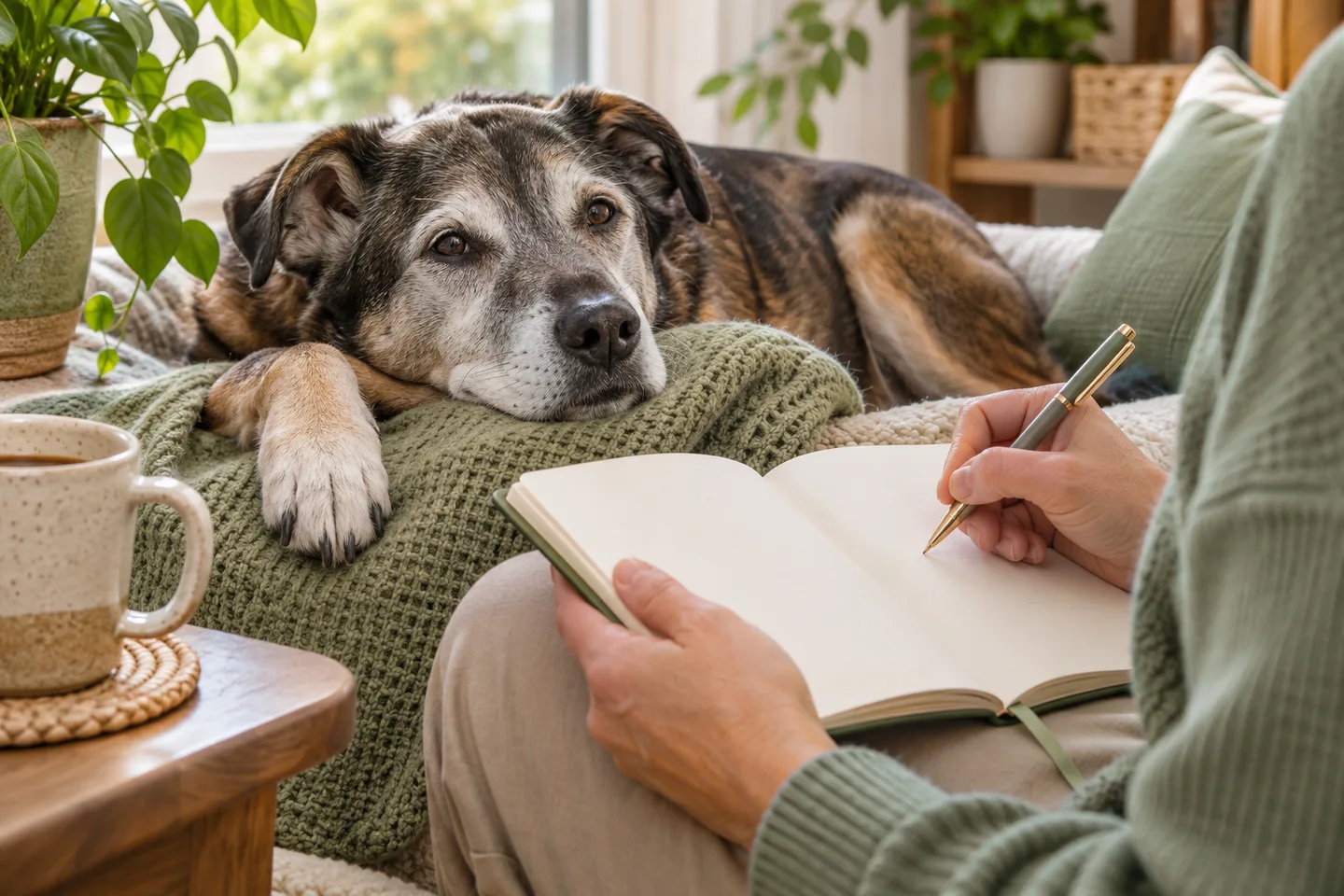
Before a routine senior checkup, write down what has changed at home and when it started. Bring your pet's current food, medication and supplement details and choose the two or three questions you most want answered. You can make useful notes even if the changes seem small.
Write observations your vet can compare
Start with a description of an ordinary day: how your pet gets up, eats, moves to a favorite place and settles at night. Then write down what is different. “Paused at the bottom of the stairs on three evenings this week” gives more context than “seems old.” Include when it happens and whether it is becoming more frequent.
- Movement: getting up, walking, jumping, slipping or hesitation near steps or litter trays.
- Eating and drinking: appetite, amounts offered and left, changes in chewing, and changes in drinking or toileting that you have noticed.
- Weight and routine: dated weights with lb or kg, sleep, interaction, grooming and activities your pet still enjoys.
- Food and medications: names, current amounts, timing and anything started, stopped or missed. A photo of the original label can help.
Bring a brief video if it is safe
AAHA suggests that videos of everyday movement or unusual behavior can give the team information that is hard to see in the exam room. Film an ordinary moment that occurs naturally. Keep the recording short and note the time, surface and activity. Avoid asking a sore dog to repeat stairs or making a cat jump to show what happens.
Ask for a written plan
Ask what the team wants you to monitor, what changes should prompt a call and when they want to recheck. If they suggest tests, ask what question each test would answer and how the result could change your pet's care. You can also ask the clinic about arrival arrangements if your pet has trouble walking from the car or becomes anxious in the waiting room.
Know when to call sooner
Contact an emergency veterinary service promptly if your pet is struggling to breathe or collapses. A cat repeatedly straining and producing little or no urine needs immediate veterinary attention. Call first rather than waiting to complete a checklist or get a video.
For one specific observation to discuss, read signs of mobility changes in older dogs or what to watch as a cat gets older.
Sources and method
Sources checked 2026-11-20. Written by Heromedia for PetCalcStudio. This is an editorial source check, not an independent veterinary review.
Cover image is an AI-generated editorial illustration.
 PetCalcStudio