 PetCalcStudio

Senior Pet Vet Visit Checklist for Dogs and Cats
Prepare for a senior pet checkup with a simple record of mobility, appetite, weight, medications and questions for your veterinary team.
3 min readCare guide
Fading kitten syndrome is a term for newborn kittens that decline quickly, often from low body temperature, low blood sugar, infection or birth problems. It's an emergency: warm the kitten slowly, don't feed a cold kitten, and get to a vet immediately.
Educational information. Our editorial policy
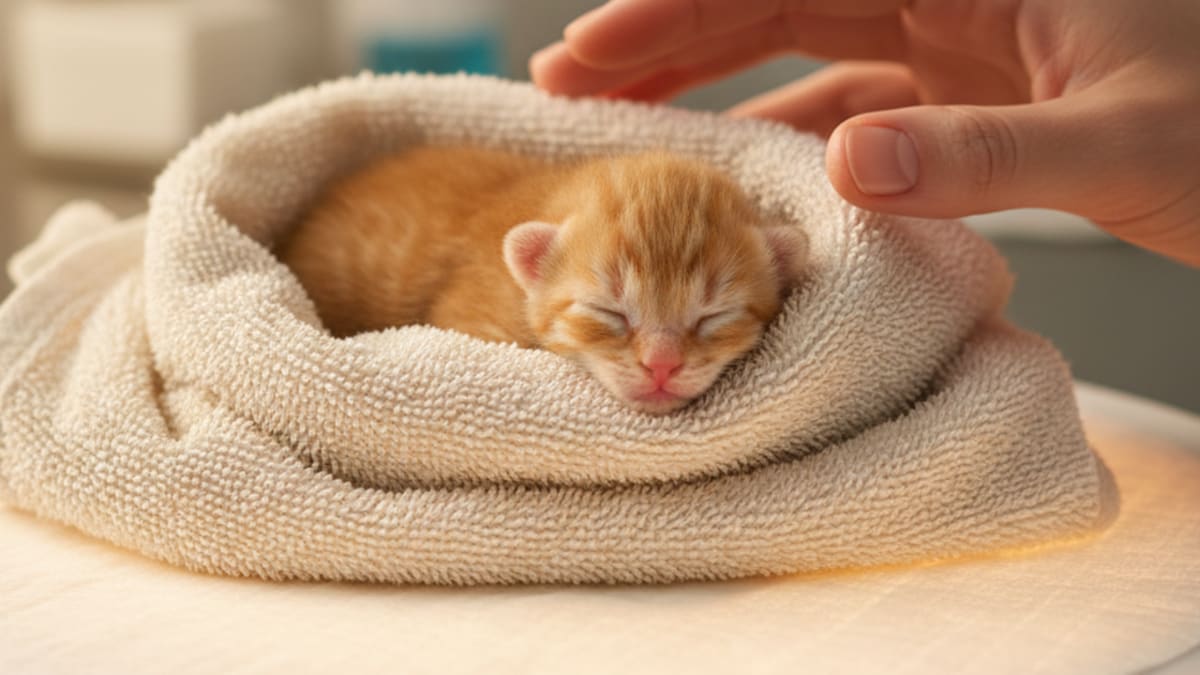
Fading kitten syndrome is not a single disease; it's a name for newborn kittens (usually under 2-3 weeks old, and sometimes up to 8 weeks) that stop thriving and decline fast. It's an emergency. Warm the kitten gradually, don't force-feed a cold kitten, and get to a vet immediately.
If you suspect a fading kitten, contact a vet or emergency clinic now. Time matters. Newborn kittens can't regulate their body temperature, have very little energy reserve and can crash within hours. This guide explains what causes fading, the warning signs, what to do while you're getting help, and how to lower the risk in future litters.
"Fading" describes a pattern, not a diagnosis. Causes often overlap:
Don't: give cow's milk, force liquids into the mouth, use heating pads set to high, rub a cold kitten vigorously or give human medications.
If your vet advises feeding, use a commercial kitten milk replacer. Amounts depend on weight and age; see our guide to kitten milk replacer and the cat feeding chart for how calorie needs scale.
Healthy newborn kittens typically gain roughly 10-15 g (about half an ounce) a day. Weighing on a kitchen scale at the same time each day shows trouble early.
Keep a simple log: date, time, weight, whether she nursed and her energy level. Your vet will find the pattern useful.
Some kittens recover fully with prompt warming, fluids and treatment, especially when the cause is chilling or a treatable infection. Others, particularly those with severe congenital problems or overwhelming infection, don't survive despite everything. Outcomes are worse the longer a kitten goes without care. Acting fast is the best thing you can do.
Immediately, for any newborn kitten that's weak, cold, not nursing, losing weight, bleeding, struggling to breathe or being rejected by the mother.
General guidance on this topic from veterinary organizations. This guide is educational and written by a non-veterinarian; check with your own vet before changing your pet's food, medication or care. Editorial policy
Sometimes, especially with fast veterinary care. Outcomes depend on the cause, but early warming and treatment improve the chances.
Not if it's cold. Warm the kitten gradually first, and follow your vet's feeding advice.
Veterinary guidance typically suggests a nest temperature of about 85-90°F (29-32°C) in the first week, decreasing gradually. Ask your vet for specifics.
Some causes (such as viral infections) are, so isolate sick kittens and ask your vet what precautions to take.
Prepare for a senior pet checkup with a simple record of mobility, appetite, weight, medications and questions for your veterinary team.
3 min readThe 7-year rule was never based on biology. Learn the DNA methylation formula vets now use to convert your dog or cat's age into accurate human-year equivalents — adjusted for breed size and life stage.
7 min readPoinsettias are usually only mildly irritating to pets, but other holiday plants are far worse. Here is which plants to keep, which to move, and what to do if your pet chews one.
6 min read
