 PetCalcStudio

Senior Pet Vet Visit Checklist for Dogs and Cats
Prepare for a senior pet checkup with a simple record of mobility, appetite, weight, medications and questions for your veterinary team.
3 min readCare guide
Shaking puppy syndrome (hypomyelination) is a rare inherited disorder where puppies have full-body tremors from birth to a few weeks old, worse when active and better at rest. Many affected puppies improve as myelin develops, but some keep mild tremors, and other causes of shaking need a vet to rule out.
Educational information. Our editorial policy
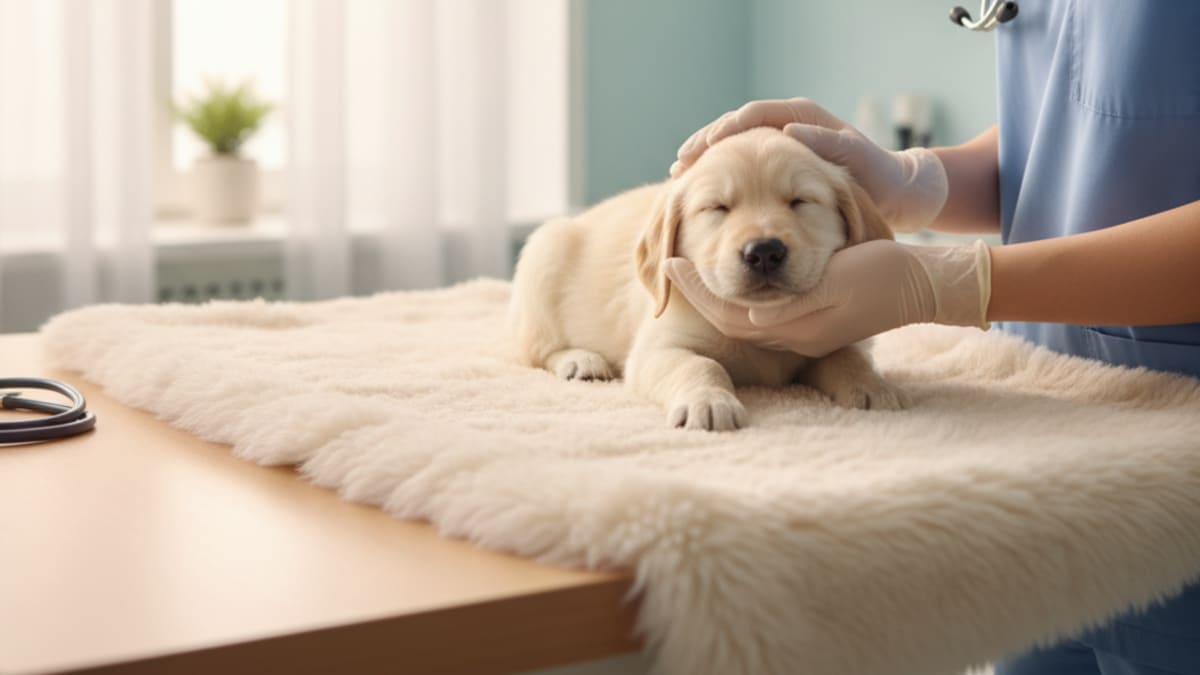
Shaking puppy syndrome (hypomyelination) is a rare, often inherited disorder in which puppies have full-body tremors from a few weeks old. The tremors get worse with activity or excitement and ease at rest or asleep. Many affected puppies improve as they mature, but some keep mild tremors for life. Other causes of shaking need a vet to rule out.
If your puppy is trembling, don't assume it's this syndrome. Low blood sugar, chilling, toxins, pain, infections and other neurological conditions can all cause shaking, and several are more urgent. A vet exam comes first. This guide explains what shaking puppy syndrome is, the signs, which breeds are affected, how it's diagnosed, the outlook, how to care for a shaky puppy, breeding considerations and when tremors need urgent help. Plan for a visit with the vet cost estimator.
Shaking puppy syndrome, medically called hypomyelination or dysmyelination, happens when the nerves in the brain and spinal cord don't develop enough myelin, the fatty coating that insulates nerve fibers. Without proper insulation, electrical signals misfire, causing tremors and poor coordination. Puppies are born with the problem, and signs typically become noticeable in the first weeks of life, often from about 2 weeks old when puppies start to walk.
It's been reported in several breeds, including Springer Spaniels (an X-linked form that mainly affects males), Chow Chows, Samoyeds, Weimaraners, Bernese Mountain Dogs, Dalmatians, Lurchers and some terrier breeds, and it can appear in other dogs too. Because it's often inherited, affected puppies often come from the same parents, and sometimes several puppies in a litter are affected.
Shaking isn't always hypomyelination. A vet needs to consider:
Low blood sugar and toxins can be emergencies, which is why any tremoring puppy needs a same-day check.
Your vet starts by ruling out other causes of tremors with a thorough history and physical exam, blood glucose check and other tests as needed. A neurological exam, blood tests and sometimes MRI or other imaging help. A definitive diagnosis may require specialist evaluation or examination of nervous tissue. The breed, age of onset and family history are important clues.
There's no cure, but the outlook varies by type and breed:
Treatment is supportive: good nutrition, warmth, safe surfaces and help with feeding if needed. Your vet may adjust care based on how your puppy is coping.
Because the condition is often inherited, affected dogs and their parents shouldn't be bred. Tell the breeder, and ask your vet about genetic counseling.
Juno is a Chow puppy with tremors at 3 weeks. Her owner keeps a simple log of the date, tremor severity on a 0-5 scale, weight and mobility:
That steady decline matches the improvement seen in many affected puppies, but her vet should confirm the plan at each recheck.
Call the same day for any puppy with tremors, since low blood sugar, toxins and infections can look similar and progress fast. Emergency signs include seizures, collapse, inability to stand or nurse, pale gums, vomiting or unresponsiveness.
General guidance on this topic from veterinary organizations. This guide is educational and written by a non-veterinarian; check with your own vet before changing your pet's food, medication or care. Editorial policy
Some improve significantly or become nearly normal as they mature. Others keep mild tremors, and severe forms can be permanent.
It is not thought to be painful, but it can make walking and eating difficult.
Low blood sugar, cold, toxins, infections, pain and other neurological conditions. A vet exam is important.
Often yes, in certain breeds. Affected puppies and their parents should not be bred.
Prepare for a senior pet checkup with a simple record of mobility, appetite, weight, medications and questions for your veterinary team.
3 min readThe 7-year rule was never based on biology. Learn the DNA methylation formula vets now use to convert your dog or cat's age into accurate human-year equivalents — adjusted for breed size and life stage.
7 min readPoinsettias are usually only mildly irritating to pets, but other holiday plants are far worse. Here is which plants to keep, which to move, and what to do if your pet chews one.
6 min read
