 PetCalcStudio

Senior Pet Vet Visit Checklist for Dogs and Cats
Prepare for a senior pet checkup with a simple record of mobility, appetite, weight, medications and questions for your veterinary team.
3 min readCare guide
Cats are masters of hiding pain and illness. This survival instinct inherited from their wild ancestors who could not afford to appear weak means that by the time a cat shows obvious signs of being unwell, the problem has often been developing for days, weeks, or even longer.
Educational information. Our editorial policy
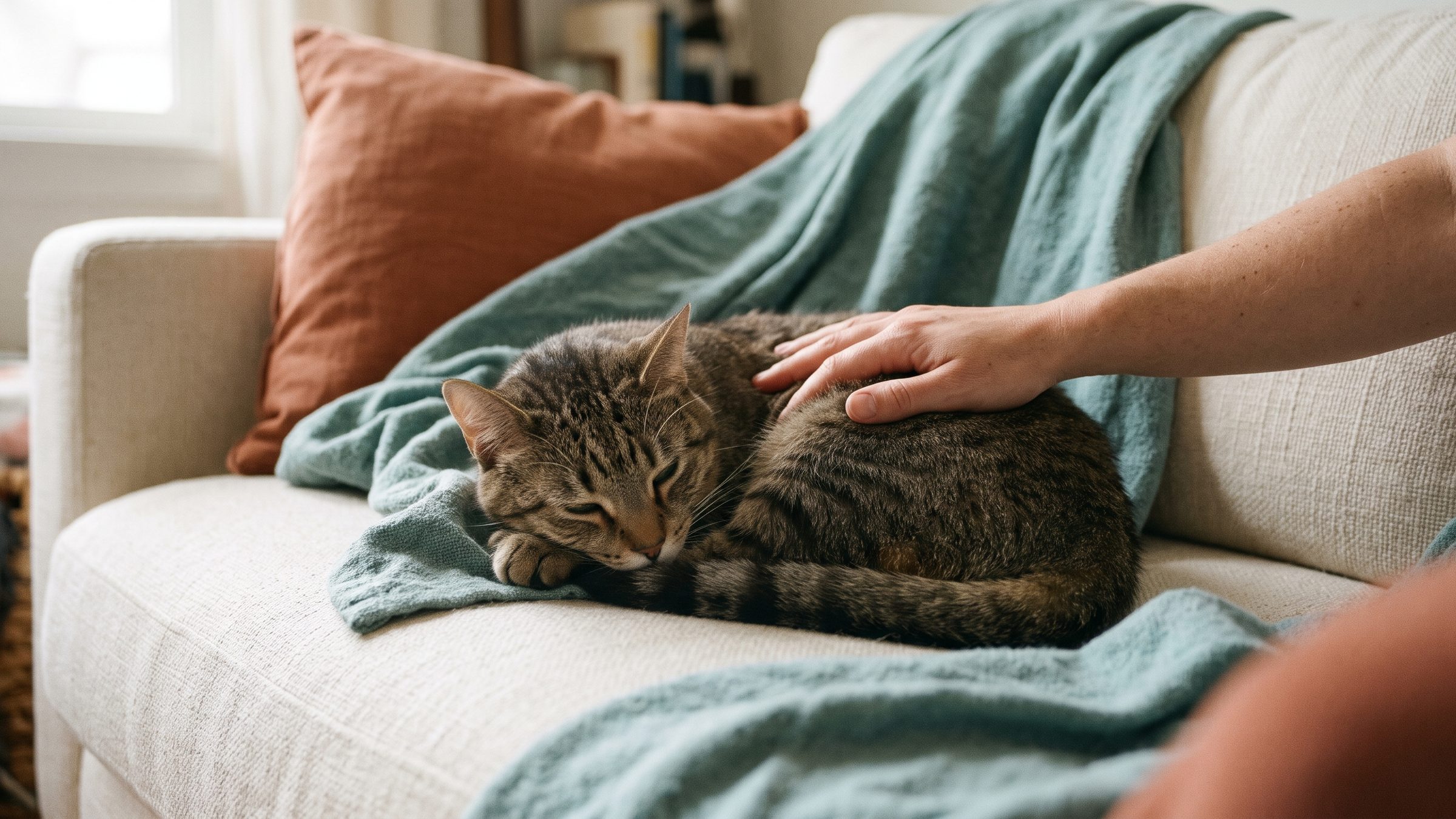
Cats are extraordinarily good at appearing fine when they aren't.
This isn't stubbornness or drama. It's a survival mechanism inherited from their wild ancestors, where showing weakness attracted predators. A cat in pain will often eat, groom, and move around almost normally until the problem is serious enough that hiding it becomes impossible.
By the time most cat owners notice something is wrong, the illness has usually been developing for days - sometimes weeks. That gap between "when it started" and "when you noticed" is exactly why knowing what to look for matters more with cats than with almost any other pet.
These 12 symptoms range from subtle early warnings to signs that require same-day veterinary care. The difference between the two categories is worth understanding clearly.
The litter box is one of the most reliable health monitors available to cat owners, and most people don't pay close enough attention to it.
What to watch for:
The urgency varies significantly. A male cat straining to urinate with no output is a urinary blockage - a life-threatening emergency. Without intervention within hours, the bladder can rupture. This does not wait for a morning appointment.
Changes in frequency or location that are less acute - more trips to the box, smaller amounts, occasional accidents - still warrant a vet call within 24-48 hours. These patterns are consistent with urinary tract infections, bladder crystals, and early kidney disease, all of which are far easier to treat when caught early.
A cat that's suddenly drinking noticeably more water - visiting the bowl repeatedly, drinking from taps, seeking unusual water sources - is showing one of the most consistent signs of several serious conditions.
The three most common causes of increased thirst in cats: chronic kidney disease, diabetes mellitus, and hyperthyroidism. All three are manageable when caught early. All three are significantly harder to manage when caught late.
The practical challenge: cats on wet food diets drink less from bowls (they get moisture from food), which makes changes in drinking behaviour harder to observe. If you notice your cat drinking more regardless of diet, take it seriously.
Increased thirst almost always accompanies increased urination - larger clumps in the litter box, more frequent trips, occasional accidents. If you see both together, a veterinary blood panel is the appropriate next step, not monitoring.
Both loss of appetite and sudden increase in appetite are meaningful signals. They're often treated asymmetrically - owners worry about a cat that stops eating but are pleased when a cat starts eating more. Both deserve attention.
Reduced appetite:
A cat that eats noticeably less than usual for more than 24-48 hours needs monitoring. More than 48 hours without eating in an overweight cat risks hepatic lipidosis (fatty liver disease), which develops rapidly and can be fatal. Any cat - regardless of weight - that refuses food for 72 hours needs veterinary assessment.
Increased appetite with weight loss:
This combination is particularly significant. A cat eating the same amount or more but losing visible weight is a classic presentation of hyperthyroidism (most common in cats over 10), diabetes, or intestinal disease including cancer. The weight loss can be masked by a fluffy coat - run your hands along the spine and ribs monthly. Bones that feel more prominent than they did six months ago are worth noting.
Weight loss in cats is easy to miss visually and easy to attribute to normal variation. It often isn't.
A 10-pound cat that drops to 8.5 pounds has lost 15% of its body weight. On a human, that's the equivalent of losing 22 pounds. It's clinically significant even if the cat seems otherwise normal.
The practical way to catch this: weigh your cat monthly on a kitchen scale or baby scale. Bathroom scales don't have enough sensitivity for cat-weight changes. Record the number. A trend downward over three months is worth a conversation with your vet even if you can't see it by looking at the cat.
Conditions associated with unexplained weight loss in cats include hyperthyroidism, chronic kidney disease, inflammatory bowel disease, dental pain (the cat is eating less than you realise), diabetes, and cancer. Several of these are very manageable if diagnosed early.
Some vomiting in cats is normal. Hairballs, occasional regurgitation after eating too fast - these happen. The key is pattern.
More likely normal:
Worth a vet call:
Chronic vomiting - once or twice a week for months - is not normal cat behaviour even if owners normalise it. It's one of the more common presentations of inflammatory bowel disease and food sensitivities, both of which have effective treatments. "My cat has always been a vomiter" is often a sign that a chronic condition was never investigated.
This is the symptom that's most often missed because it develops gradually and is easiest to attribute to the cat getting older or it being a quiet day.
Cats sleep a lot - 12-16 hours is normal. The question isn't how much they sleep but whether the quality and pattern of their activity has changed. A cat that used to greet you at the door and now doesn't. A cat that used to jump to the windowsill and has stopped. A cat that engages in play for two minutes instead of ten.
These changes are meaningful precisely because they happen slowly. The best way to catch them: think about what your cat did six months ago and compare it to now. Not yesterday - six months ago.
Lethargy combined with any other symptom on this list - reduced appetite, vomiting, hiding, changes in coat - should prompt a vet visit rather than a watch-and-wait approach.
A cat that suddenly spends most of its time under the bed, in a closet, or in any location it previously didn't prefer is exhibiting one of the most classic sick-cat behaviours there is.
Hiding is a pain response. It's the manifestation of that prey-animal instinct - when an animal feels vulnerable, it seeks concealment. A cat that's hiding isn't being antisocial. It's telling you something is wrong in the clearest way it knows how.
This applies to social cats becoming withdrawn, but also to independent cats becoming unusually clingy. Both represent departures from baseline. Both are worth noting.
If your cat is hiding and also not eating, not using the litter box normally, or difficult to rouse, don't wait more than 24 hours to contact a vet.
Healthy cats are meticulous self-groomers. A coat that looks dull, greasy, matted, or unkempt - especially in a cat that previously had a good coat - indicates the cat has either stopped grooming or is unable to groom effectively.
Cats stop grooming when they're in pain, when they're systemically unwell, or when they're too stiff or overweight to reach certain areas. Matting along the lower back and hindquarters is often the first visible sign of arthritis - the cat simply can't reach those areas comfortably anymore.
Conversely, over-grooming - bald patches, thin fur, or skin irritation from excessive licking - can indicate allergies, skin parasites, pain in the area being licked, or psychological stress.
Normal cats breathe quietly and effortlessly at 20-30 breaths per minute at rest. You shouldn't notice a healthy cat breathing.
Any of the following requires prompt veterinary attention - same day, or emergency if severe:
Respiratory symptoms in cats escalate quickly. A cat in respiratory distress should not be driven to a vet appointment booked for next week - it needs to be seen today.
A healthy cat's eyes are clear and bright. The nose is slightly moist but clean.
Eyes: Discharge that's green, yellow, or white is abnormal. Squinting, holding one eye partially closed, or a cloudy appearance to the eye surface are all signs of a problem ranging from infection to corneal injury. The third eyelid - a pale membrane at the inner corner of the eye - becoming visible and partially covering the eye is a sign of systemic illness or dehydration.
Nose: Any discharge from a healthy cat's nose is abnormal. Clear watery discharge can indicate a viral upper respiratory infection (cat flu). Thick coloured discharge - yellow, green - indicates bacterial infection, which often develops as a secondary infection on top of viral illness. Cats with blocked noses often stop eating because they can't smell their food, which accelerates illness.
Dental disease affects an estimated 70-80% of cats over three years old. Most owners don't know because cats don't show dental pain obviously - they keep eating, keep functioning, and keep suffering quietly.
Signs that dental disease has progressed to a point requiring attention:
Dental disease that isn't addressed doesn't stay in the mouth. The bacteria involved in periodontal disease have been associated with kidney, liver, and cardiac changes in cats. A dental cleaning under anaesthesia sounds like a big deal, but it's a routine procedure and the cost of dental disease left untreated - medically and financially - is much higher.
These are the symptoms owners are least likely to attribute to illness because they look so unusual.
What to watch for:
Vestibular episodes (sudden head tilt, loss of balance, rapid eye movement) can look terrifying but are often benign and self-resolving in cats - similar to sudden vertigo in humans. However, they need to be seen by a vet to rule out more serious causes.
Seizures require veterinary attention after the first episode. A seizure lasting more than five minutes, or multiple seizures in a 24-hour period, is an emergency.
Every symptom on this list is easier to recognise when you know your cat's normal. Normal breathing rate, normal appetite, normal litter box patterns, normal activity level, normal weight.
The owners who catch illness earliest are the ones who know their cat's baseline well enough to notice when something is 10% off - not 50% off.
Monthly weight checks. Annual vet visits for cats under seven. Every six months for cats over seven or those with known conditions. Basic bloodwork annually from age seven onwards - it catches kidney disease, thyroid changes, and diabetes before any of the above symptoms appear.
The symptoms in this article are what illness looks like once it's already developed. Routine monitoring is what catches it before it gets there.
Use the PetCalcStudio Vaccination Schedule and Vet Cost Estimator to plan your cat's preventive care calendar and budget for it realistically.
My cat seems fine but is doing one of these things. Should I still go to the vet?
Yes, if the symptom is persistent (more than 48 hours) or falls into the emergency category above. Cats appearing "fine" while sick is the whole point of this article. The appearance of normalcy is not reliable evidence of normalcy in cats.
How do I tell the difference between a hairball and vomiting from illness?
Hairball vomit is typically cylindrical and contains visible fur. It's usually produced with effort but quickly. Vomiting from illness is more likely to be liquid, bile-coloured, or contain undigested food, and is more likely to recur. If you're unsure - and especially if it's happening more than weekly - have it assessed.
My cat is old. Isn't slowing down just normal ageing?
Some slowing is expected. But many symptoms attributed to "just getting old" - weight loss, reduced appetite, increased thirst, stiffness - are actually symptoms of manageable conditions. Hyperthyroidism, arthritis, and early kidney disease are all treatable. An older cat that's slowing down is worth a vet visit to establish what's treatable versus what's genuinely age-related.
At what point is something an emergency versus a next-day appointment?
Emergency (go now): male cat straining to urinate with no output, open-mouth breathing, seizure lasting more than five minutes, collapse or inability to stand, suspected poisoning.
Same-day call: any respiratory changes, blood in urine or stool, complete appetite refusal for 48+ hours in an overweight cat, sudden neurological symptoms.
Book within a week: persistent vomiting, gradual weight loss, coat changes, increased thirst without urgency signs.
This article is for educational purposes. If your cat is showing emergency symptoms, contact your nearest veterinary clinic or emergency animal hospital immediately.
General guidance on this topic from veterinary organizations. This guide is educational and written by a non-veterinarian; check with your own vet before changing your pet's food, medication or care. Editorial policy
Cats in pain often hide, become less active, stop grooming, avoid being touched, sit hunched with their eyes half-closed, or become aggressive when handled. They rarely cry out. Subtle changes in posture and behaviour are the most reliable signs.
A single missed meal in an otherwise healthy, active cat that is drinking normally may not be cause for immediate alarm but monitor closely. If they miss two meals or show any other symptoms, contact your vet.
Once a year for cats under 7. Every six months for cats 7 and older. Many serious conditions, including kidney disease and hyperthyroidism, can be detected with routine blood work before the cat shows any symptoms at all.
Not always. Cats sometimes hide when stressed, after a loud event, or when new people visit. However, a normally social cat that suddenly spends days hiding is a red flag and should be monitored closely for other symptoms.
Yes. Cats can develop upper respiratory infections caused by viruses such as feline herpesvirus and calicivirus. Symptoms are similar to a human cold sneezing, nasal discharge, watery eyes, and mild lethargy. Most resolve within 7 to 10 days with supportive care, but severe or prolonged symptoms need veterinary treatment.
Night-time yowling in senior cats is a common sign of hyperthyroidism, high blood pressure, cognitive dysfunction syndrome (feline dementia), pain, or anxiety. It should always be investigated by a vet. All of these conditions are manageable with proper treatment.
Annual vet checkups. Most serious illnesses including kidney disease, diabetes, and cancer are far more treatable when caught early through routine examination and blood work, before the cat shows any outward signs of illness.
Prepare for a senior pet checkup with a simple record of mobility, appetite, weight, medications and questions for your veterinary team.
3 min readThe 7-year rule was never based on biology. Learn the DNA methylation formula vets now use to convert your dog or cat's age into accurate human-year equivalents — adjusted for breed size and life stage.
7 min readPoinsettias are usually only mildly irritating to pets, but other holiday plants are far worse. Here is which plants to keep, which to move, and what to do if your pet chews one.
6 min read
