 PetCalcStudio

Senior Pet Vet Visit Checklist for Dogs and Cats
Prepare for a senior pet checkup with a simple record of mobility, appetite, weight, medications and questions for your veterinary team.
3 min readCare guide
Puppies naturally breathe faster than adult dogs, especially during dream sleep. Learn how to count your puppy's resting breathing rate, what is normal and the signs that fast breathing needs a vet right away.
Educational information. Our editorial policy
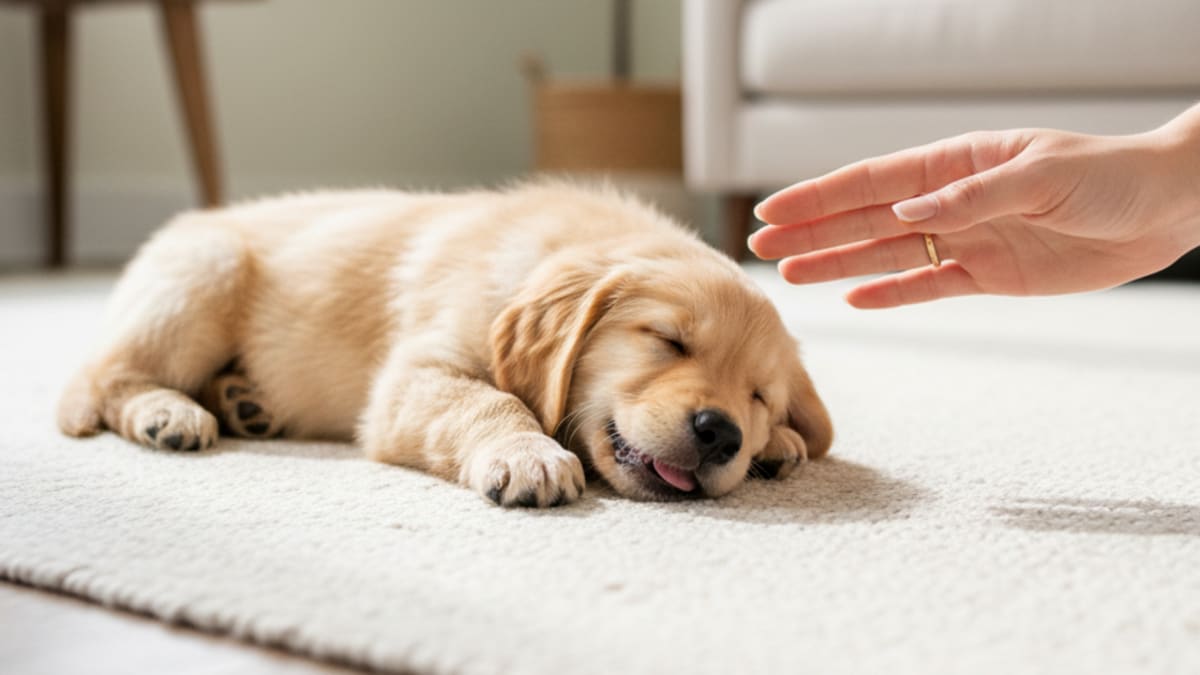
Puppies often breathe faster than adult dogs, especially after play or during dream (REM) sleep, and that can be normal. Fast breathing that continues at rest, looks labored, comes with pale or blue gums, coughing or lethargy needs a vet right away.
Watching your puppy's belly rise and fall at what feels like double speed can be alarming. The good news is that quick, shallow breathing during sleep is common. The key is knowing how to measure the rate, what is typical and which signs separate normal from urgent. This guide covers normal puppy breathing, harmless causes, medical causes, how to count breaths, what to do at home, how vets investigate the problem and when to call your vet. If you want to plan for unexpected visits, the vet cost estimator can help you prepare.
A resting adult dog typically takes roughly 15-30 breaths per minute, and many vets treat a sleeping or relaxed rate persistently above about 30-40 as worth a call. Puppies, with small bodies and fast metabolisms, often run higher, and their rate climbs quickly with excitement, warmth or play. During REM sleep, breathing can become fast and irregular, with twitching paws and whimpering. That is usually normal.
| Situation | What you may see | Usually normal? |
|---|---|---|
| Asleep, twitching, then settles | Brief fast, uneven breaths | Yes |
| Just after play or a walk | Panting, fast breaths settling in minutes | Yes |
| Warm room or car | Panting | Yes, if relief is quick |
| Resting, awake and calm | Persistently fast breaths | Check with vet |
| Any time | Gasping, open-mouth effort, blue gums | Emergency |
Worked example: your puppy is asleep and you count 14 breaths in 30 seconds. 14 × 2 = 28 breaths per minute, which is generally comfortable. If you repeatedly count 20 or more in 30 seconds (40+ per minute) while fully relaxed, call your vet.
Count at the same time each day for a few days if you are worried, because a trend tells your vet more than a single number. A rate that is creeping upward over days, even at rest, can be an early sign of heart or lung problems.
| Pattern | What it may suggest |
|---|---|
| Fast and shallow at rest | Pain, fever, anemia, heart or lung disease |
| Slow, deep, labored effort | Airway blockage or chest disease |
| Noisy, snorting breaths | Flat-faced airway anatomy or upper airway problems |
| Breathing with coughing | Kennel cough, pneumonia or heart disease |
| Belly heaving | Difficulty moving air in or out |
| Fast breathing with pale gums | Anemia or shock |
Go to a vet or emergency clinic immediately if you see:
An exam is usually a lot cheaper than an emergency admission, so early calls pay off. The vet cost estimator helps you budget for exams, diagnostics and emergency care. Pet insurance, if bought early, can also help with unexpected costs.
Call promptly if breathing is persistently fast at rest, if your puppy coughs, has a fever, is lethargic or refuses food. For suspected poisoning, call the ASPCA Animal Poison Control Center at 888-426-4435 or the Pet Poison Helpline at 855-764-7661 (fees may apply).
Fast, uneven breathing during dream sleep is usually normal. Persistent fast breathing at rest, effort, blue or pale gums or collapse is not. Count the rate, record a video and call your vet when in doubt. Plan for care costs with the vet cost estimator.
General guidance on this topic from veterinary organizations. This guide is educational and written by a non-veterinarian; check with your own vet before changing your pet's food, medication or care. Editorial policy
Dream (REM) sleep often causes brief fast, irregular breathing with twitching. It is usually normal if it settles quickly.
Adult dogs typically take about 15-30 resting breaths a minute, and puppies often run a bit higher. A calm puppy persistently above about 40 should be checked.
If the puppy has blue or pale gums, struggles to breathe, heaves its belly, collapses or breathes open-mouthed at rest, go to an emergency vet.
Heavy parasite burdens can cause anemia and lung effects. Keep up deworming and see your vet.
Yes after play, excitement or heat, as long as it settles within minutes.
Prepare for a senior pet checkup with a simple record of mobility, appetite, weight, medications and questions for your veterinary team.
3 min readThe 7-year rule was never based on biology. Learn the DNA methylation formula vets now use to convert your dog or cat's age into accurate human-year equivalents — adjusted for breed size and life stage.
7 min readPoinsettias are usually only mildly irritating to pets, but other holiday plants are far worse. Here is which plants to keep, which to move, and what to do if your pet chews one.
6 min read
