 PetCalcStudio

How to Introduce Two Cats at Their Own Pace
Prepare a separate room, swap scent, introduce through a barrier and learn when to slow down if either cat shows tension.
2 min readCare guide
At ten weeks a kitten is a bundle of energy with a big appetite. Learn typical weight and growth, how much and how often to feed, wet versus dry food, litter and sleep habits, play biting and scratching, vaccine boosters and spay or neuter planning, plus red flags to watch for.
Educational information. Our editorial policy
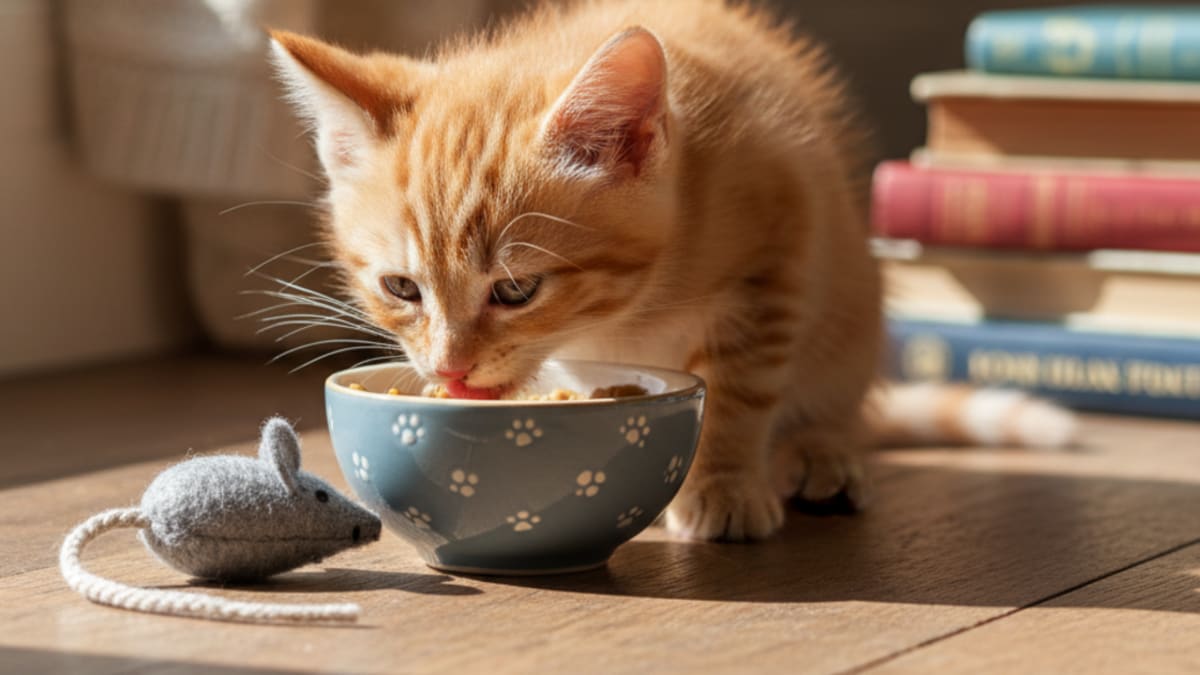
A 10 week old kitten typically weighs about 2-3 lb (0.9-1.4 kg), needs three to four small meals a day of complete-and-balanced kitten food, sleeps 16-20 hours, plays hard and bites and scratches while learning limits. It is due for its second round of vaccines, so keep up with vet visits and use toys, not hands, for play.
Ten weeks is a fun stage. Your kitten has settled in, its personality is showing and its energy seems limitless. It is also a time of rapid growth and important health milestones: the second FVRCP vaccine, continued deworming and early habits around litter, scratching and play. This guide explains what to expect at 10 weeks, typical weight and development, how much and how often to feed, the right food, litter and sleep habits, play biting and scratching, vaccines and vet care, safety and warning signs. To match meals to your kitten's weight, use the cat feeding chart.
| Feature | Typical at 10 weeks |
|---|---|
| Weight | About 2-3 lb (0.9-1.4 kg), gaining roughly 2-4 oz per week |
| Teeth | Baby teeth are in, adult teeth start coming in around 3-4 months |
| Eyes | Eye color is changing from baby blue toward the adult color |
| Energy | Very high, with bursts of play and sleep |
| Litter box | Usually reliable if introduced properly |
| Coordination | Good, with climbing, pouncing and jumping |
| Social skills | Learning bite inhibition and boundaries from play |
| Sleep | 16-20 hours a day |
Kittens need more calories, protein and fat per pound than adult cats, so feed a food labeled complete and balanced for growth (or all life stages).
A 10 week old kitten weighing 1.2 kg (2.6 lb).
Use the cat feeding chart and your food's label to double-check amounts.
| Feature | Wet | Dry |
|---|---|---|
| Moisture | High, helps hydration and urinary health | Low |
| Palatability | Usually high | Good |
| Cost | Higher | Lower |
| Convenience | Needs refrigeration after opening | Easy to store and use in puzzle feeders |
| Dental effect | None, though kibble does not clean teeth well either | Minimal |
| Calorie control | Easy with measured cans | Easy to overfeed if free-fed |
A mix is a popular compromise. Whatever you choose, keep the diet complete and balanced and transition gradually when changing foods over 7-10 days.
Most kittens use the litter box reliably by 10 weeks.
Kittens sleep a lot, but when they are awake they are very active. A calm bedtime routine, play before a meal and quiet time at night helps prevent 3am zoomies. Provide a warm, safe bed and some safe hiding spots.
At ten weeks, your kitten is learning how hard it can bite and scratch. Play is how it learns.
Kittens are still in a sensitive window for learning about the world.
Typical kitten schedule (your vet may adjust it):
| Age | Typical care |
|---|---|
| 6-8 weeks | First FVRCP vaccine, deworming, exam |
| 10-12 weeks | FVRCP booster, FeLV vaccine if recommended, continued deworming |
| 12-16 weeks | Final FVRCP booster, rabies |
| 4-6 months | Spay or neuter, microchip |
Ask your vet about flea and parasite prevention that is safe for kittens, and test for feline leukemia and FIV if not already done. Keep your kitten indoors until fully vaccinated and ideally for life, since indoor cats are generally safer.
Many vets recommend spaying or neutering at about 4-6 months, and some shelters do it earlier. Plan ahead for the appointment and for any needed pre-surgical care. Calorie needs often drop after surgery, so monitor weight.
For suspected poisoning, call the ASPCA Animal Poison Control Center at 888-426-4435 or the Pet Poison Helpline at 855-764-7661 (fees may apply).
Contact your vet right away for any warning sign above, and schedule the booster vaccine on time. Kittens can deteriorate quickly, so do not wait if something seems off.
A 10 week old kitten needs three to four measured meals of kitten food, plenty of play with toys, a clean litter box, safe kitten-proofed spaces and on-time vaccine boosters. Keep an eye on weight and watch for signs of illness. Match portions to growth with the cat feeding chart.
General guidance on this topic from veterinary organizations. This guide is educational and written by a non-veterinarian; check with your own vet before changing your pet's food, medication or care. Editorial policy
Roughly 2.5 times its resting energy needs, so a 1.2 kg kitten needs about 200 kcal a day, split into three or four meals. Check your food's label.
Typically about 2-3 lb (0.9-1.4 kg), gaining a few ounces per week.
Three to four small meals a day.
Biting is normal play and learning. Redirect to toys, stop play if teeth touch skin and avoid using hands as toys.
Usually the FVRCP booster, plus FeLV if recommended, with a final FVRCP and rabies at 12-16 weeks.
No. Kittens need food made for growth, with more calories, protein and fat.
Prepare a separate room, swap scent, introduce through a barrier and learn when to slow down if either cat shows tension.
2 min readCreate an indoor setup your cat can explore, with safe hiding spots, scratching surfaces, supervised play and options for smaller homes.
3 min readTry a calm, dog-led walk with safe sniffing stops. Choose a route, use a comfortable pace and adapt the outing for your dog.
3 min read
