 PetCalcStudio

Indoor Cat Enrichment With Play, Scratching and Hiding
Create an indoor setup your cat can explore, with safe hiding spots, scratching surfaces, supervised play and options for smaller homes.
3 min readCare guide
Prepare a separate room, swap scent, introduce through a barrier and learn when to slow down if either cat shows tension.
Educational information. Updated . Our editorial policy
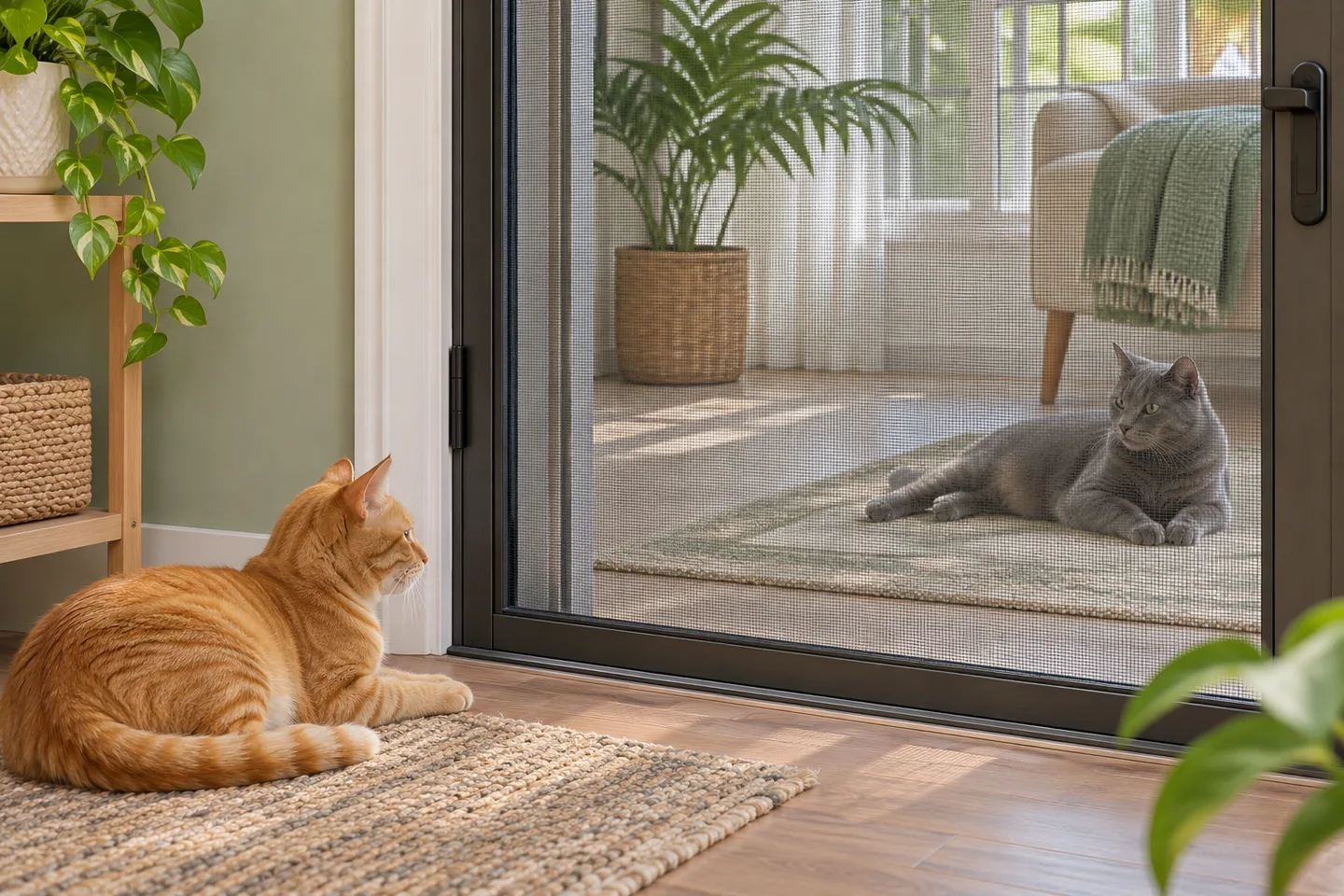
Start with the cats in separate areas, then let them get used to each other's scent before they see or meet each other. Progress when both cats are comfortable at the current stage. Some pairs need more time or professional help, so plan space and routines that can support separation for as long as needed.
Give the new cat a quiet room with a closed door, a resting spot, somewhere to hide, a scratching surface, litter, food and water. Arrange the resources so the cat has room to move between them. Keep the resident cat's normal feeding and resting places available. Our new cat checklist can help you prepare this setup before arrival.
Once the cats have settled, exchange small pieces of familiar bedding. Put the item at a distance so the cat can choose whether to approach. Watch how each cat responds and give both room to walk away. If a cat persistently avoids the area or becomes tense around the item, pause and give it more space.
When both cats appear comfortable with scent, try brief visual contact through a secure barrier they cannot jump over, squeeze through or reach through to swat. Leave room on each side to retreat. End the session while both are calm and build gradually. Sustained staring, stalking, crouching or guarding an exit are reasons to increase distance or return to the earlier step.
When both regularly stay relaxed around the barrier, consider a short supervised session in a room with separate escape routes. Let them move independently. Keep resources distributed in different locations, including separate feeding spaces. Brief, calm coexistence is a useful result on its own.
If tension escalates, restore separation. Keep your hands away from cats that are fighting and seek veterinary advice if a cat is hurt. For repeated tension, eating or litter changes, talk to your veterinarian or a qualified feline behavior professional. New behavior changes can have medical as well as environmental causes.
Sources checked 2026-11-20. Written by Heromedia for PetCalcStudio. This is an editorial source check, not an independent veterinary review.
Cover image is an AI-generated editorial illustration.
Checked against the sources below by the editorial team. This is not an independent veterinary review.
Create an indoor setup your cat can explore, with safe hiding spots, scratching surfaces, supervised play and options for smaller homes.
3 min readTry a calm, dog-led walk with safe sniffing stops. Choose a route, use a comfortable pace and adapt the outing for your dog.
3 min readWork out how many days a food bag will last and its cost per day using your actual daily portion. Includes kg/lb conversion and a clear worked example.
3 min read
