 PetCalcStudio

How to Introduce Two Cats at Their Own Pace
Prepare a separate room, swap scent, introduce through a barrier and learn when to slow down if either cat shows tension.
2 min readCare guide
Create an indoor setup your cat can explore, with safe hiding spots, scratching surfaces, supervised play and options for smaller homes.
Educational information. Updated . Our editorial policy
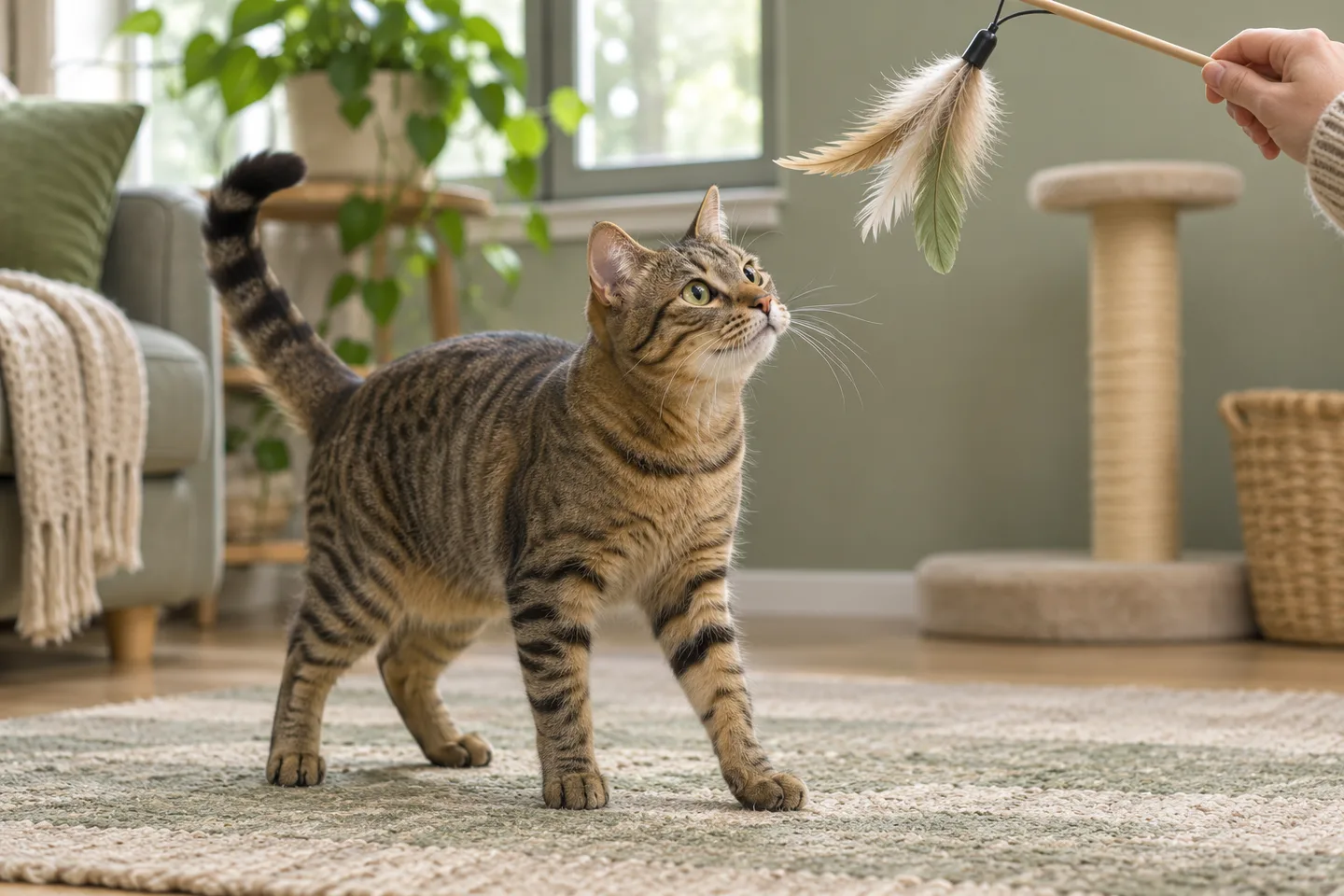
Give an indoor cat places to retreat, scratch, climb if comfortable and play at its own pace. Start with what the cat already chooses. A stable perch near a familiar resting area or a scratching surface next to a favorite route can be more useful than a room full of unfamiliar toys.
Note where your cat naps, what it scratches and which direction it goes when someone walks into the room. Add a safe option nearby. A cat that already likes climbing may use a steady elevated perch. An older cat with limited mobility may prefer a low, easy approach or a stable step. Make sure the cat can move away without being cornered and that furniture and screens are secure.
Provide a quiet hiding place that people leave alone. Set scratching surfaces where the cat already spends time and offer a choice of stable vertical or flat surfaces. In a shared home, spread food, water, litter trays and resting areas across accessible locations so that one cat cannot easily block all of them.
Try moving a wand toy along the floor and pausing to let the cat watch or approach. Some cats are interested in short bursts with clear pauses. Let the cat catch the toy during play, and stop if the cat walks away or seems uncomfortable. Put wand toys, string and anything that can unravel out of reach after supervised play. Check toys for loose or damaged parts before offering them again.
Rotate a few safe toys and change one detail at a time. You could try a new starting point, move the toy around the edge of a box or offer play earlier in the evening. A food puzzle, if suitable for your cat, can use part of its normal measured meal.
Notice which options your cat uses over the following days. If your cat suddenly avoids usual activities, has difficulty moving or shows other changes, talk with your veterinarian. If a new cat is arriving, start with the new cat checklist and plan gradual introductions.
Sources checked 2026-11-20. Written by Heromedia for PetCalcStudio. This is an editorial source check, not an independent veterinary review.
Cover image is an AI-generated editorial illustration.
Checked against the sources below by the editorial team. This is not an independent veterinary review.
Prepare a separate room, swap scent, introduce through a barrier and learn when to slow down if either cat shows tension.
2 min readTry a calm, dog-led walk with safe sniffing stops. Choose a route, use a comfortable pace and adapt the outing for your dog.
3 min readWork out how many days a food bag will last and its cost per day using your actual daily portion. Includes kg/lb conversion and a clear worked example.
3 min read
