 PetCalcStudio

How to Introduce Two Cats at Their Own Pace
Prepare a separate room, swap scent, introduce through a barrier and learn when to slow down if either cat shows tension.
2 min readCare guide
Try a calm, dog-led walk with safe sniffing stops. Choose a route, use a comfortable pace and adapt the outing for your dog.
Educational information. Updated . Our editorial policy
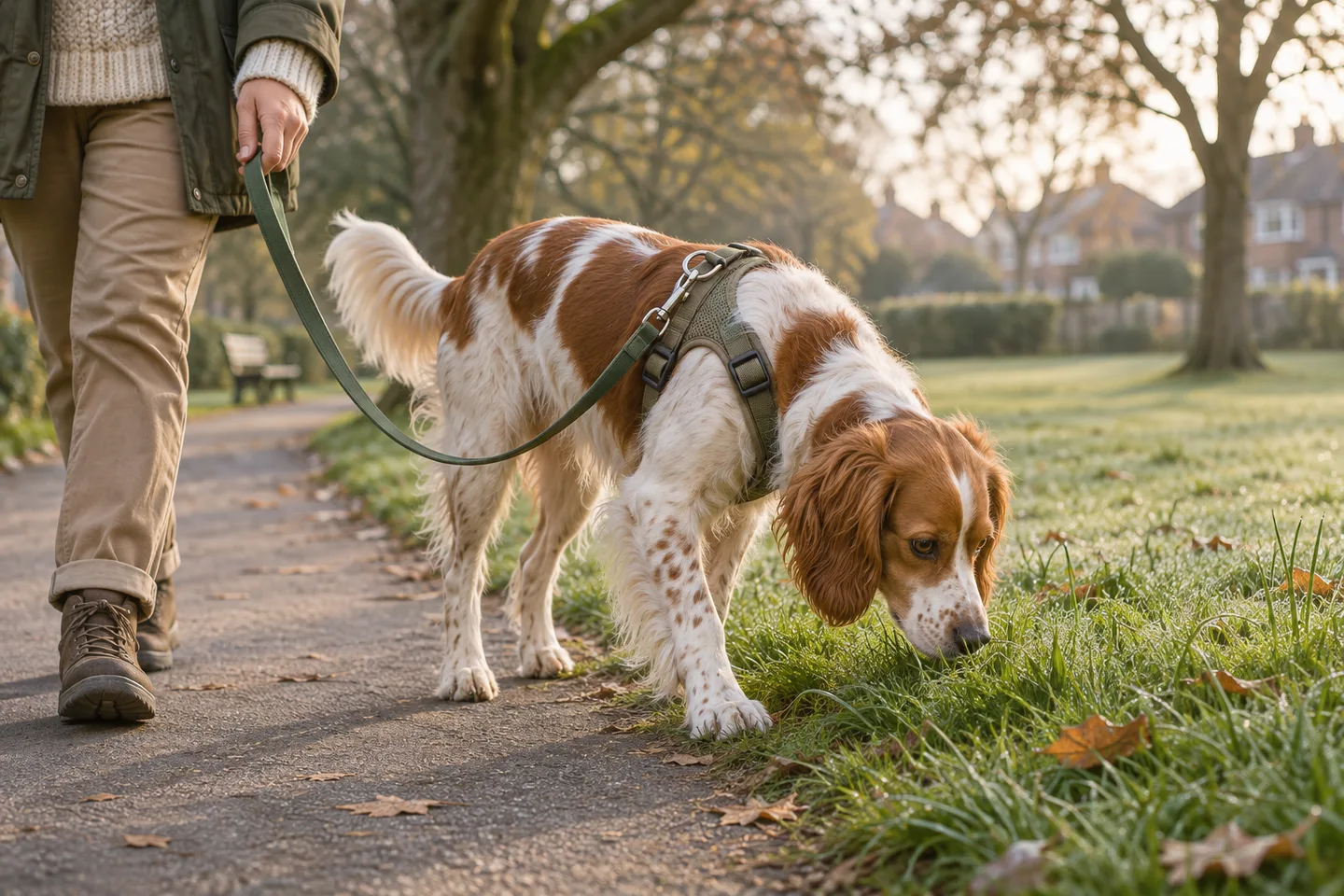
A sniff walk gives your dog time to investigate safe scents while you set the route and manage the lead. You can start on a familiar path and make room for extra pauses. A small patch of grass in a quiet spot can be enough for a first outing.
Pick a low-traffic stretch with room to step aside if another dog, bicycle or jogger comes past. Use a secure, well-fitted harness or collar appropriate to your dog and keep the lead manageable. Follow local lead rules and ask before approaching other people or dogs. Standing a little back from the path can give your dog time to sniff without blocking anyone.
Start walking normally. When your dog chooses a safe patch of grass or a tree, pause and give the lead enough slack for comfortable exploration while keeping control. Move on when the dog disengages. If you need to leave sooner, use a familiar cue and reward your dog for coming away. Keep the outing away from roads, broken glass, discarded food and other hazards your dog might investigate.
Dogs Trust describes scent exploration as one form of enrichment. An outing can contain varied moments: a sniffing stop, an easy stretch at your dog's normal pace and a quiet turn for home. You can keep pace-focused walks in your routine and add exploration where it fits.
A dog that tends to rush toward distractions may find a quiet route easier. If your dog becomes tense, stops engaging or repeatedly tries to leave, increase distance from the trigger and make the outing simpler. For a young puppy or a dog whose movement is limited, ask your veterinarian which outings are appropriate. On difficult weather days, brief, supervised scent games indoors can give the dog another way to explore.
After the walk, note the route, weather, activity level and whether your dog seemed comfortable. Change one thing on the next outing, such as the time of day or where you stop. For general planning, see the dog walking calculator and its assumptions. If cold weather is the limiting factor, read the cold-weather walking guide.
Sources checked 2026-11-20. Written by Heromedia for PetCalcStudio. This is an editorial source check, not an independent veterinary review.
Cover image is an AI-generated editorial illustration.
Checked against the sources below by the editorial team. This is not an independent veterinary review.
Prepare a separate room, swap scent, introduce through a barrier and learn when to slow down if either cat shows tension.
2 min readCreate an indoor setup your cat can explore, with safe hiding spots, scratching surfaces, supervised play and options for smaller homes.
3 min readWork out how many days a food bag will last and its cost per day using your actual daily portion. Includes kg/lb conversion and a clear worked example.
3 min read
