 PetCalcStudio

How to Introduce Two Cats at Their Own Pace
Prepare a separate room, swap scent, introduce through a barrier and learn when to slow down if either cat shows tension.
2 min readCare guide
A 4 week old kitten is starting to wean: offer kitten wet food mixed into a gruel with milk replacer several times a day, introduce a low-sided litter box and keep the kitten warm. Bottle feeding continues alongside until about 6-8 weeks.
Educational information. Our editorial policy
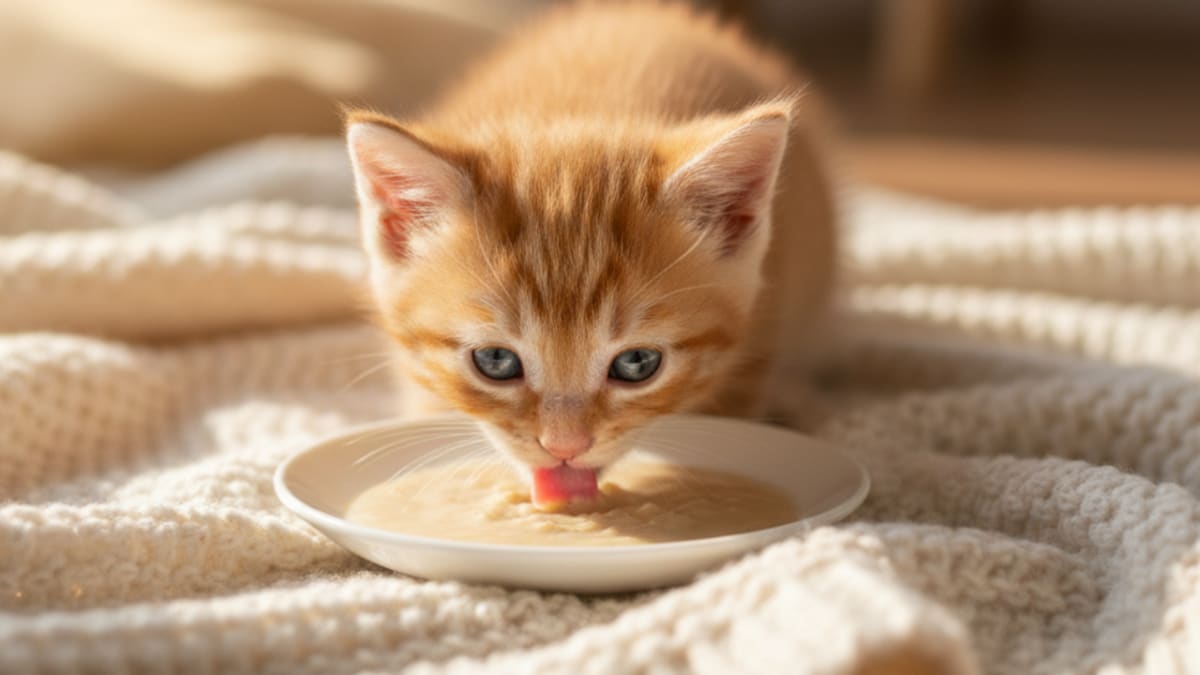
A 4 week old kitten is ready to start weaning. Offer kitten wet food mixed into a gruel with kitten milk replacer several times a day, add a low-sided litter box, keep the kitten warm, and continue mother's milk or bottle feeding alongside until about 6-8 weeks.
At one month old, kittens are curious, wobbly and changing fast. They're walking, exploring and discovering solid food, and they're starting to learn the social skills that will shape their adult behavior. This guide covers milestones, how to wean step by step, how often and how much to feed, litter training, warmth, health care and the signs that need a vet. For exact portions by weight, see the cat feeding chart.
Weaning is a gradual shift from milk to solid food over several weeks.
Be patient: kittens are messy and some take days to get the idea. If a kitten refuses solids, go back a step and try again, and never stop milk feeds entirely until the kitten is reliably eating enough.
If the kitten is orphaned, see kitten milk replacer for bottle-feeding instructions.
| Situation | Approximate schedule |
|---|---|
| With mother | She nurses on demand; offer gruel 3-4 times daily |
| Orphaned | Bottle every 4-6 hours plus gruel 3-4 times daily |
Weigh the kitten daily or every other day. Steady weight gain is the best sign feeding is adequate.
Provide a shallow box (a low-sided tray works well) with unscented, non-clumping litter or paper pellets. Clumping litter can cause blockages if swallowed in quantity, so avoid it for very young kittens. Place the kitten in the box after meals and naps, and praise success. Keep the box away from food and water, and scoop daily.
Keep the room comfortably warm, around 75-80°F (24-27°C) at this age, with a cozy nest. Kitten-proof the space: block gaps behind appliances, cover electrical cords, keep small items out of reach and avoid toxic plants such as lilies.
Pip weighs 600 g (about 1.3 lb).
The window from about 2 to 7 weeks is the prime time for socialization. Handle the kitten gently for short sessions, introduce different people, sounds and textures, and provide safe toys. Kittens that are handled kindly now tend to grow into friendlier adult cats.
Ask your vet about:
Call promptly if your kitten has diarrhea, isn't gaining weight, seems weak or cold, has eye or nose discharge, vomits, has a swollen belly or refuses food for more than a few hours.
General guidance on this topic from veterinary organizations. This guide is educational and written by a non-veterinarian; check with your own vet before changing your pet's food, medication or care. Editorial policy
Soaked kitten kibble can be introduced around 4-5 weeks, but wet gruel is usually the easiest start.
Often around 450-700 g (1-1.5 lb), though it varies.
Many can begin. Offer a shallow box and place the kitten in after meals.
Typically from about 6-8 weeks. Your vet will set the schedule.
Prepare a separate room, swap scent, introduce through a barrier and learn when to slow down if either cat shows tension.
2 min readCreate an indoor setup your cat can explore, with safe hiding spots, scratching surfaces, supervised play and options for smaller homes.
3 min readTry a calm, dog-led walk with safe sniffing stops. Choose a route, use a comfortable pace and adapt the outing for your dog.
3 min read
