 PetCalcStudio

How to Feed Dogs and Cats Separately in a Shared Home
Set up separate feeding stations, measure each pet’s meals and monitor what they actually eat with a simple household routine.
3 min readCare guide
"Natural" on a dog food bag has a specific regulatory definition, but it says little about quality, safety or nutrition. Learn what the AAFCO definition allows, why synthetic vitamins can still be present, how natural differs from organic and how to judge a natural brand and its cost.
Educational information. Our editorial policy
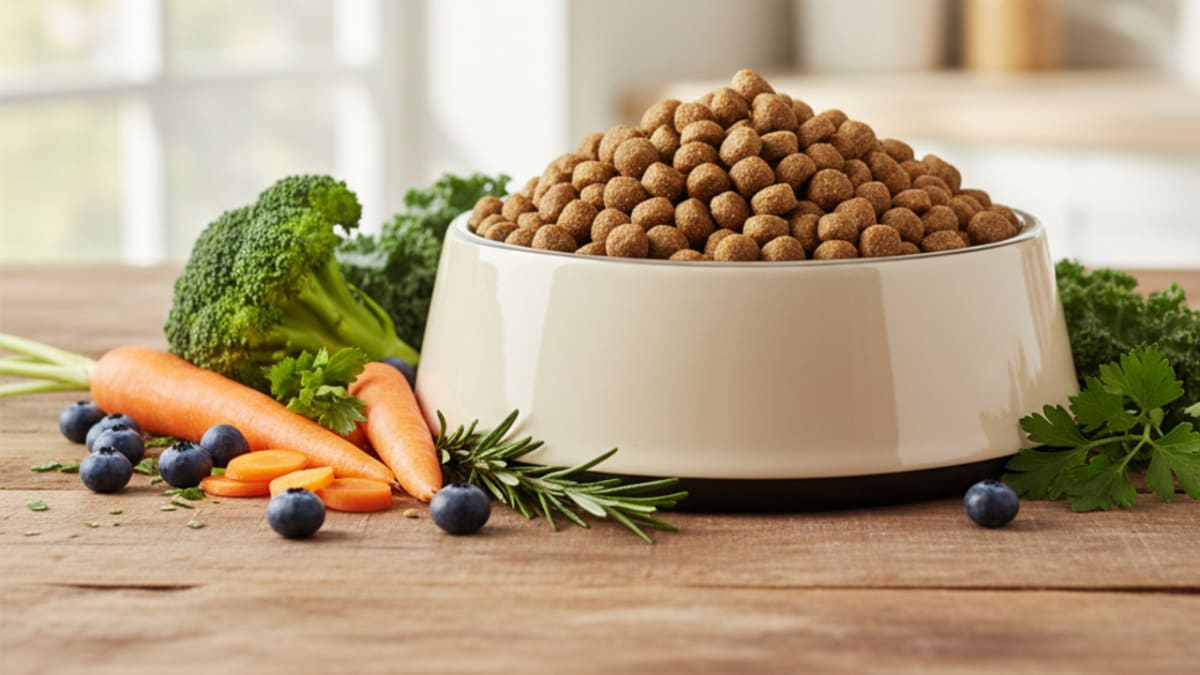
"All natural" on a dog food label means the ingredients come from plant, animal or mined sources and have not been produced by a chemically synthetic process, with exceptions such as added vitamins and minerals. It does not mean the food is organic, higher quality, healthier, safer or better suited to your dog.
Walk down any pet food aisle and "natural" is everywhere, often with pictures of vegetables, meadows and wolves. It feels reassuring, but the word is easier to claim than most people realize. This guide explains the official AAFCO definition of natural, what it does and does not guarantee, how natural differs from organic and "human-grade," what actually matters on a label, how to compare costs and how to feed your dog well whatever the bag says. Use the dog food calculator to set the right daily portion.
AAFCO's model pet food regulations define "natural" for feed ingredients as derived solely from plant, animal or mined sources, either in an unprocessed form or having been subject to physical processing, heat processing, rendering, purification, extraction, hydrolysis, enzymolysis or fermentation, but not produced by or subject to a chemically synthetic process, and not containing any additives or processing aids that are chemically synthetic, except in amounts that might occur unavoidably in good manufacturing practices.
In plain language, "natural" restricts chemically synthetic ingredients and additives. But there is a major exception: synthetic vitamins, minerals and trace nutrients are allowed in a product called natural, as long as the label says so, with wording such as "natural with added vitamins, minerals and trace nutrients." That matters because most complete-and-balanced foods need those additions to meet nutrient profiles.
| Claim | What it generally means | What it does not mean |
|---|---|---|
| Natural | No chemically synthetic ingredients or additives, apart from permitted added vitamins and minerals | Healthier, higher quality, organic |
| Organic | Ingredients meet USDA organic rules | Complete and balanced by itself, or safer |
| Human-grade | All ingredients and the product are suitable for human consumption and made in compliant facilities | Better suited to your dog |
| Complete and balanced | Meets AAFCO nutrient profiles for a life stage | Premium ingredients |
An 8 kg (18 lb) neutered adult dog.
Use the dog calorie calculator to estimate your dog's needs and compare real prices.
Some owners report better coats and stools on natural diets, and some natural foods are very well made. But evidence that "natural" itself improves health is limited. Dogs thrive on diets that are complete, balanced, digestible and suited to them. A conventional food from a company with qualified nutritionists and rigorous quality control can outperform a natural food from a company without them.
If you choose natural, choose a brand with the same quality markers you would expect from any good food.
Contact your vet if your dog has persistent diarrhea, vomiting, itching, weight loss or low energy on any diet, or before changing foods for a medical condition. For suspected poisoning, call the ASPCA Animal Poison Control Center at 888-426-4435 or the Pet Poison Helpline at 855-764-7661 (fees may apply).
"Natural" is a narrow ingredient-sourcing claim, not a promise of quality. Judge a natural food like any other: look for a complete-and-balanced statement, named ingredients, listed calories and a trustworthy company, then watch how your dog does. Calculate portions with the dog food calculator.
General guidance on this topic from veterinary organizations. This guide is educational and written by a non-veterinarian; check with your own vet before changing your pet's food, medication or care. Editorial policy
Ingredients come from plant, animal or mined sources and are not chemically synthetic, with exceptions such as added vitamins and minerals. It is not a guarantee of quality.
No. Organic follows USDA rules for how ingredients are produced. Natural does not.
Yes, if the label states it, for example natural with added vitamins, minerals and trace nutrients.
Not automatically. Health depends on whether the food is complete, balanced, digestible and suited to your dog.
It depends on your dog. Judge by the food's quality markers and your dog's response rather than the word natural.
Check the AAFCO statement, ingredient list, calorie information, nutritionist oversight and recall history.
Set up separate feeding stations, measure each pet’s meals and monitor what they actually eat with a simple household routine.
3 min readSet up safe storage for dry pet food and opened wet food. Keep lot codes handy and learn what to do with leftovers and damaged packaging.
3 min readConvert cups to grams using your food’s own label. See worked examples, avoid scoop errors, and measure an existing feeding plan more consistently.
3 min read
