 PetCalcStudio

How to Feed Dogs and Cats Separately in a Shared Home
Set up separate feeding stations, measure each pet’s meals and monitor what they actually eat with a simple household routine.
3 min readCare guide
Set up safe storage for dry pet food and opened wet food. Keep lot codes handy and learn what to do with leftovers and damaged packaging.
Educational information. Updated . Our editorial policy
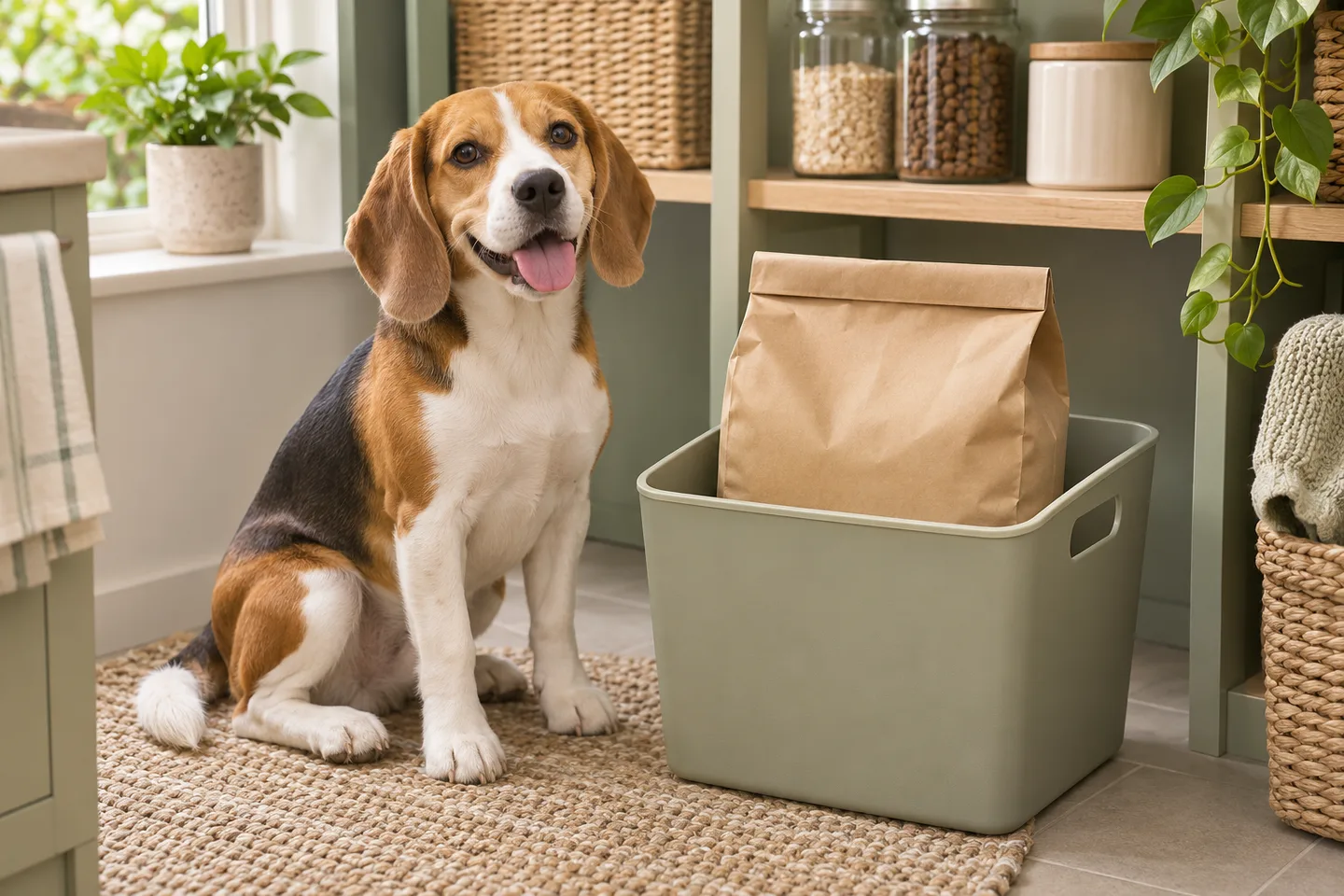
Keep dry pet food in its original bag, inside a clean container if you use one. Cover and refrigerate unused wet food promptly or discard it. These two habits make everyday feeding easier and preserve the details you need if a product is recalled.
Fold or close the bag after use. Choose a cool, dry cupboard that pets and young children cannot reach. The FDA recommends keeping dry pet food below 80°F, about 27°C. A garage that gets hot in summer may be a poor choice even if it feels convenient in winter.
If you use a lidded bin, place the whole bag inside it. Keep the product name, lot code and best-by date readable. A photo of the label and seam can be a handy second record. Use a clean, dry container and dedicated scoop, and clean and dry the bin before starting another bag. Avoid topping up remnants from an older bag with a new one, which makes it harder to identify the lot later.
Put unused food from an opened can or pouch in a covered container in the refrigerator. AVMA advises keeping the refrigerator at 40°F (about 4°C) or colder. Check the package for how soon to use the refrigerated remainder. If it gives no clear instructions, ask the manufacturer. The storage directions for an unopened package do not carry over once it has been opened.
Label the container with the opening date if several people feed the pet. Discard wet food left in the serving bowl rather than mixing it back into the unused food. Wash bowls, scoops and utensils regularly with hot, soapy water, and wash your hands after handling pet food. Keep food for different pets clearly labeled.
Write down the exact recipe, package size, lot code, best-by date and purchase location. Compare all those details when a recall notice names a product. Set aside any affected or suspicious package and follow the recall instructions. Call your veterinarian if you think the food has made your pet unwell.
Our food supply guide estimates how quickly your household uses a bag. Compare that estimate with the label and your available storage space when choosing a bag size. For everyday portion measuring, see how to weigh dog food.
Sources checked 2026-11-20. Written by Heromedia for PetCalcStudio. This is an editorial source check, not an independent veterinary review.
Cover image is an AI-generated editorial illustration.
Checked against the sources below by the editorial team. This is not an independent veterinary review.
Set up separate feeding stations, measure each pet’s meals and monitor what they actually eat with a simple household routine.
3 min readConvert cups to grams using your food’s own label. See worked examples, avoid scoop errors, and measure an existing feeding plan more consistently.
3 min readUnderstand kcal/kg, kcal/cup and kcal/can, then convert a planned calorie amount into grams. Includes US and European label guidance and worked examples.
3 min read
