 PetCalcStudio

How to Store Dog and Cat Food Safely
Set up safe storage for dry pet food and opened wet food. Keep lot codes handy and learn what to do with leftovers and damaged packaging.
3 min readCare guide
Set up separate feeding stations, measure each pet’s meals and monitor what they actually eat with a simple household routine.
Educational information. Updated . Our editorial policy
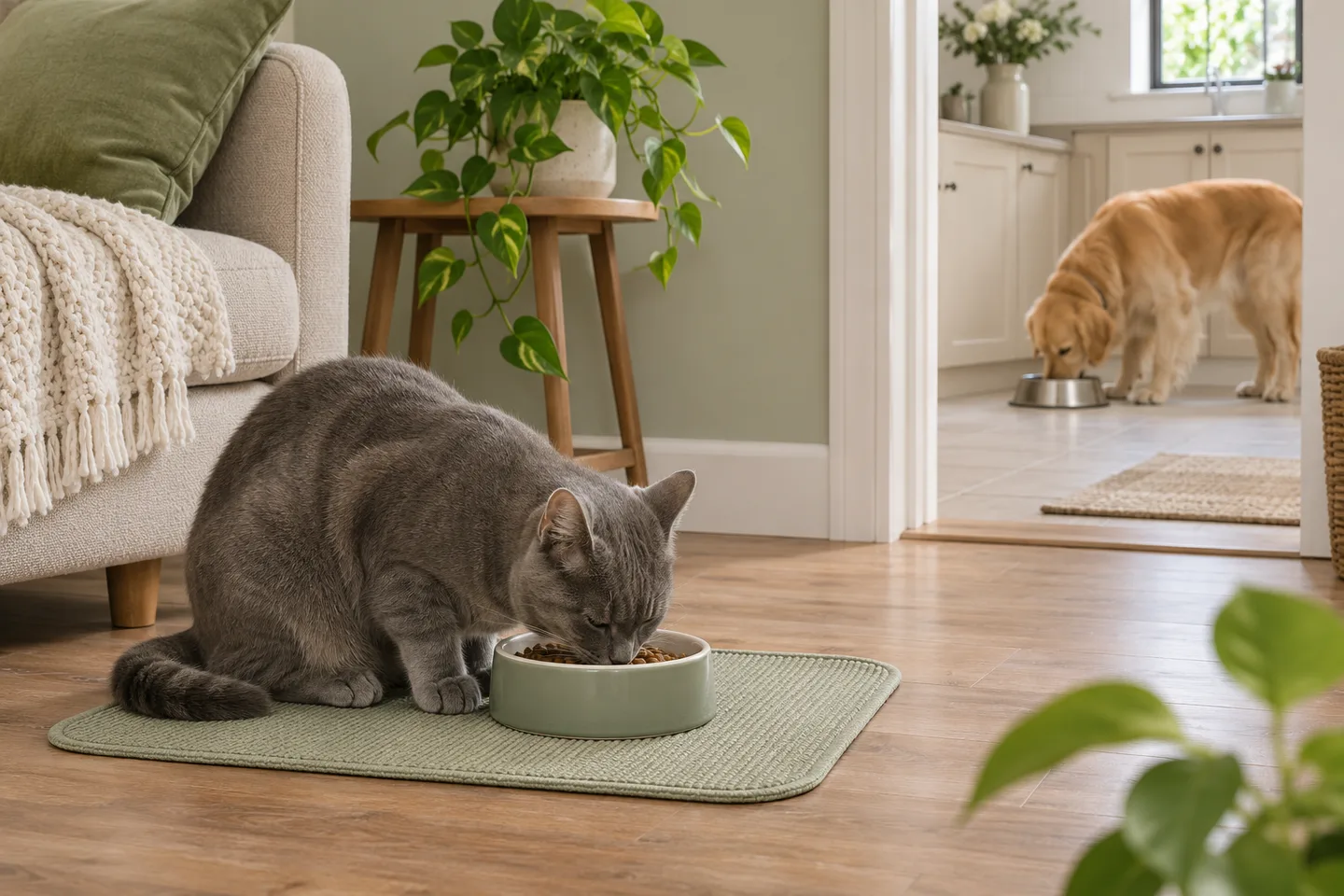
Give each dog or cat its own measured food and a place to eat without another pet approaching the bowl. The simplest setup is often two rooms with a closed door between them. A predictable routine helps you see who ate, whose food was left and who needs a closer look.
Start with familiar locations where each pet can eat comfortably. A dog's bowl in the kitchen and a cat's bowl in a quiet room can be easier to monitor than bowls lined up along one wall. Make sure the cat can reach its food without passing the dog. For cats sharing a home, the FelineVMA intercat tension guidelines discuss separate rooms or a suitable visual barrier where room separation is impractical. Watch for staring, waiting to eat or one pet controlling access to a doorway.
A microchip feeder can help some cats access their own portion. Introduce it according to the instructions, observe each pet using it, and check that a faster pet cannot steal food while the lid is open. Keep fresh water accessible throughout the home.
For example, if you offer 80 g (about 2.8 oz) and find 20 g (about 0.7 oz) still in that pet's bowl, you can record about 60 g (2.1 oz) eaten, assuming none spilled or was stolen. These are example measurements. Keep portions based on each pet's existing feeding plan.
Ask your veterinarian how to protect a prescribed diet or a condition-specific meal schedule. If you need a label's calorie units explained, use our pet food label guide. If another pet approaches food and you see growling, lunging or repeated intimidation, maintain separation and seek individual help from your veterinary team. Avoid testing whether the animals will tolerate sharing a bowl.
If a pet regularly leaves food or shows a new appetite change, share the record with your veterinary team. Knowing the actual amount offered and left helps the team ask better questions.
Sources checked 2026-11-20. Written by Heromedia for PetCalcStudio. This is an editorial source check, not an independent veterinary review.
Cover image is an AI-generated editorial illustration.
Checked against the sources below by the editorial team. This is not an independent veterinary review.
Set up safe storage for dry pet food and opened wet food. Keep lot codes handy and learn what to do with leftovers and damaged packaging.
3 min readConvert cups to grams using your food’s own label. See worked examples, avoid scoop errors, and measure an existing feeding plan more consistently.
3 min readUnderstand kcal/kg, kcal/cup and kcal/can, then convert a planned calorie amount into grams. Includes US and European label guidance and worked examples.
3 min read
