 PetCalcStudio

How to Feed Dogs and Cats Separately in a Shared Home
Set up separate feeding stations, measure each pet’s meals and monitor what they actually eat with a simple household routine.
3 min readCare guide
Convert cups to grams using your food’s own label. See worked examples, avoid scoop errors, and measure an existing feeding plan more consistently.
Educational information. Updated . Our editorial policy
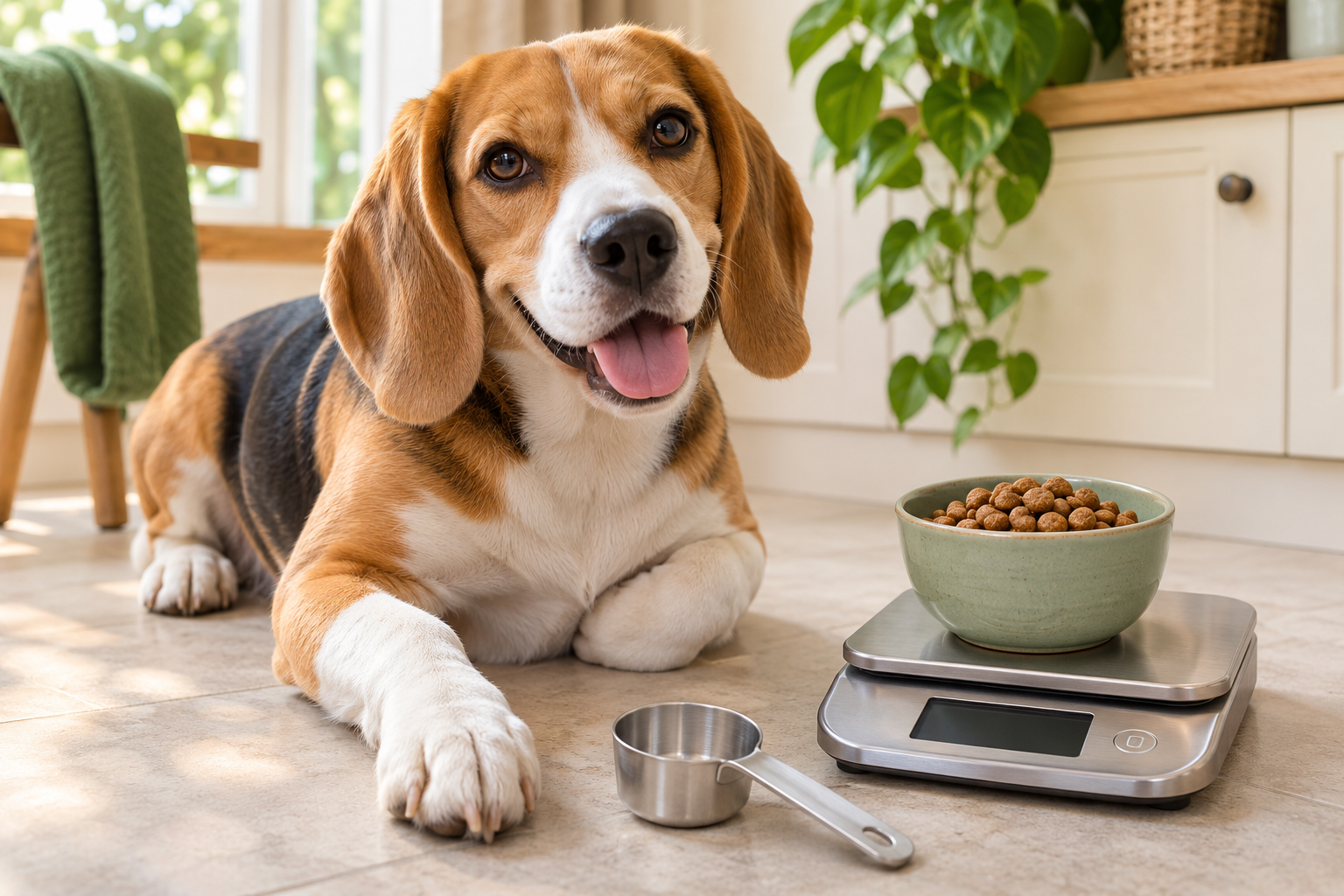
AI-generated editorial image · View full-size image ↗
The useful answer
There is no universal grams-per-cup value. Convert using the weight of one cup of your exact food, then weigh the planned serving consistently.
Put the guide into practice
Use your exact food label and an amount from an existing plan. This converter does not decide how much your pet should eat.
Enter positive values in every field to see the calculation.
Numbers entered here stay in this page and are not sent to our server.
There is no single grams-per-cup conversion for dog food. Use the grams per cup supplied for your exact recipe, or ask the manufacturer. The converter above translates an amount you already plan to feed; it does not decide how much your dog needs.
Look beside the feeding instructions or calorie statement for a weight such as “1 cup = 100 g.” Check that the brand, recipe and product version match your bag. A figure from another food is not a reliable substitute. If the package gives only calories, use our food-label guide to understand the units before converting.
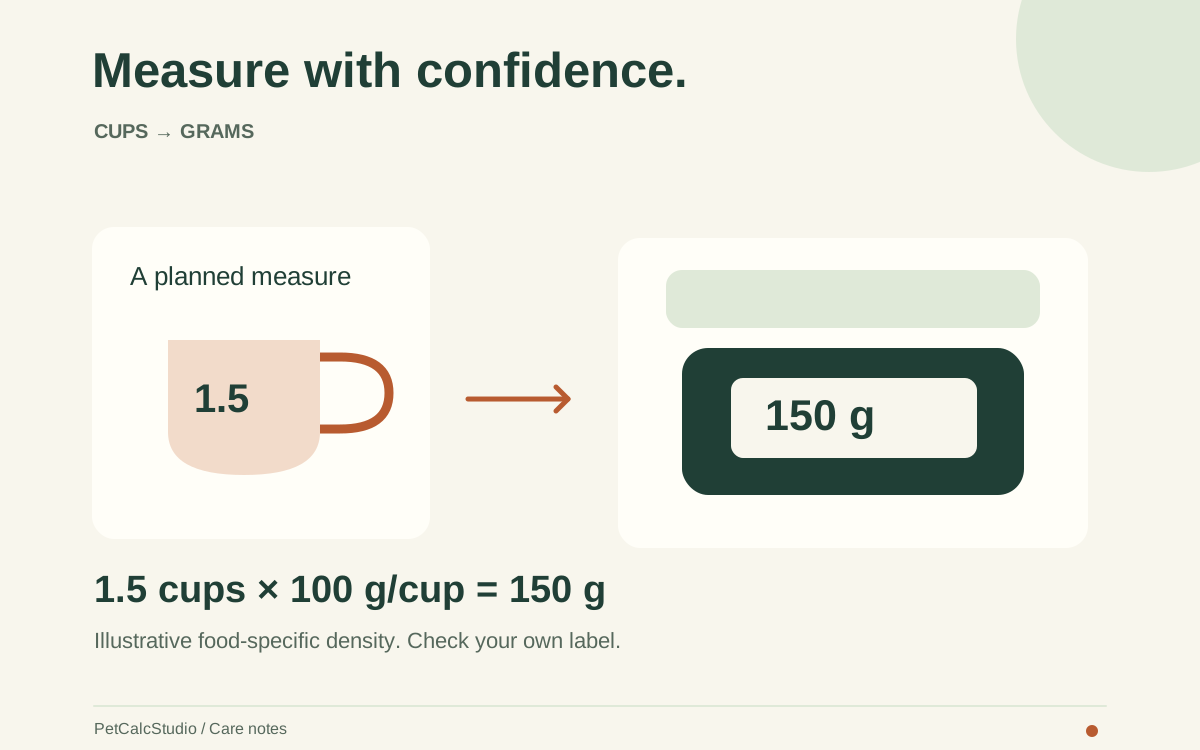
Multiply the number of cups by the grams in one cup of that food. To go the other way, divide grams by grams per cup. Suppose a hypothetical recipe states 100 g per cup: 1.5 cups × 100 g/cup = 150 g. A 75 g serving of that same recipe equals 0.75 cup.
| Planned amount | Example food A: 100 g/cup | Example food B: 120 g/cup |
|---|---|---|
| 0.5 cup | 50 g | 60 g |
| 1 cup | 100 g | 120 g |
| 1.5 cups | 150 g | 180 g |
These are invented label values to demonstrate the calculation. They are not averages for kibble and are not feeding recommendations. A cup measures volume; a gram measures mass. Larger pieces, shapes and packing can change the relationship.
VCA recommends a digital kitchen scale rather than relying on cups. Put an empty bowl on the scale, zero it, then weigh the food. Keep the unit set to grams. Check the scale with its manufacturer’s instructions and use the same method for everyone who feeds the dog.
If your plan is written in daily grams, write both the daily total and each meal’s share on a note. For example, a hypothetical 160 g daily amount split equally into two meals means 80 g at each meal, not 160 g twice. If some of that same food goes into training toys, take it from the day’s measured amount.
If both kcal/cup and kcal/kg refer to the same food as sold, an approximate conversion is: grams per cup = kcal/cup ÷ kcal/kg × 1,000. For example, 400 kcal/cup ÷ 4,000 kcal/kg × 1,000 = 100 g/cup. Label rounding can affect this estimate; confirm unclear information with the manufacturer rather than substituting numbers from another recipe.
Changing the measuring method does not establish a suitable calorie target. Use your current feeding plan, or discuss a new plan with your veterinary team. Our dog food calculator provides an estimate with assumptions. The feeding-chart guide explains why weight alone cannot determine a universal serving.
Once you know the daily grams, estimate how long the food will last without changing the ration to make the bag stretch.
Sources checked 2026-11-20. Written by Heromedia for PetCalcStudio. This is an editorial source check, not an independent veterinary review. Worked examples are illustrative and do not establish an individual pet’s needs.
Checked against the sources below by the editorial team. This is not an independent veterinary review.
Set up separate feeding stations, measure each pet’s meals and monitor what they actually eat with a simple household routine.
3 min readSet up safe storage for dry pet food and opened wet food. Keep lot codes handy and learn what to do with leftovers and damaged packaging.
3 min readUnderstand kcal/kg, kcal/cup and kcal/can, then convert a planned calorie amount into grams. Includes US and European label guidance and worked examples.
3 min read
