 PetCalcStudio

How to Feed Dogs and Cats Separately in a Shared Home
Set up separate feeding stations, measure each pet’s meals and monitor what they actually eat with a simple household routine.
3 min readCare guide
Dehydrated dog food removes water to make a lightweight, shelf-stable diet that you rehydrate before serving. Learn how it compares with kibble, raw and freeze-dried food, how to rehydrate it, how to portion it by calories and what to check before buying.
Educational information. Our editorial policy
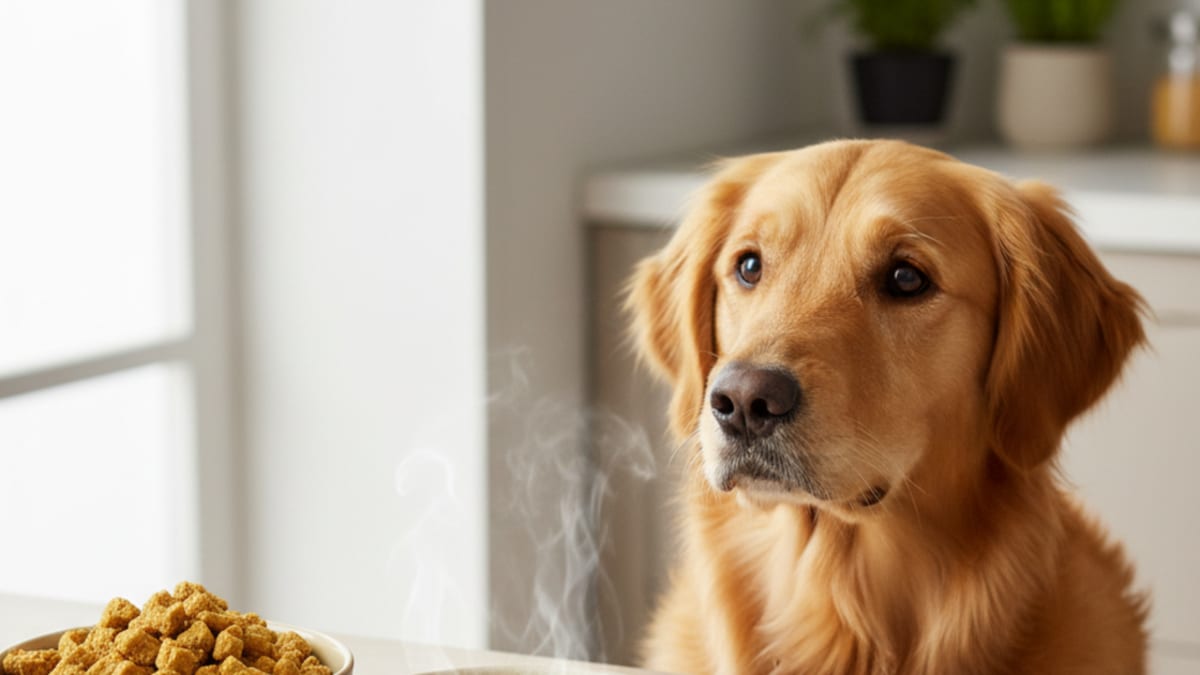
Dehydrated dog food is made by gently removing water from fresh ingredients, leaving a lightweight, shelf-stable product that you usually rehydrate with warm water before serving. It can be palatable and convenient, but it is not automatically healthier than other diets, so check for a complete-and-balanced statement, safe processing and calories per cup or gram.
Dehydrated food sits between kibble and fresh food. It is popular with owners who want less processed ingredients without freezer space or the hassle of cooking. But "dehydrated" covers a wide range of products, from complete diets to toppers, and the details matter. This guide explains what dehydrated dog food is, how it differs from air-dried and freeze-dried foods, the pros and cons, how to rehydrate and portion it, how to switch your dog safely and what to check on the label. Use the dog food calculator to find your dog's daily calories first.
Dehydrated dog food is made by warming ingredients at low temperatures to evaporate most of the water. The result is a light, dry product with a long shelf life. Some formulas are mixed with fruits, vegetables, grains and supplements to make a complete diet, while others are single-ingredient toppers or treats.
| Type | How it is made | Texture | Rehydration |
|---|---|---|---|
| Dehydrated | Warm air removes moisture | Dense, grainy or flaky | Usually needed, using warm water |
| Air-dried | Slow, gentle air drying, often at low heat | Jerky-like pieces | Optional, many dogs eat it dry |
| Freeze-dried | Frozen, then moisture removed under vacuum | Light, crunchy | Often rehydrated, quick to absorb |
| Kibble | Cooked and extruded at high heat | Hard pellets | None |
Different brands use these terms differently, so read the feeding instructions.
Follow the package, since ratios differ. A common starting point is about one part food to one to two parts warm water by volume.
A 15 kg (33 lb) neutered adult dog.
Weigh your dog every few weeks and adjust by about 10% if weight drifts. Always use the calories on your actual bag, because densities differ.
Contact your vet if your dog has vomiting, diarrhea, weight loss, itching or low energy after a diet change, or if you are considering a diet for a medical condition. For suspected poisoning, call the ASPCA Animal Poison Control Center at 888-426-4435 or the Pet Poison Helpline at 855-764-7661 (fees may apply).
Dehydrated dog food can be a convenient, palatable option when it is complete and balanced and safely processed. Rehydrate as directed, portion by calories rather than by scoop and monitor your dog's weight. Calculate your dog's needs with the dog food calculator before you buy.
General guidance on this topic from veterinary organizations. This guide is educational and written by a non-veterinarian; check with your own vet before changing your pet's food, medication or care. Editorial policy
Usually yes, following the package. Some air-dried products can be fed dry. Check the label.
A common starting point is one part food to one to two parts warm water, but follow your product's instructions.
Not automatically. It can be more palatable and less processed, but quality depends on whether it is complete and balanced and safely made.
No. Dehydrated uses warm air to remove moisture, while freeze-dried freezes the food and removes moisture under vacuum.
If it is made from raw ingredients without a kill step, it can. Choose products with documented pathogen control and handle them hygienically.
Not long. Follow the label, usually serve within an hour or two and refrigerate and discard leftovers promptly.
Set up separate feeding stations, measure each pet’s meals and monitor what they actually eat with a simple household routine.
3 min readSet up safe storage for dry pet food and opened wet food. Keep lot codes handy and learn what to do with leftovers and damaged packaging.
3 min readConvert cups to grams using your food’s own label. See worked examples, avoid scoop errors, and measure an existing feeding plan more consistently.
3 min read
