 PetCalcStudio

How to Feed Dogs and Cats Separately in a Shared Home
Set up separate feeding stations, measure each pet’s meals and monitor what they actually eat with a simple household routine.
3 min readCare guide
Instead of a blacklist that goes out of date, use nine red flags to judge any dog food brand: missing AAFCO statements, vague ingredients, no nutritionist, hidden calories, repeated recalls and more. Includes a simple scoring example and what to ask a company.
Educational information. Our editorial policy
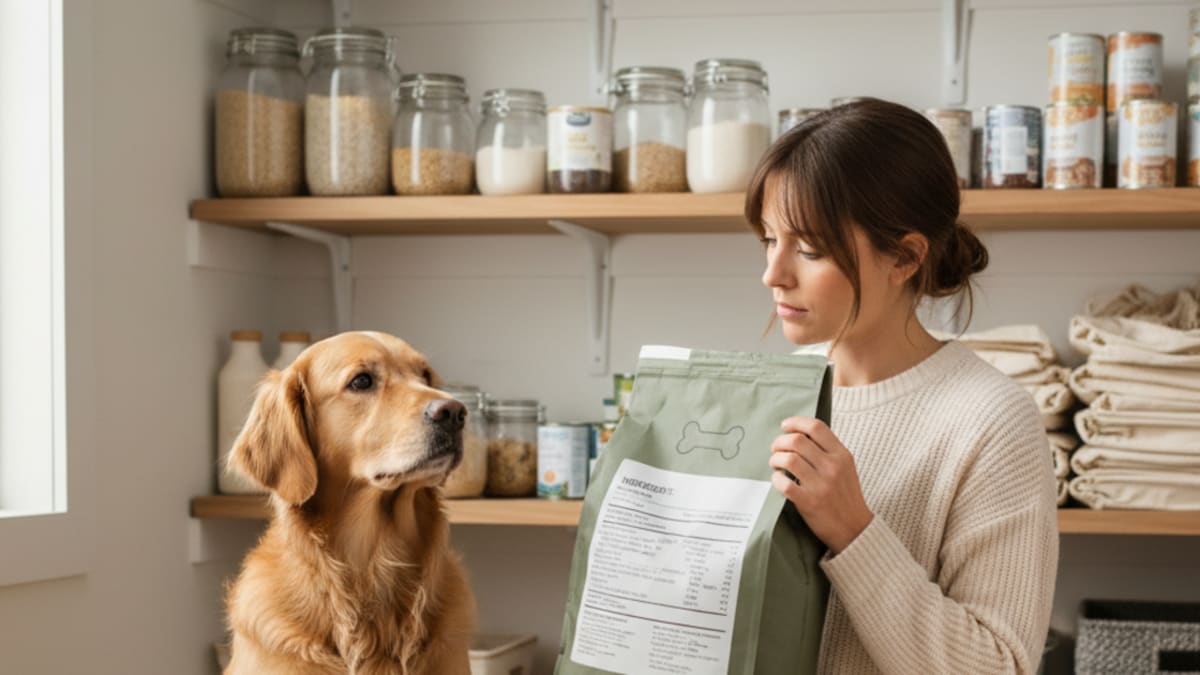
There is no single list of dog food brands to avoid, because formulas, ownership and recall records change. Instead, judge any food by nine red flags: no complete-and-balanced AAFCO statement, vague ingredients, no qualified nutritionist, missing calorie information, repeated recalls, unrealistic claims, no customer contact, extreme formulations and ingredients your dog reacts to.
Search results for "worst dog food brands" are full of confident rankings, but most are opinion, not evidence. A brand that was fine five years ago may have changed owners or recipes, and a "bad" brand for one dog may suit another. A more reliable approach is to teach yourself what a trustworthy dog food looks like and what warning signs to check. This guide walks through nine red flags, how to read the label, what to ask a manufacturer, a simple scoring example and what to do if your dog already seems unwell on a food. Use the dog food calculator to check portions once you choose.
Look for a nutritional adequacy statement from AAFCO, such as "formulated to meet the nutritional levels established by the AAFCO Dog Food Nutrient Profiles for adult maintenance" or a statement that the food was proven in feeding trials. If the label says "for intermittent or supplemental feeding only," it is not meant to be a sole diet. A food with no statement at all should not be your dog's main food.
A food made for adult maintenance may not meet the needs of a growing puppy, and a regular puppy food can be a poor fit for a large-breed pup. Choose a food that matches your dog's life stage, size and health needs.
Ingredient lists should name the animal source. Be cautious with:
Not all by-products are bad, but you should know what you are feeding, and vague wording can hide inconsistent sourcing.
Reputable companies employ a board-certified veterinary nutritionist or a PhD animal nutritionist, formulate recipes to meet AAFCO profiles and may run feeding trials. If a company will not tell you who formulates its food, treat that as a warning.
A trustworthy label lists calories (kcal) per cup, can or kilogram. Without it you cannot portion accurately, and overfeeding is one of the most common problems in dogs. If you cannot find it on the bag, check the website or ask the company.
One recall does not make a brand unsafe. What matters is how often they happen, what caused them and how the company responded. Check the FDA recall page for the brand name and look for repeated problems such as contamination, vitamin or mineral toxicity or poor communication.
Be skeptical of marketing words with no standard meaning, such as "premium," "holistic" and "superfood," and of claims to cure or prevent diseases. Claims like "human-grade" have specific meanings and should be backed up. Terms like "natural" are defined narrowly by AAFCO, and do not guarantee better quality.
Diets based on exotic proteins, very high legume content, or trendy "boutique" recipes may lack testing. The FDA has investigated reports of dilated cardiomyopathy in dogs eating certain grain-free diets heavy in legumes and potatoes, although the cause is still under study. Be cautious with extreme diets, such as very low protein, very high fat or unbalanced raw or vegan formulas without nutritionist oversight.
A responsible company provides contact details, answers questions about sourcing, quality control and nutrient analysis and shares data on request. If you cannot get a straight answer, move on.
The World Small Animal Veterinary Association recommends asking these types of questions:
A good company will answer clearly. Evasive replies are a warning.
Imagine you are comparing two bags for an adult 20 kg dog. Give one point for each red flag the food avoids.
| Check | Food X | Food Y |
|---|---|---|
| AAFCO adult maintenance statement | Yes | No statement |
| Named protein first | Yes | "Meat meal" |
| Qualified nutritionist | Yes | Unknown |
| Calories listed | Yes | No |
| Recall pattern | None recent | Two recent |
| Clear contact and answers | Yes | No reply |
| Realistic marketing | Yes | "Miracle superfood" |
| Not extreme formulation | Yes | Very high legume |
| Dog tolerates well | Yes | Not tested |
| Score out of 9 | 9 | 0-1 |
Food X is a better choice. Then confirm portions: a 20 kg neutered adult needs about 70 × 20^0.75 × 1.6, or roughly 1,060 kcal per day. At 3,800 kcal per kg, that is about 279 g daily. If Food X had no calorie information, you could not do this calculation, and that alone would be a reason to ask the company for it.
Do not judge a food by one ingredient. Corn, by-products and grains are not automatically bad. Look at the overall nutrition, digestibility, how your dog does on it and whether the company can explain its choices. Watch for artificial colors, which dogs do not need, and for ingredients your dog is known to react to.
If you see these, talk to your vet before switching again. Many symptoms have causes besides food.
Contact your vet for vomiting, diarrhea, lethargy, refusal to eat, drinking or urinating more than usual, or weight changes. Seek urgent care for repeated vomiting, bloody stool, collapse or seizures. For suspected poisoning, call the ASPCA Animal Poison Control Center at 888-426-4435 or the Pet Poison Helpline at 855-764-7661 (fees may apply).
Skip blacklists and judge each food by evidence: a complete-and-balanced statement, a qualified nutritionist, clear ingredients, calories listed, an acceptable recall record and honest answers. Once you pick a food, measure portions with the dog food calculator and monitor your dog's weight, stool and coat.
General guidance on this topic from veterinary organizations. This guide is educational and written by a non-veterinarian; check with your own vet before changing your pet's food, medication or care. Editorial policy
No reliable single list exists because recipes, owners and recall histories change. Use red flags such as no AAFCO statement, vague ingredients and no nutritionist to judge any brand.
Look for an AAFCO nutritional adequacy statement for your dog's life stage on the label.
Not automatically. Judge the whole food, its testing, its nutritionist oversight and how your dog does on it.
Search the FDA's pet food recall listings for the brand and look at how often recalls occurred and how the company responded.
Ask about nutritionist credentials, who formulates the food, quality control, testing and calorie content.
Not inherently, but the FDA has investigated a possible link between some grain-free, legume-heavy diets and heart disease. Choose a complete-and-balanced food and ask your vet.
Set up separate feeding stations, measure each pet’s meals and monitor what they actually eat with a simple household routine.
3 min readSet up safe storage for dry pet food and opened wet food. Keep lot codes handy and learn what to do with leftovers and damaged packaging.
3 min readConvert cups to grams using your food’s own label. See worked examples, avoid scoop errors, and measure an existing feeding plan more consistently.
3 min read
