 PetCalcStudio

How to Introduce Two Cats at Their Own Pace
Prepare a separate room, swap scent, introduce through a barrier and learn when to slow down if either cat shows tension.
2 min readCare guide
A professional dog dental cleaning under anesthesia typically costs about $300 to $800, and $1,000 to $2,500 or more when extractions are needed. Here is what is included and how to keep costs down.
Educational information. Our editorial policy
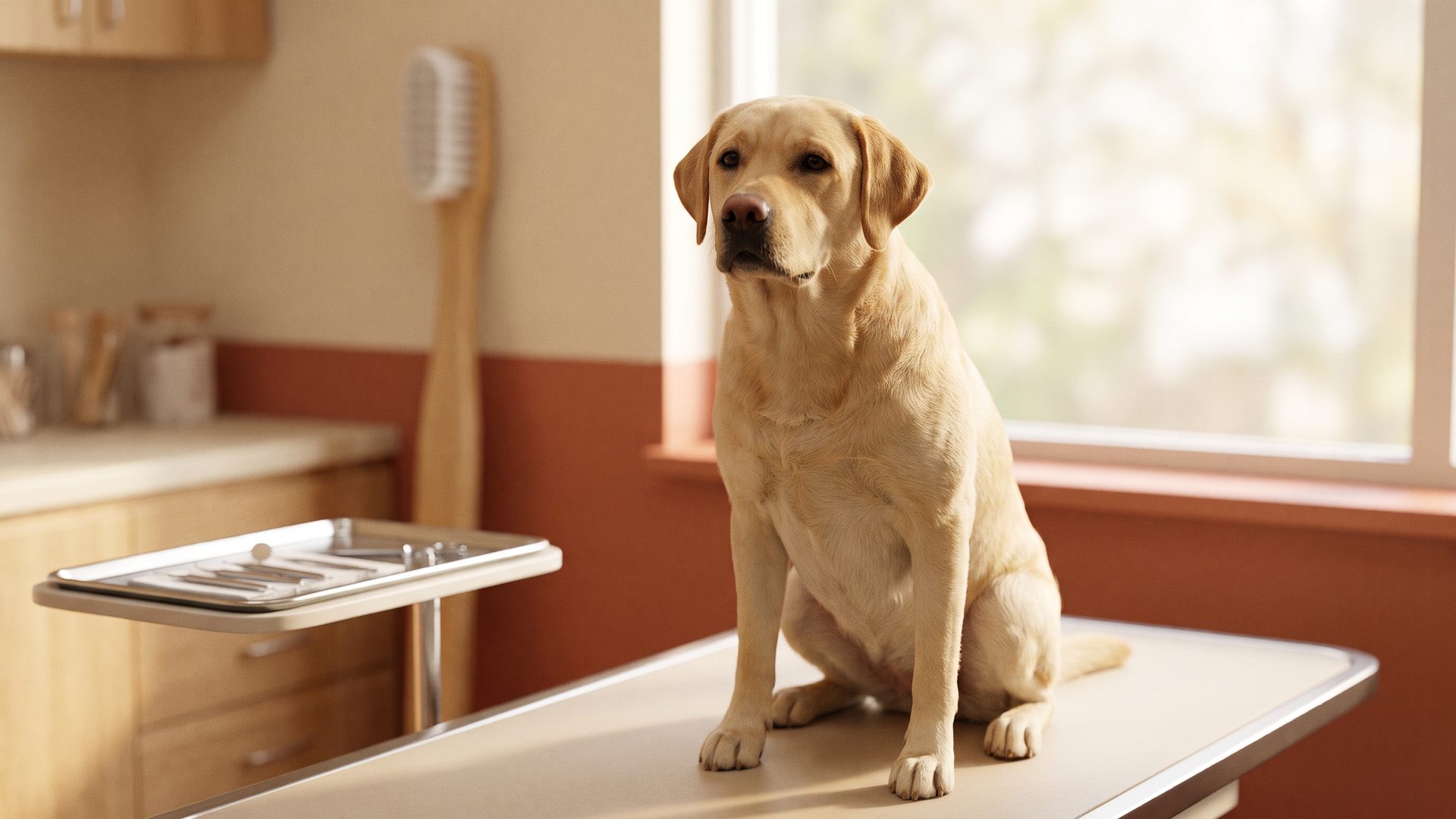
A professional dog teeth cleaning under anesthesia typically costs about $300 to $800 in the US. If your vet finds diseased teeth that need extractions, the total commonly rises to $1,000 to $2,500 or more. These are ballpark figures, not quotes. Prices depend on your dog's size, the clinic, your region and what the exam finds once your dog is under anesthesia.
| Service | Typical US range |
|---|---|
| Dental exam | About $50 to $100 |
| Pre-anesthetic bloodwork | About $75 to $200 |
| Cleaning under anesthesia, no extractions | About $300 to $800 |
| Dental X-rays | About $75 to $250 |
| Simple extraction (per tooth) | About $50 to $200 |
| Surgical extraction (per tooth) | About $150 to $500 or more |
| Full cleaning with multiple extractions | About $1,000 to $2,500 or more |
| Antibiotics and pain medication | About $20 to $100 |
Ranges are typical US estimates and vary widely by region and clinic.
A proper veterinary dental cleaning is more than scraping tartar. It usually includes:
Ask which of these are included in your quote. A very low price may leave out X-rays or pain medication.
Some groomers and mobile services offer "anesthesia-free" cleanings. The American Veterinary Dental College and the AVMA do not support non-anesthetic dental scaling as a substitute for a veterinary cleaning, because it cannot clean below the gumline, cannot allow X-rays and can be stressful for dogs. It can make teeth look cleaner while disease continues underneath. Compare estimates for proper veterinary care instead.
Most adult dogs develop some dental disease. Plaque turns into tartar, and bacteria cause gum inflammation and infection. Left untreated, it can cause pain, tooth loss and infection. Bad breath, red or bleeding gums, drooling, dropping food, pawing at the mouth or reluctance to chew are signs to book an exam. This is general education, not veterinary advice, and your vet can assess your dog.
Our vet cost estimator helps estimate yearly vet spending, and our How much does a vet visit cost in 2026? guide covers exam fees.
Many standard policies cover dental injuries and disease but not routine cleanings. Some wellness plans reimburse part of the cleaning cost. Pre-existing dental disease may be excluded. Read the policy terms and see is pet insurance worth it.
Do not wait for a yearly exam if you notice persistent bad breath, yellow or brown tartar, red or bleeding gums, loose or broken teeth, drooling, dropping food, chewing on one side or pawing at the face. Some dogs hide pain well, so subtle changes such as eating more slowly or avoiding hard treats can matter. A prompt exam is often cheaper than waiting until a tooth needs extraction.
Your vet may grade dental disease on a scale from mild to severe and recommend a treatment plan. Ask them to explain the stage, what treatment is needed now and what can be monitored. If you are quoted a large treatment plan, it is reasonable to ask for an itemized estimate and, if you wish, a second opinion.
Daily brushing with a dog-safe toothpaste is the gold standard. Never use human toothpaste, which often contains fluoride or xylitol. Dental chews and diets carrying the VOHC seal can help slow plaque and tartar, but they do not replace brushing or professional care. Avoid very hard chews such as antlers, bones and hard nylon, which can fracture teeth and lead to expensive repairs.
Small dogs and flat-faced breeds are especially prone to dental disease because of crowded teeth, so they often need cleanings earlier. Large dogs cost more per procedure but may need them less often. Ask your vet how often your dog should be checked.
Swap experiences with other owners on the PawTalk health forum.
This guide is general education from the PetCalcStudio team, not veterinary or financial advice. Cost ranges are typical US ballparks for 2026 and vary by region, clinic and provider, so confirm with local quotes. Sources: the AVMA, the American Veterinary Dental College and published clinic pricing ranges.
A professional cleaning under anesthesia typically costs about $300 to $800 without extractions. With extractions it can reach $1,000 to $2,500 or more.
It requires anesthesia, monitoring, scaling, polishing, often X-rays and a trained team. Extractions and medication add cost.
Veterinary dental organizations do not recommend it as a substitute for a veterinary cleaning, because it cannot treat disease below the gumline or allow X-rays.
It depends on the dog. Many need one every year or two, and small breeds often earlier. Your vet can advise after an exam.
Usually not routine cleanings, though some wellness add-ons may. Dental disease and injuries may be covered under some policies, but pre-existing conditions are often excluded.
Brush regularly, book exams early, ask for written estimates, watch for February dental promotions and ask about payment plans.
Prepare a separate room, swap scent, introduce through a barrier and learn when to slow down if either cat shows tension.
2 min readCreate an indoor setup your cat can explore, with safe hiding spots, scratching surfaces, supervised play and options for smaller homes.
3 min readTry a calm, dog-led walk with safe sniffing stops. Choose a route, use a comfortable pace and adapt the outing for your dog.
3 min read
