 PetCalcStudio

How to Feed Dogs and Cats Separately in a Shared Home
Set up separate feeding stations, measure each pet’s meals and monitor what they actually eat with a simple household routine.
3 min readCare guide
Hairball formulas promise fewer hacked-up hairballs, but do they deliver? Learn how fiber-based hairball control cat food works, who benefits most, how grooming and hydration matter, how to portion it and the vomiting signs that point to a vet visit instead.
Educational information. Our editorial policy
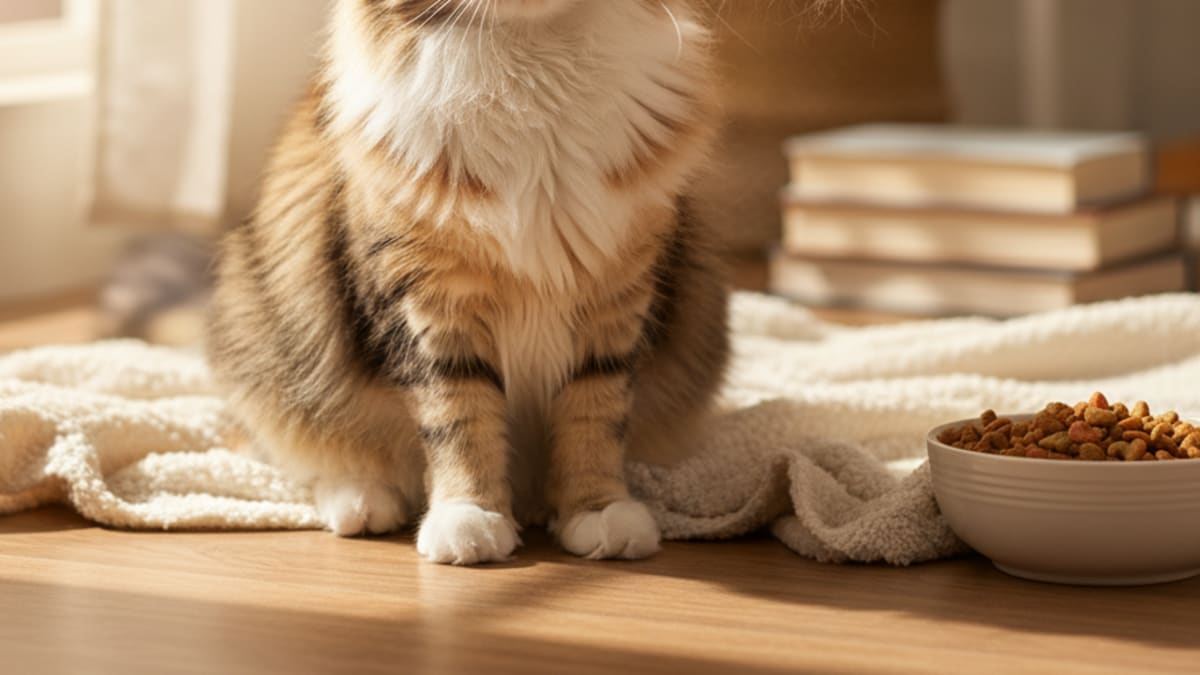
Hairball control cat food can help some cats pass swallowed hair through the gut instead of coughing it up, mainly by adding fiber that carries hair along in the stool. It works best alongside regular brushing and good hydration, and it is not a cure for frequent vomiting, which needs a vet.
Most cat owners have stepped on a damp surprise in the middle of the night. Cats groom constantly, swallow loose hair and normally pass most of it in their stool. A smaller amount can clump in the stomach and come back up as a hairball. Pet food companies sell special formulas to reduce that, and many owners swear by them, but the evidence is modest and results vary by cat. This guide explains how hairball control cat food works, who benefits, what to look for on the label, how to feed it, what else helps and when vomiting is a sign of something more serious. To portion any cat food correctly, use the cat food calculator.
A hairball (trichobezoar) is a cylindrical wad of hair mixed with saliva and stomach contents. Despite the name, it is usually tube-shaped because it passes through the narrow esophagus on the way out. Cats swallow hair from grooming, since the tiny barbs on their tongue pull loose fur into the mouth. Most of it moves through the intestines and leaves in the litter box.
Manufacturers use a few strategies, often in combination.
| Approach | How it is thought to help |
|---|---|
| Added insoluble fiber (cellulose, beet pulp, psyllium, pea fiber) | Adds bulk and speeds intestinal transit so hair leaves in the stool |
| Higher overall fiber content | Increases stool volume and motility |
| Omega-3 and omega-6 fatty acids | Support skin and coat health, which may reduce shedding |
| Highly digestible protein | Helps healthy skin and coat |
| Lubricating oils or gels (in supplements and treats) | Coat hair to help it slide through |
| Kibble shape or texture | Some brands claim mild brushing action, though evidence is limited |
In studies, diets with added fiber have been shown to increase the amount of hair passed in feces and reduce hairball formation in some cats. The effect is real but modest, and cats differ a lot.
Dry hairball formulas are the most common because they are easy to make and feed. Wet versions exist and offer extra hydration, which helps hair move through the gut. Many vets like a mix, such as wet food for meals plus a measured amount of dry.
A 4.5 kg (10 lb) neutered indoor adult cat.
Use the cat calorie calculator to double-check your cat's daily needs.
Food is only one part of the picture.
Occasional hairballs, perhaps once every week or two, are usually normal for cats. A cat that coughs one up and then eats, plays and acts normally is likely fine. More frequent hairballs can signal overgrooming, a heavy shed or a digestive issue.
Many cats vomit for reasons that have nothing to do with hair, and "hairballs" are sometimes blamed for other illnesses. Contact your vet if you see:
A cat repeatedly trying to bring up a hairball without success, or that stops eating, may have an intestinal blockage, which is an emergency. Conditions like inflammatory bowel disease, food sensitivities, hyperthyroidism, kidney disease and intestinal lymphoma can all cause chronic vomiting, so persistent vomiting should never be dismissed as a hairball problem.
Kittens need growth formulas, not hairball formulas, unless a vet recommends otherwise. Senior cats may benefit from added fiber, but sudden changes in vomiting or weight in older cats deserve a vet check rather than a food swap.
Give a new formula at least 3-4 weeks while keeping up brushing. If hairballs are not reduced, or if vomiting continues, talk to your vet before trying more products.
Call your vet for frequent vomiting, repeated unproductive retching, appetite loss, lethargy, constipation, sudden weight changes or any sign of pain. Go to an emergency clinic if your cat is retching without producing anything, has a hard swollen belly, is crying out or is unable to pass stool.
Hairball control cat food can reduce hairballs for some cats by adding fiber that moves hair through the gut, but brushing, hydration and a vet check for frequent vomiting matter just as much. Portion it carefully with the cat food calculator.
General guidance on this topic from veterinary organizations. This guide is educational and written by a non-veterinarian; check with your own vet before changing your pet's food, medication or care. Editorial policy
It helps some cats by adding fiber that carries swallowed hair through the gut, but results are modest and vary. Brushing and hydration help as well.
Mostly through extra insoluble fiber that speeds transit and helps hair leave in the stool, often with omega fatty acids for coat health.
An occasional hairball every week or two can be normal. Frequent vomiting needs a vet check.
Either can work. Wet food adds moisture that helps digestion, and many vets like a mix.
Kittens usually need a growth formula. Ask your vet before using a hairball diet.
If your cat vomits often without hair, retches without producing anything, stops eating, is lethargic or constipated, see a vet.
Set up separate feeding stations, measure each pet’s meals and monitor what they actually eat with a simple household routine.
3 min readSet up safe storage for dry pet food and opened wet food. Keep lot codes handy and learn what to do with leftovers and damaged packaging.
3 min readConvert cups to grams using your food’s own label. See worked examples, avoid scoop errors, and measure an existing feeding plan more consistently.
3 min read
