 PetCalcStudio

Senior Pet Vet Visit Checklist for Dogs and Cats
Prepare for a senior pet checkup with a simple record of mobility, appetite, weight, medications and questions for your veterinary team.
3 min readCare guide
Plan winter walks using weather, coat, health and your dog’s response. Understand why a temperature chart cannot guarantee safety and when to seek veterinary help.
Educational information. Updated . Our editorial policy
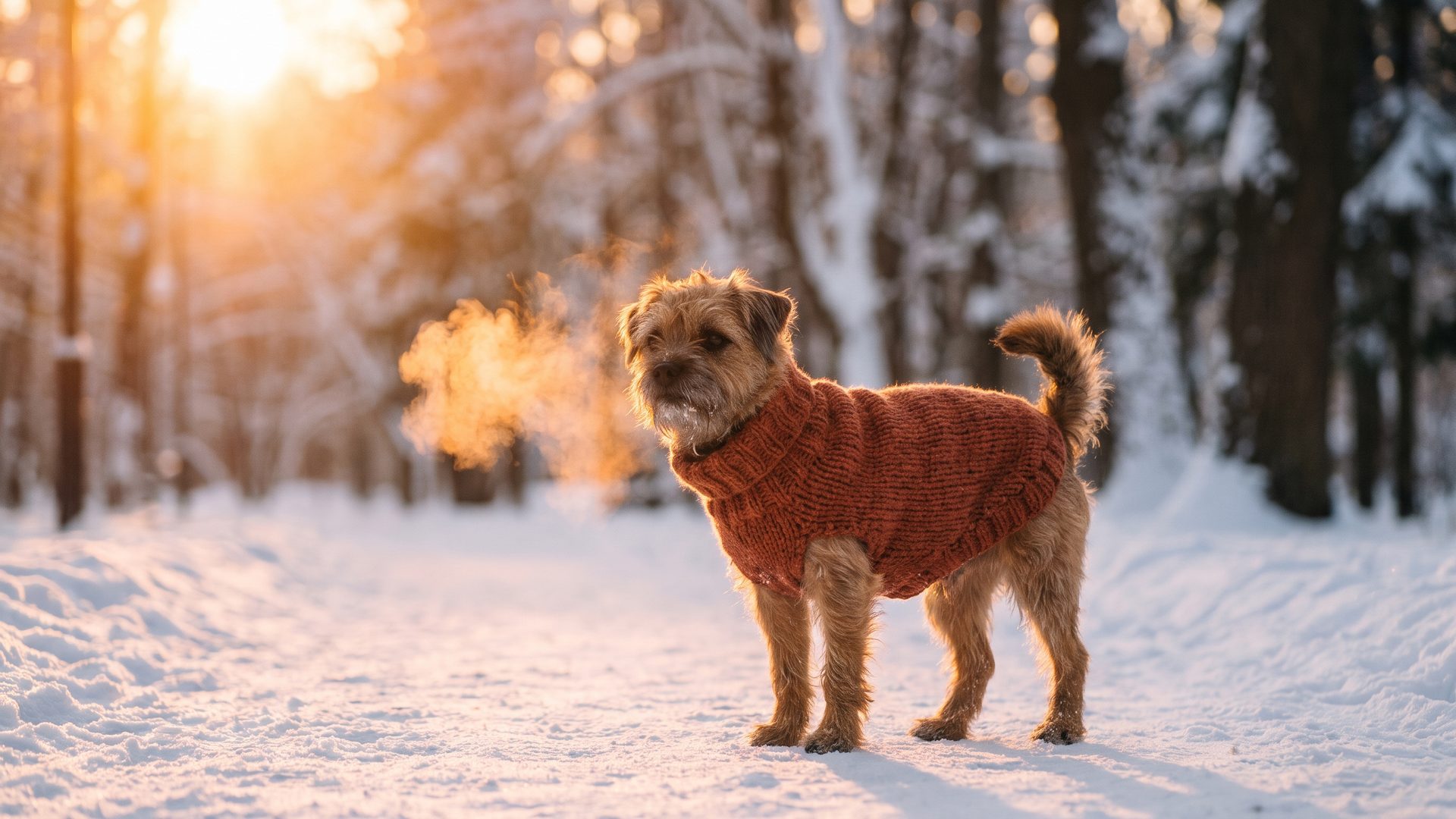
A temperature alone cannot guarantee a safe walk. Your dog’s health, coat, age and response matter, as do wet conditions, wind and exposure time. A thick coat does not make a dog immune to cold injury.
AAHA advises limiting exposure in extreme cold and watching individual pets closely. Small, short-coated and older animals can be especially sensitive. Its guidance does not provide a universal number of safe minutes for each breed or temperature.
| Celsius | Fahrenheit | What the conversion tells you |
|---|---|---|
| 10°C | 50°F | The same air temperature in two units |
| 5°C | 41°F | The same air temperature in two units |
| 0°C | 32°F | The freezing point of water, not a safe-walk guarantee |
| −5°C | 23°F | A unit conversion, not an allowed exposure time |
Use °F = (°C × 9/5) + 32 to read a forecast in the units you know. Do not turn the table into a green-light system for a walk. A route with sheltered ground and an easy return is different from an exposed route far from home.
Check the actual forecast and surface conditions. Choose a route where you can return early, and agree with anyone walking the dog that the route can be shortened. A planned distance is optional; the dog’s condition takes priority.
Discuss individual restrictions with your veterinary team, especially for a dog with health or mobility concerns. AAHA’s senior-pet guidance notes winter mobility issues and suggests indoor enrichment when outdoor activity is difficult.
Shivering, weakness or unusual lethargy are concerning signs in cold exposure. Go indoors and contact a veterinarian promptly if you suspect hypothermia or frostbite. Do not wait to finish the route or a calculator’s suggested exercise target.
AAHA recommends suitable protective clothing where needed and cleaning salt, ice and debris from paws after walks. Clothing does not establish a guaranteed safe exposure time.
Write two versions of the day’s routine: an outdoor plan and a shorter outing with indoor activity. Use familiar games or training that suit your dog’s abilities. Keep a record of how the dog manages each outing so you can describe concerns clearly at a veterinary appointment.
Our walking calculator is an activity-planning aid. It does not assess the safety of a particular winter route. Reducing outdoor time when conditions demand it is more important than meeting an estimated distance.
Keep those answers with your walking notes. This gives the person holding the leash a useful individual plan instead of a generic breed-and-temperature chart.
Sources checked 2026-11-20. Written by Heromedia for PetCalcStudio. This is an editorial source check, not an independent veterinary review. Worked examples are illustrative and do not establish an individual pet’s needs.
Checked against the sources below by the editorial team. This is not an independent veterinary review.
Prepare for a senior pet checkup with a simple record of mobility, appetite, weight, medications and questions for your veterinary team.
3 min readThe 7-year rule was never based on biology. Learn the DNA methylation formula vets now use to convert your dog or cat's age into accurate human-year equivalents — adjusted for breed size and life stage.
7 min readPoinsettias are usually only mildly irritating to pets, but other holiday plants are far worse. Here is which plants to keep, which to move, and what to do if your pet chews one.
6 min read
