 PetCalcStudio

How to Introduce Two Cats at Their Own Pace
Prepare a separate room, swap scent, introduce through a barrier and learn when to slow down if either cat shows tension.
2 min readCare guide
Most kittens take to a litter box naturally. Start around 3-4 weeks, use a low-sided box with soft unscented litter, place it in a quiet spot, put the kitten in after meals and naps, praise success and clean accidents with an enzyme cleaner. Never punish accidents.
Educational information. Our editorial policy
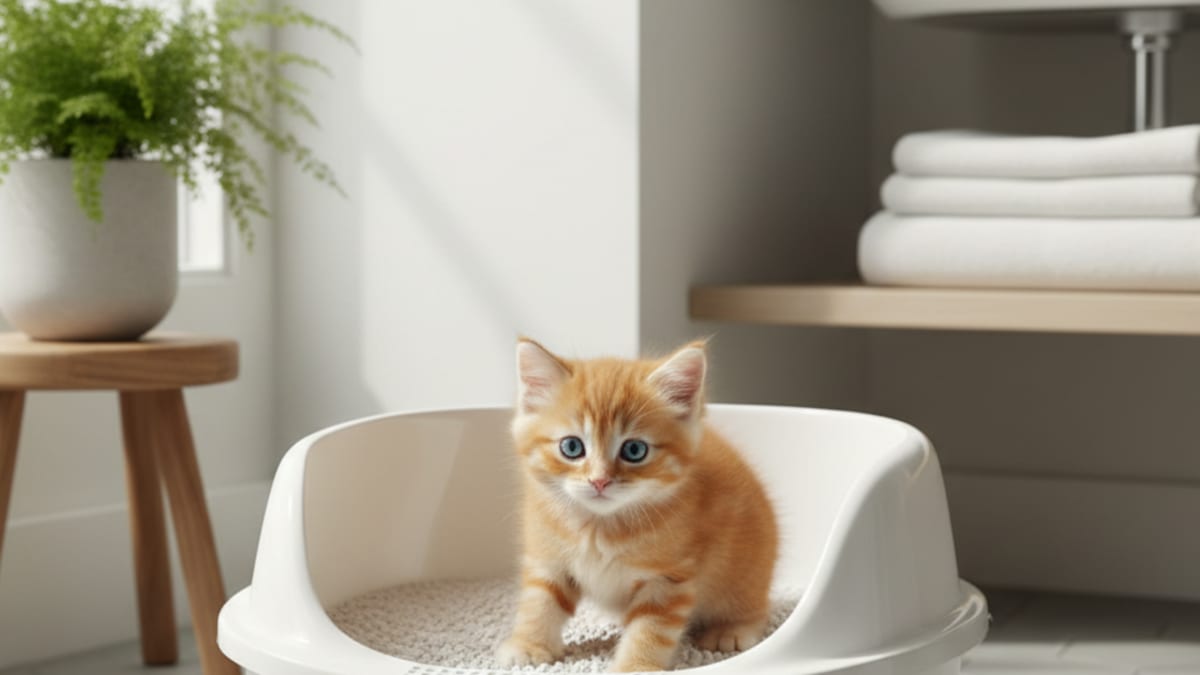
Most kittens take to a litter box naturally. Start around 3-4 weeks, use a low-sided box with soft, unscented litter, put it in a quiet spot, place the kitten in it after meals and naps, praise success and clean accidents with an enzyme cleaner. Never punish accidents.
Cats instinctively dig and bury, so litter training is mostly about making the right spot easy and appealing, and then staying consistent. Problems usually come from the wrong box, the wrong litter, a bad location or a health issue, not from a "naughty" kitten. This guide walks through the five steps, a daily schedule, how to handle accidents, how many boxes you need, troubleshooting and when a vet should look. Plan your cleaning schedule with the litter box calculator.
Choose a quiet, easy-to-reach location away from food and water bowls and from noisy appliances such as washing machines. For a new kitten, keep the box in the room where your kitten spends time, and add extra boxes in other areas as their territory grows. A common rule is one box per cat plus one extra.
For a 10-week-old kitten eating 3 meals a day:
That's about 7-9 chances a day, which quickly builds the habit. Meal portions for your kitten are on the cat feeding chart.
One per cat plus one extra, in different locations. Kittens who have to travel far will have accidents. Put a box on each floor of the house.
Call if your kitten strains without producing urine (an emergency, especially in males), cries in the box, has blood in urine or stool, constant diarrhea or constipation, or suddenly stops using the box.
Usually around 3-4 weeks old, when kittens begin exploring and can walk steadily into a low box.
Unscented, soft litter. For very young kittens that might eat it, use non-clumping or paper pellets.
Many kittens pick it up in days to a couple of weeks; some need longer.
Possible causes include a dirty box, a bad location, a litter change, stress or a urinary problem. Check with your vet if it continues.
Prepare a separate room, swap scent, introduce through a barrier and learn when to slow down if either cat shows tension.
2 min readCreate an indoor setup your cat can explore, with safe hiding spots, scratching surfaces, supervised play and options for smaller homes.
3 min readTry a calm, dog-led walk with safe sniffing stops. Choose a route, use a comfortable pace and adapt the outing for your dog.
3 min read
