 PetCalcStudio

How to Introduce Two Cats at Their Own Pace
Prepare a separate room, swap scent, introduce through a barrier and learn when to slow down if either cat shows tension.
2 min readCare guide
A complete first-year plan for new kitten owners: what to buy, how to feed, how to litter train, vaccine and vet timing, socialization, play, kitten-proofing, spay or neuter, and what the first year really costs.
Educational information. Our editorial policy
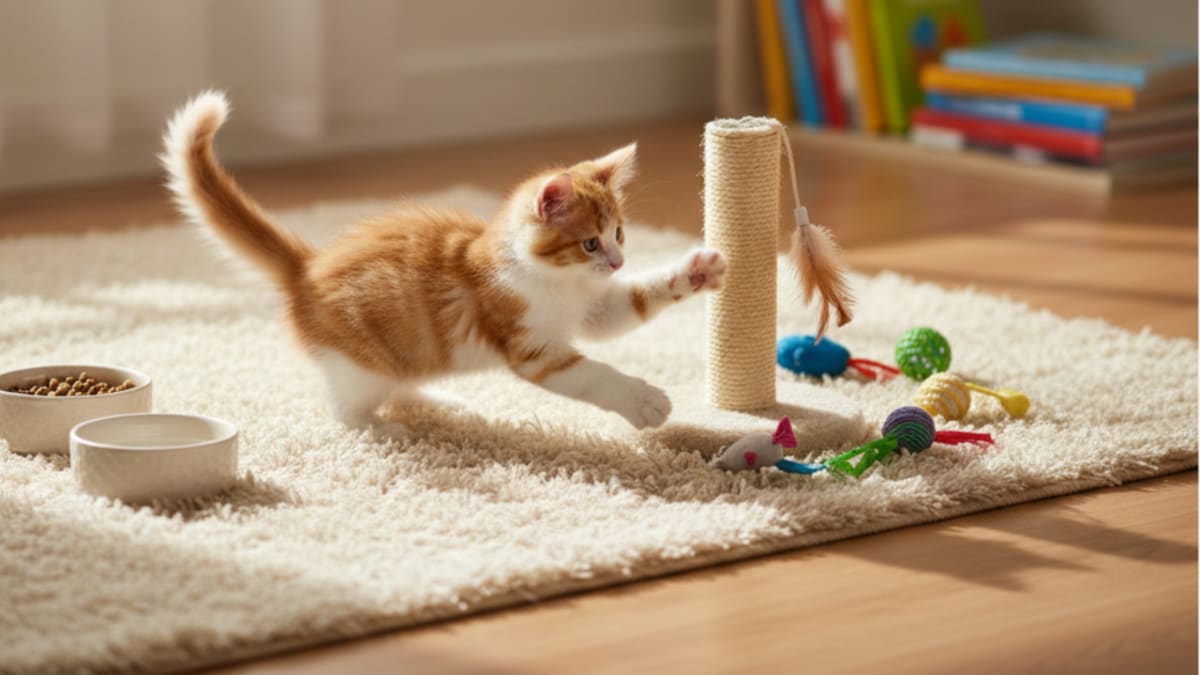
To take care of a kitten, provide a warm safe space, kitten food in small frequent meals, a clean litter box, vet visits for vaccines, deworming and spay or neuter, daily play and gentle socialization. Kitten-proof your home, keep toxic items out of reach and watch for signs of illness, because kittens decline quickly.
Bringing home a kitten is exciting and a little overwhelming. Kittens grow from tiny, fragile babies into confident adolescents in about a year, and what you do in that window shapes their health and behavior for life. This guide gives you a practical first-year plan: what to buy, how to set up your home, feeding, litter training, vet care, socialization, play, grooming, safety and costs. Use the cat cost calculator to plan your budget.
For the first few days, keep your kitten in one small, quiet room with food, water, litter, a bed and toys. This prevents overwhelm and makes it easy to monitor eating and litter habits. Expand access gradually as your kitten gains confidence.
Kittens need more calories, protein and fat than adult cats. Choose a food labeled complete and balanced for growth or all life stages.
| Age | Meals per day | Notes |
|---|---|---|
| 4-8 weeks | 4 | Wet or softened food, transitioning from mother's milk or formula |
| 8-12 weeks | 3-4 | Wet and dry kitten food |
| 3-6 months | 3 | Gradually fewer meals |
| 6-12 months | 2-3 | Continue kitten food, plan transition near 12 months |
Provide fresh water at all times. Do not feed cow's milk, which can cause diarrhea. Keep treats to under 10% of daily calories.
A 1.2 kg (2.6 lb) kitten.
Use the cat feeding chart to match meals to your kitten's weight.
Most kittens already know what a litter box is. Show them the box after meals, naps and play, and praise success.
Schedule a vet visit within the first few days to check health, test for parasites and plan vaccines.
| Age | Typical care |
|---|---|
| 6-8 weeks | First FVRCP vaccine, deworming, exam |
| 10-12 weeks | FVRCP booster, FeLV vaccine if recommended |
| 12-16 weeks | Final FVRCP booster, rabies |
| 4-6 months | Spay or neuter, microchip |
| 1 year | Annual exam and boosters |
Ask your vet about flea, tick and parasite prevention that is safe for kittens, since many products have age and weight limits. Keep new kittens separate from resident cats until a vet clears them.
Between about 2 and 9 weeks of age, kittens are most open to new experiences, and socialization continues for months.
Kittens sleep 16-20 hours a day. Give them a warm, quiet place to rest, and let them nap undisturbed.
Many vets recommend spaying or neutering at about 4-6 months, and some shelters do it earlier at about 8 weeks and 2 lb. It prevents unwanted litters, reduces spraying and roaming and has health benefits. Calories needs often drop after surgery, so monitor weight.
Go slowly. Keep the kitten in a separate room at first, swap scents with bedding, then allow short supervised visits through a barrier. Never force interactions. Keep supplies separate to start, and give each pet a safe retreat.
Illustrative costs, which vary by location.
| Item | Estimated cost |
|---|---|
| Adoption fee | $100 |
| Vaccines and exams | $200 |
| Spay or neuter | $150 |
| Microchip | $40 |
| Food | $300 |
| Litter | $180 |
| Supplies (bed, carrier, posts, bowls) | $200 |
| Toys and enrichment | $60 |
| Parasite prevention | $120 |
| Total | $1,350 |
Plan your own budget with the cat cost calculator.
Kittens can deteriorate fast. Watch for:
Call your vet promptly for any of these signs, and go to an emergency clinic for trouble breathing, collapse, repeated vomiting, a swallowed string or toxin or a male kitten straining to urinate. For suspected poisoning, call the ASPCA Animal Poison Control Center at 888-426-4435 or the Pet Poison Helpline at 855-764-7661 (fees may apply).
Kitten care comes down to safety, nutrition, vet care, socialization and play. Set up a safe space, feed small frequent meals, keep up with vaccines and spay or neuter and enjoy your kitten's growth. Budget with the cat cost calculator.
Newborns need warmth, kitten milk replacer fed every 2-3 hours and help to urinate and defecate. Contact a vet or rescue right away for guidance.
Three to four small meals a day for kittens under about 6 months, then two to three.
Typically FVRCP from 6-8 weeks, boosters every 3-4 weeks to 16 weeks and rabies at 12-16 weeks.
Show the box after meals and naps, use unscented litter, keep it clean and never punish accidents.
Lilies, many houseplants, human medications, chocolate, onions, garlic, grapes, xylitol and some cleaners.
Often around $1,000-$1,500 depending on location and adoption costs. Use a cost calculator to plan.
Prepare a separate room, swap scent, introduce through a barrier and learn when to slow down if either cat shows tension.
2 min readCreate an indoor setup your cat can explore, with safe hiding spots, scratching surfaces, supervised play and options for smaller homes.
3 min readTry a calm, dog-led walk with safe sniffing stops. Choose a route, use a comfortable pace and adapt the outing for your dog.
3 min read
