 PetCalcStudio

How to Feed Dogs and Cats Separately in a Shared Home
Set up separate feeding stations, measure each pet’s meals and monitor what they actually eat with a simple household routine.
3 min readCare guide
Hypoallergenic cat food uses hydrolyzed or novel proteins to avoid triggering the immune system. It is used for diagnosed food allergies, and it only works when the trial is strict and supervised by your vet.
Educational information. Our editorial policy
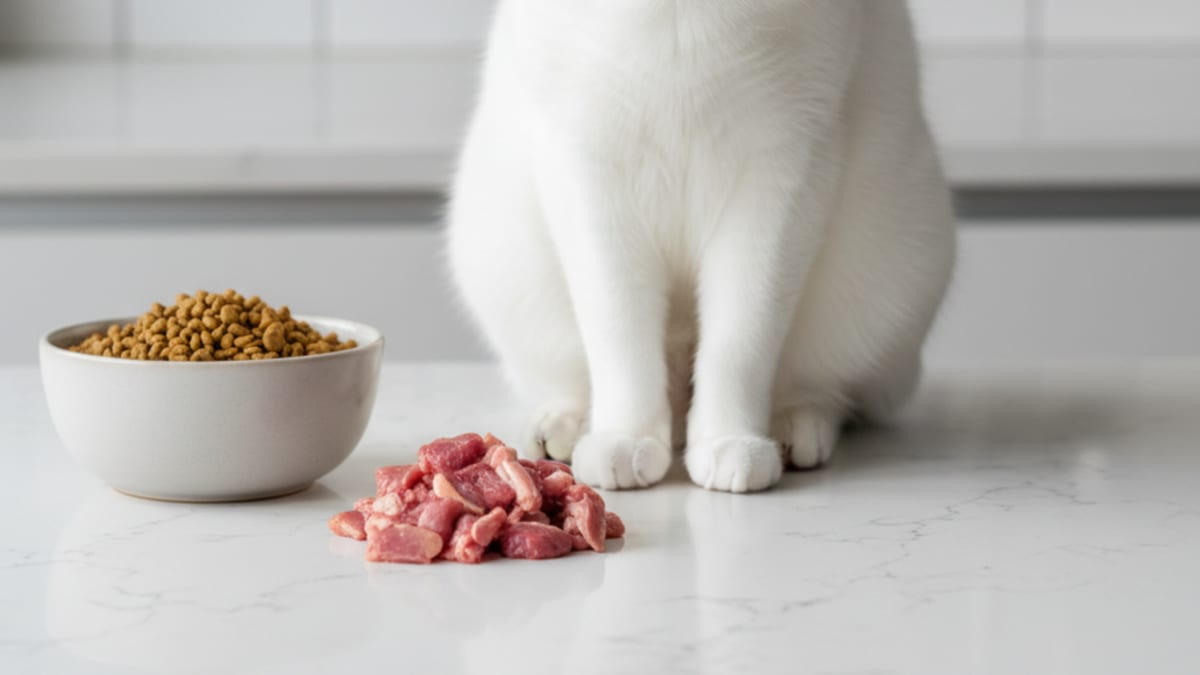
Hypoallergenic cat food uses hydrolyzed proteins (broken into tiny pieces the immune system does not recognize) or a novel protein your cat has never eaten, to avoid triggering a food allergy. It is used in a strict 8-12 week trial under veterinary guidance, not as a general upgrade for healthy cats.
When a cat has constant itching, over-grooming, skin sores or chronic vomiting and diarrhea, a food allergy or intolerance may be one of the possible causes. A "hypoallergenic" diet is the main tool for finding out. This guide explains how food allergies show up in cats, how these diets work, the difference between hydrolyzed and novel-protein foods, how to run a proper food trial, what can go wrong, how to portion the food and what happens after the trial. Use the cat food calculator to set your cat's daily calories before you start.
A food allergy is an immune reaction to a specific ingredient, almost always a protein. The most commonly reported triggers in cats are beef, fish, dairy and chicken. Symptoms can include:
Many of these signs also occur with fleas, environmental allergies and infections, so a vet should rule out other causes first. Food allergy is thought to be a minority of itchy-cat cases, and environmental allergy and flea allergy are more common.
| Feature | Food allergy | Food intolerance |
|---|---|---|
| Mechanism | Immune reaction to a protein | Digestive reaction, not immune-mediated |
| Typical signs | Itching, skin lesions, ear infections, sometimes GI signs | Vomiting, diarrhea, gas |
| Onset | Can develop after months or years of eating the same food | Often soon after eating the ingredient |
| Diagnosis | Elimination diet trial | Elimination diet trial |
Both are managed by identifying and avoiding the trigger, which is why the trial is the same.
The protein is broken into very small fragments by a process called hydrolysis. The immune system generally does not recognize the fragments as allergens. These diets are typically prescription, and are often the vet's first choice for a food trial.
These use a protein your cat has not eaten before, for example duck, rabbit, venison or kangaroo, usually with a limited ingredient list. They work only if the protein is truly new to your cat, so the history of what your cat has eaten matters.
Labels like "limited ingredient" or "sensitive" are not regulated the same way as prescription diets. Some are cross-contaminated with other proteins, so they are less reliable for a diagnostic trial.
| Diet type | How it helps | Best for | Notes |
|---|---|---|---|
| Hydrolyzed protein | Tiny protein fragments avoid immune reaction | Food trials, suspected allergy | Usually prescription |
| Novel protein | A protein not previously eaten | Cats with known diet history | Must be new to your cat |
| Limited ingredient (OTC) | Fewer ingredients | Mild sensitivity | Cross-contamination possible |
Both can work. Wet food adds moisture, which is good for urinary health, and is easier to portion by the can. Dry food is convenient but denser in calories. Many vets allow either form from the same prescription line. Pick the one your cat will reliably eat, because refusing food is the main reason trials fail.
A food trial is the only reliable way to confirm a food allergy.
Even a small slip, such as a lick of tuna, can restart the reaction and confuse the result.
A 4.5 kg (10 lb) neutered adult cat starting a hydrolyzed diet.
Prescription diets can differ in calorie density, so always use the number on your bag, not a generic chart.
Transition over about 7-10 days unless your vet advises otherwise, mixing more of the new food each day. For a strict trial, some vets prefer a quicker switch. Follow their directions. If your cat refuses the new food for more than a day, contact your vet rather than waiting, since cats that stop eating can develop fatty liver disease.
If signs improve over 8-12 weeks, your vet may ask you to rechallenge with the old food. If symptoms return within days, a food allergy is confirmed. You can then either stay on the trial diet long term or, with your vet, test individual ingredients to find a cheaper, more varied diet your cat tolerates.
If there is no improvement after a full, strict trial, food allergy is less likely, and your vet may look at environmental allergies, flea allergy, infections or other conditions. A slip in the trial is the most common reason for poor results, so be honest with your vet about any extras.
No. Healthy cats without signs of allergy do not need it. Using it "just in case" can be expensive and may make future diagnosis harder, because you will have used up your cat's novel options.
Contact your vet for persistent itching, hair loss, skin sores, repeated ear problems, ongoing vomiting or diarrhea, or weight loss. Seek urgent care if your cat has facial swelling, difficulty breathing, collapse or repeated vomiting with lethargy. For suspected poisoning, call the ASPCA Animal Poison Control Center at 888-426-4435 or the Pet Poison Helpline at 855-764-7661 (fees may apply).
Hypoallergenic cat food is a diagnostic and management tool, not a general upgrade. Work with your vet, keep the trial strict and measure portions with the cat food calculator.
General guidance on this topic from veterinary organizations. This guide is educational and written by a non-veterinarian; check with your own vet before changing your pet's food, medication or care. Editorial policy
It is food made with hydrolyzed proteins or a novel protein to reduce the chance of triggering a food allergy.
Usually 8-12 weeks of feeding only the trial diet, with no treats or other foods.
No. It is intended for cats with suspected or diagnosed food allergies, not for healthy cats.
Beef, fish, dairy and chicken are most commonly reported.
Hydrolyzed diets are typically prescription. Some limited-ingredient foods are sold over the counter but may be less reliable for a trial.
Set up separate feeding stations, measure each pet’s meals and monitor what they actually eat with a simple household routine.
3 min readSet up safe storage for dry pet food and opened wet food. Keep lot codes handy and learn what to do with leftovers and damaged packaging.
3 min readConvert cups to grams using your food’s own label. See worked examples, avoid scoop errors, and measure an existing feeding plan more consistently.
3 min read
