 PetCalcStudio

How to Feed Dogs and Cats Separately in a Shared Home
Set up separate feeding stations, measure each pet’s meals and monitor what they actually eat with a simple household routine.
3 min readCare guide
Switch to senior dog food around the last quarter of your dog's expected lifespan, which comes years earlier for big dogs. Here's what older dogs need, what to look for on the label, and a calorie chart by weight.
Educational information. Our editorial policy
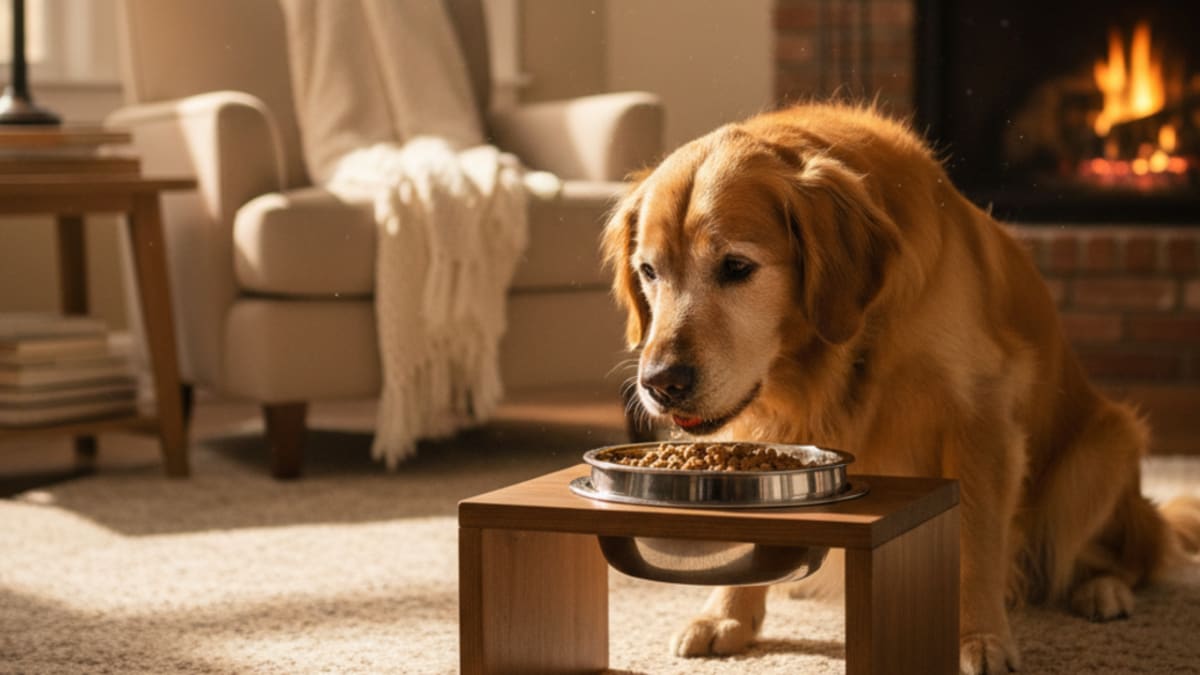
Most dogs are ready for senior dog food around the last 25% of their expected lifespan, which is how AAHA's senior care guidelines define "senior." In practice that's about 10–12 years for small breeds, 8–10 for medium, 7–8 for large and 5–6 for giant breeds. The switch isn't about a birthday, though. It's about your dog: slowing down, gaining or losing weight, stiff joints, or dental problems are all good reasons to reassess their food.
Older dogs often need fewer calories but just as much (or more) protein. The dog food calculator by weight and age adjusts portions as your dog gets older.
| Size | Adult weight | Typical lifespan | Senior from about |
|---|---|---|---|
| Small | Under 10 kg (22 lb) | 12–16 years | 10–12 years |
| Medium | 10–25 kg (22–55 lb) | 10–13 years | 8–10 years |
| Large | 25–45 kg (55–100 lb) | 9–12 years | 7–8 years |
| Giant | Over 45 kg (100 lb) | 7–10 years | 5–6 years |
Not sure where your dog falls? The dog age calculator converts your dog's age to human years based on size.
Enough high-quality protein. It's a myth that seniors need low protein. Healthy older dogs lose muscle more easily, and research suggests they may need more protein than younger adults to hold onto it. Protein restriction is only for dogs with specific conditions, like advanced kidney disease, as advised by a vet.
Fewer calories, for most. Many seniors are less active, and weight gain speeds up arthritis. Some very old dogs (often 12+) swing the other way and start losing weight, so watch the trend.
Omega-3 fatty acids (EPA and DHA) from fish oil support joints, skin and possibly brain health.
Antioxidants and brain-support nutrients. Some senior diets add antioxidants or MCT oil, which have evidence for supporting cognitive function in older dogs.
Easy to chew and digest. Dental disease is very common in older dogs.
Fiber to help with regularity.
If your dog drops kibble, chews on one side, or eats slowly, their teeth may hurt. Soft dog food for senior dogs can help:
But don't just switch textures and move on. Painful teeth need a vet check; treating dental disease often gives seniors a new lease on life.
Many senior dogs do well on about 1.4 × RER, compared with 1.6 for a younger neutered adult.
A 20 kg (44 lb) neutered 10-year-old dog, senior kibble at 350 kcal per cup.
| Dog weight | Senior (~1.4 × RER) | Cups at 350 kcal/cup |
|---|---|---|
| 5 kg (11 lb) | ~328 kcal | ~1 |
| 10 kg (22 lb) | ~551 kcal | ~1½ |
| 20 kg (44 lb) | ~927 kcal | ~2⅔ |
| 30 kg (66 lb) | ~1,256 kcal | ~3½ |
| 40 kg (88 lb) | ~1,559 kcal | ~4½ |
These are starting points. Weigh your dog monthly and adjust by 10%. Very active seniors may need more; for a general portion check, the dog food calculator works for any life stage.
The best dog food for older dogs is the one that keeps your dog at a lean, muscular body condition, not simply the one with "senior" on the bag. For more ideas, read our senior dog feeding guide.
Change over 7–10 days: 25% new food, then 50%, then 75%, then 100%. Senior stomachs can be more sensitive, so go slower if needed. Add a weigh-in every two weeks for the first two months.
AAHA recommends checkups at least every six months for senior dogs, since problems show up faster. Call your vet sooner if your older dog:
Switch to senior dog food when your dog reaches the last quarter of their expected lifespan or starts showing age-related changes. Keep protein up, trim calories if they're gaining, and choose a texture they can eat comfortably. Use the dog food calculator by weight and age to set the right portion for your older dog.
General guidance on this topic from veterinary organizations. This guide is educational and written by a non-veterinarian; check with your own vet before changing your pet's food, medication or care. Editorial policy
Around the last 25% of their expected lifespan: roughly 10–12 years for small breeds, 8–10 for medium, 7–8 for large and 5–6 for giant breeds, or sooner if your vet suggests it.
No. Healthy seniors need at least as much protein as younger adults, and possibly more, to maintain muscle. Protein is only reduced for specific conditions like advanced kidney disease.
Many seniors do well on about 1.4 × RER. A 20 kg senior needs roughly 927 kcal a day, or about 2⅔ cups of a 350 kcal/cup food. Adjust based on body condition.
Any complete and balanced canned or fresh food, or kibble soaked in warm water, can work. If your dog struggles to chew, have their teeth checked too.
One that's complete and balanced, has enough protein, matches your dog's calorie needs, and ideally includes omega-3s. The best choice keeps your dog lean and muscular.
Not always. Some older dogs do fine on their adult food with smaller portions. Senior foods can help with calories, joints and chewing, but there's no AAFCO senior standard, so compare labels.
Set up separate feeding stations, measure each pet’s meals and monitor what they actually eat with a simple household routine.
3 min readSet up safe storage for dry pet food and opened wet food. Keep lot codes handy and learn what to do with leftovers and damaged packaging.
3 min readConvert cups to grams using your food’s own label. See worked examples, avoid scoop errors, and measure an existing feeding plan more consistently.
3 min read
