 PetCalcStudio

How to Introduce Two Cats at Their Own Pace
Prepare a separate room, swap scent, introduce through a barrier and learn when to slow down if either cat shows tension.
2 min readCare guide
Which dog is the fastest in the world? The greyhound tops the list at around 40-45 mph, followed by the Saluki, Vizsla, Whippet and others. See the top 10 speedsters with their top speeds, how they run so fast, how much exercise they need, what to feed them and how to keep fast dogs safe.
Educational information. Our editorial policy
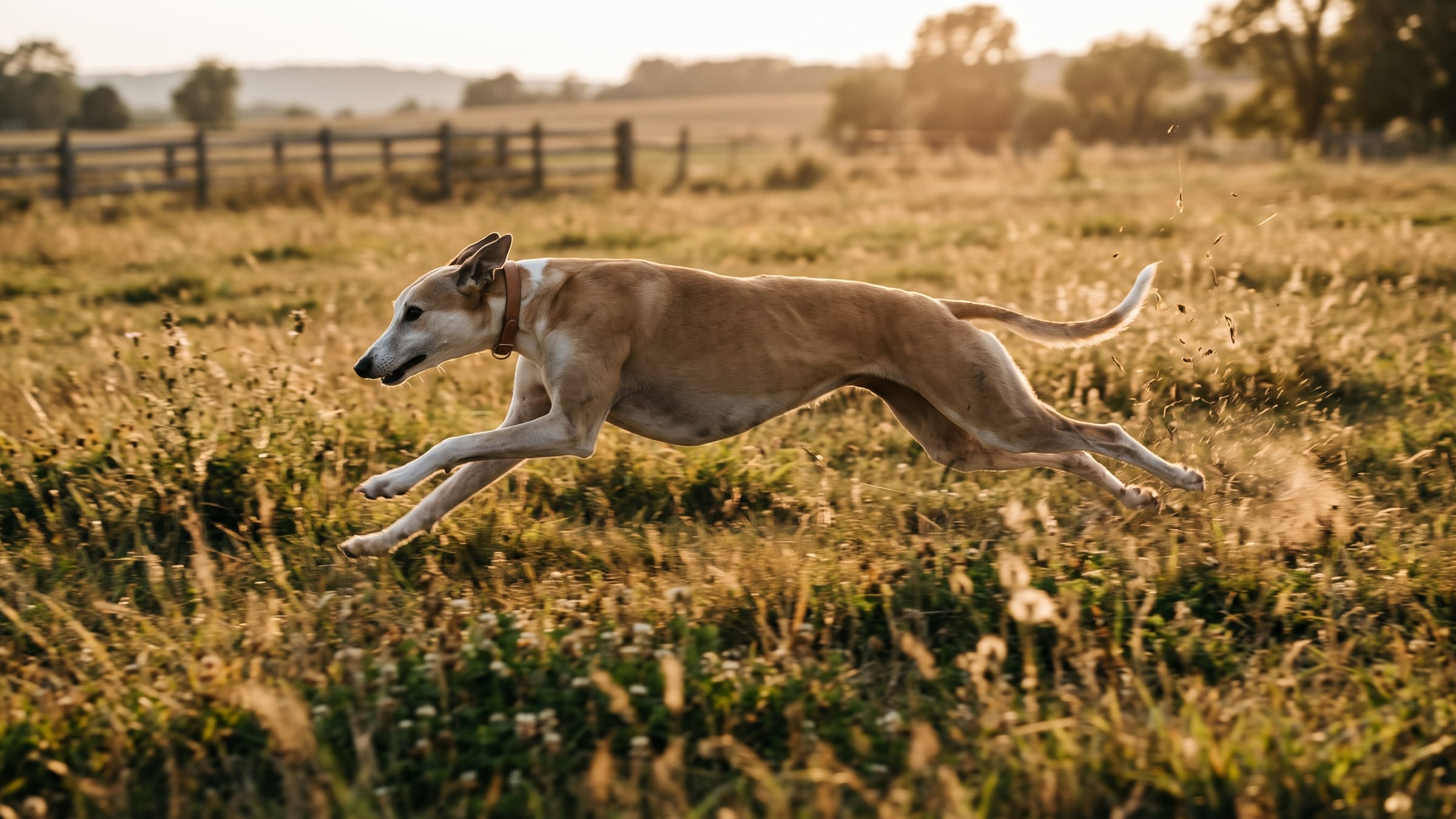
The fastest dog breed is the greyhound, which can reach about 40-45 mph (64-72 km/h) in short sprints. Salukis, Whippets, Vizslas, Afghan Hounds and a handful of other sighthounds and athletic breeds follow close behind. Fast dogs need safe places to run, regular exercise and food matched to their energy output.
Few things are as striking as a greyhound in full flight, legs stretched and body almost floating over the ground. Speed in dogs comes from a mix of body shape, muscle type, flexible spine and centuries of selective breeding for chasing prey. Top speeds are hard to measure precisely, since most figures come from racing records, informal tests and estimates, so treat the numbers below as approximate. This guide ranks 10 of the fastest dog breeds, explains why they are so fast, compares speeds, covers how much exercise these athletes need, how to feed them and how to keep them safe. To plan daily activity for your own dog, use the dog exercise calculator.
| Rank | Breed | Approximate top speed | Group |
|---|---|---|---|
| 1 | Greyhound | 40-45 mph (64-72 km/h) | Sighthound |
| 2 | Saluki | 40-43 mph (64-69 km/h) | Sighthound |
| 3 | Afghan Hound | 35-40 mph (56-64 km/h) | Sighthound |
| 4 | Vizsla | 35-40 mph (56-64 km/h) | Sporting |
| 5 | Jack Russell Terrier | 30-38 mph (48-61 km/h) | Terrier |
| 6 | Whippet | 35 mph (56 km/h) | Sighthound |
| 7 | Borzoi | 35-36 mph (56-58 km/h) | Sighthound |
| 8 | Dalmatian | 35 mph (56 km/h) | Non-sporting |
| 9 | Ibizan Hound | 35 mph (56 km/h) | Sighthound |
| 10 | Doberman Pinscher | 32-35 mph (51-56 km/h) | Working |
Other contenders often named include the Azawakh, German Shepherd, Border Collie, Australian Shepherd and Weimaraner. Speed varies by individual, age, fitness and terrain.
The undisputed champion. Greyhounds were bred for coursing and are now famous for racing. A lean build, deep chest, long legs and a highly flexible spine let them cover enormous ground with each stride, and they can reach top speed within a few strides. Despite their athletic reputation, many greyhounds are calm "couch potatoes" at home and sleep up to 18 hours a day.
An ancient Middle Eastern sighthound known as the "royal dog of Egypt." Salukis combine speed with remarkable endurance and can run long distances at a fast pace, a combination that suits hunting across open desert.
Despite the glamorous coat, the Afghan Hound was bred to hunt in rugged mountain terrain. Its large feet and powerful hindquarters make it quick and agile.
A Hungarian sporting dog bred to point and retrieve. Vizslas are lean, high-energy athletes that thrive on running, hiking and training. Their speed and endurance make them excellent running partners.
Small in size but astonishing in speed and agility. Jack Russells were bred to chase foxes and bolt them from burrows, and can reach impressive speeds relative to their size.
Sometimes called the "poor man's racehorse," the Whippet is a smaller sighthound that accelerates quickly and has long been used in racing. Despite their speed, Whippets are gentle, calm indoors and make good family companions.
A tall, elegant Russian sighthound bred to chase wolves. Borzois have long, powerful legs and a deep chest. They are fast over distance and have an impressive stride.
Bred as carriage dogs that ran alongside horse-drawn carriages for hours, Dalmatians have outstanding endurance and respectable speed.
A lean, agile sighthound from the Balearic Islands, known for jumping ability as well as speed. Ibizan Hounds can clear tall fences with ease.
Muscular, sleek and powerful, Dobermans are fast and agile working dogs developed as guard dogs and companions.
The fastest speed ever recorded for a dog under Guinness World Records rules is 41.83 mph (67.32 km/h), set by a greyhound called Star Title in Australia in 1994. Here is how that compares at top speed over 100 metres (real races are slower because no one holds top speed from a standing start).
| Runner | Top speed | Time for 100 m at top speed |
|---|---|---|
| Greyhound (record: Star Title) | 41.83 mph (67 km/h) | 5.3 s |
| Whippet | 35 mph (56 km/h) | 6.4 s |
| Usain Bolt (world record 100 m, peak split) | 27.8 mph (45 km/h) | 8.0 s |
| Fit recreational runner | 12 mph (19 km/h) | 18.6 s |
A cheetah is faster still, at about 60 mph (97 km/h) in short bursts, so a greyhound cannot outrun one. Greyhounds win on acceleration among dogs, not against wild cats.
In this ranking the fastest small breed is the Jack Russell Terrier at about 30–38 mph. Among toy-sized sighthounds the Italian Greyhound is the quick one, though it is more fragile and sprints in short bursts. Small fast dogs still need a secure, fenced area to run, because prey drive overrides recall.
| Factor | How it helps |
|---|---|
| Lean, aerodynamic build | Reduces drag and weight |
| Deep chest | Room for large lungs and a strong heart |
| Long legs | Longer stride length |
| Flexible spine | Allows a "double suspension gallop," where the dog stretches and gathers the body in each stride |
| Fast-twitch muscle fibers | Explosive power for sprinting |
| Large heart and high red blood cell count | Greater oxygen delivery, especially in greyhounds |
| Light bones and thin skin | Less weight to carry |
| Selective breeding | Centuries of selection for chasing ability |
Not all fast dogs are the same. Greyhounds and Whippets are sprinters, with explosive speed over short distances and a need for recovery. Salukis, Vizslas, Dalmatians and Siberian Huskies are better at maintaining a steady pace over long distances. Choose a breed that matches the activity you want, whether that is sprinting in a fenced field or running alongside you on trails.
Needs vary by breed and individual.
| Type | Typical daily exercise |
|---|---|
| Greyhound and Whippet | 30-60 minutes, including some off-leash sprinting in a secure area |
| Saluki, Borzoi, Afghan Hound | 60 minutes with chances to run |
| Vizsla | 1-2 hours of vigorous exercise |
| Jack Russell Terrier | 1-2 hours with mental challenges |
| Dalmatian | 1-2 hours |
| Doberman | 1 hour or more with training |
Puppies and adolescents should not be over-exercised, especially large breeds, as their joints are still developing. Avoid forced running in hot weather. Use the dog exercise calculator to estimate a sensible daily routine based on your dog's age, size and energy.
Athletic dogs burn more calories than couch dogs, but each breed is different. Many sighthounds are naturally lean and should be kept that way.
A 25 kg (55 lb) active adult Vizsla.
Use the dog calorie calculator to estimate your dog's energy needs.
Speed does not always mean a high-maintenance dog. Many greyhounds and Whippets are calm at home with short bursts of exercise, while Vizslas, Jack Russells and Dalmatians need much more activity and mental work. Think about your space, schedule, other pets and experience. Use the breed selector to compare breeds against your lifestyle.
See your vet if your dog limps after running, has a torn nail or injured pad, shows signs of heat stress such as heavy panting, drooling or collapse, or if you notice reduced stamina, coughing or fainting, which can be heart-related. Seek emergency care for a swollen abdomen with retching, which can indicate bloat in deep-chested breeds.
The greyhound is the fastest dog breed at around 40-45 mph, with Salukis, Afghan Hounds, Vizslas and Whippets close behind. Fast dogs need secure places to run, tailored exercise and food that matches their activity. Plan your dog's routine with the dog exercise calculator.
Nearly every breed in a fastest-dog ranking is a sighthound. These dogs were bred to chase prey by sight, with a deep chest, long legs, a flexible spine and a "double suspension" gallop where all four feet leave the ground twice in each stride. Scent hounds such as the Beagle and Bloodhound were bred for stamina and nose work, not top speed.
| Breed | Type | Commonly cited top speed |
|---|---|---|
| Greyhound | Sighthound | about 43–45 mph |
| Saluki | Sighthound | about 40–42 mph |
| Afghan Hound | Sighthound | about 40 mph |
| Whippet | Sighthound | about 35–36 mph |
| Borzoi | Sighthound | about 35–36 mph |
| Beagle (for comparison) | Scent hound | about 20 mph |
Most figures you'll see are estimates. The fairest comparison comes from the AKC Fast CAT, a timed 100-yard dash after a lure. To convert a Fast CAT time to mph, divide 204.5 by the time in seconds. For example, a 5.0-second run is about 41 mph. For scale, the fastest human sprint (Usain Bolt) peaked at about 27–28 mph, and a cheetah can reach about 60–70 mph.
Sighthounds can reach full speed in a few strides and may not hear a recall while they're chasing. Only let them off the lead in securely fenced areas. Check how much daily running they need with the dog exercise calculator, and use the breed selector to see whether a speedster suits your lifestyle.
| Runner | Top speed |
|---|---|
| Cheetah | about 60–70 mph |
| Greyhound | about 40–45 mph |
| Domestic cat | about 30 mph |
| Fastest human sprinter | about 27–28 mph |
A greyhound can't catch a cheetah over a short sprint, but greyhounds can hold a high speed for longer.
The greyhound, which can reach about 40-45 mph (64-72 km/h) in short sprints.
The Saluki is usually ranked second at about 40-43 mph, with excellent endurance as well.
They are sprinters but often calm at home, sleeping many hours a day, with short bursts of exercise.
It varies from about 30-60 minutes for greyhounds and Whippets to 1-2 hours for Vizslas, Jack Russells and Dalmatians.
Roughly 30-38 mph for short distances, which is impressive for their size.
Only in a secure, fenced area. Sighthounds chase by instinct and can be hard to recall.
Guinness World Records lists a greyhound named Star Title at 41.83 mph (67.32 km/h), set in Wyong, Australia, in 1994.
No. A greyhound tops out around 40–45 mph while a cheetah can reach about 60 mph in short bursts. Over longer distances greyhounds also tire quickly, so neither is a marathon runner.
The Jack Russell Terrier is the fastest small breed in this ranking at about 30–38 mph. The Italian Greyhound is the fastest toy-sized sighthound.
Sighthounds such as greyhounds are sprinters. For endurance, Siberian Huskies, Alaskan Malamutes and many pointers and herding breeds keep a steady pace over many miles.
A fit recreational runner manages about 10–12 mph. Most dogs can run 15–20 mph, and the fastest breeds reach 35–45 mph, faster than any human sprinter (about 28 mph at world-record peak).
The fastest dogs are. A greyhound reaches about 40–45 mph, while a domestic cat tops out at around 30 mph over short bursts.
Prepare a separate room, swap scent, introduce through a barrier and learn when to slow down if either cat shows tension.
2 min readCreate an indoor setup your cat can explore, with safe hiding spots, scratching surfaces, supervised play and options for smaller homes.
3 min readTry a calm, dog-led walk with safe sniffing stops. Choose a route, use a comfortable pace and adapt the outing for your dog.
3 min read
