 PetCalcStudio

How to Feed Dogs and Cats Separately in a Shared Home
Set up separate feeding stations, measure each pet’s meals and monitor what they actually eat with a simple household routine.
3 min readCare guide
Wet cat food brings extra water, more protein per calorie and fewer carbs, which suits most cats well. Here's how to pick a good one, what "grain-free" really means, and how much to serve.
Educational information. Our editorial policy
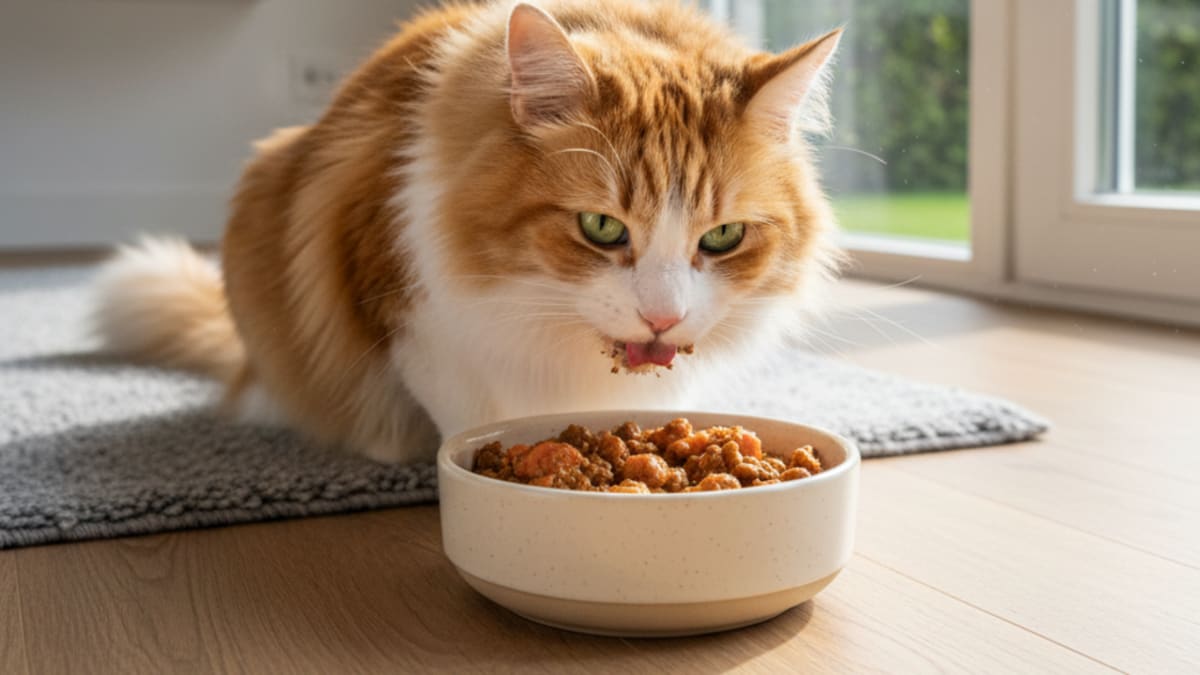
Wet cat food is a great fit for most cats. It's about 75–80% water, which helps cats that don't drink much, and it's usually higher in protein and lower in carbohydrates than dry food, closer to what cats evolved to eat. It's also lower in calories per bite, which makes weight control easier. The best wet cat food is one that's complete and balanced for your cat's life stage and that your cat eats reliably, fed in the right amount.
Calories vary a lot between cans, so portioning matters. The cat food calculator turns your can's calorie count into a daily serving.
The downsides: it costs more per calorie, it spoils after a few hours in the bowl, and it doesn't clean teeth (neither does most kibble, despite the myth).
Labels list nutrients "as fed," including water. Converting to dry matter shows what's really in the food:
Dry matter % = as-fed % ÷ (100 − moisture %) × 100
| Wet cat food | Dry cat food | |
|---|---|---|
| Protein (as fed) | 11% | 32% |
| Moisture | 78% | 10% |
| Protein (dry matter) | 11 ÷ 22 × 100 = 50% | 32 ÷ 90 × 100 ≈ 35.6% |
That "11% protein" can actually has more protein than the "32% protein" kibble once you remove the water.
Indoor cats usually burn fewer calories. Look for:
Most wet cat food is already low in grains. "Grain-free" doesn't mean low-carb, since some grain-free foods use potatoes or peas instead. Grain allergies are uncommon in cats; beef, fish and chicken are more frequently reported food allergens. Pick grain-free if your cat does well on it, not because it's automatically healthier.
There isn't one brand that's healthiest for every cat. The healthiest wet cat food is complete and balanced, made by a reputable company, suits your cat's age and health, and keeps them at a lean body condition.
A 5 kg (11 lb) neutered, fairly inactive indoor cat, eating a 5.5 oz (156 g) can with 170 kcal.
| Cat weight | Calories/day (1.0–1.2 × RER) | 3 oz cans at 80 kcal | 5.5 oz cans at 170 kcal |
|---|---|---|---|
| 3 kg (6.6 lb) | 160–190 | 2–2½ | ~1–1⅛ |
| 4 kg (8.8 lb) | 200–240 | 2½–3 | ~1¼–1⅖ |
| 5 kg (11 lb) | 235–280 | 3–3½ | ~1⅓–1⅔ |
| 6 kg (13.2 lb) | 270–320 | 3⅓–4 | ~1⅗–1⅞ |
Kittens, pregnant cats and very active cats need more; overweight cats should be fed for their ideal weight. Get a precise target from the cat calorie calculator, and see side-by-side wet and dry amounts in the cat feeding chart.
For label reading on the dry side, see how to choose a good dry cat food, and for meal timing, how often to feed your cat.
Call your vet if your cat:
Cats with kidney disease, diabetes, urinary stones or allergies may need a specific prescription wet diet, so check with your vet before switching.
Wet cat food adds water, delivers more protein per calorie and makes weight control easier, which is why vets often recommend it. Choose a complete and balanced food your cat enjoys, check the calories per can, and serve the right amount. Work out your cat's daily cans with the cat food calculator.
General guidance on this topic from veterinary organizations. This guide is educational and written by a non-veterinarian; check with your own vet before changing your pet's food, medication or care. Editorial policy
For many cats, yes. Wet food adds water, is usually higher in protein and lower in carbs, and makes weight control easier. Dry food is cheaper and more convenient, and many cats do well on a mix.
One that's complete and balanced for your cat's life stage, made by a reputable company, has a named animal protein first, and that your cat eats reliably while staying lean.
A complete food with moderate calories per can, high protein and a little fiber. Indoor cats usually need fewer calories, so check the kcal per can and portion carefully.
Not automatically. Grain allergies are uncommon in cats, and grain-free foods can still contain starches like potato or peas.
Most 4–5 kg indoor adult cats need about 200–280 kcal a day, which is roughly 1¼–1⅔ of a 5.5 oz can at 170 kcal. Check your can's calories.
About 4 hours at room temperature, less in hot weather. Refrigerate opened cans, covered, for up to 3 days.
Set up separate feeding stations, measure each pet’s meals and monitor what they actually eat with a simple household routine.
3 min readSet up safe storage for dry pet food and opened wet food. Keep lot codes handy and learn what to do with leftovers and damaged packaging.
3 min readConvert cups to grams using your food’s own label. See worked examples, avoid scoop errors, and measure an existing feeding plan more consistently.
3 min read
