 PetCalcStudio

How to Introduce Two Cats at Their Own Pace
Prepare a separate room, swap scent, introduce through a barrier and learn when to slow down if either cat shows tension.
2 min readCare guide
Kittens bite because they're playing, teething or overstimulated, and they learn it works if hands become toys. Stop it by ending play when teeth touch skin, redirecting to wand toys, scheduling daily play and never using hands as toys. Most kittens ease off as adult teeth arrive by about 6-7 months.
Educational information. Our editorial policy
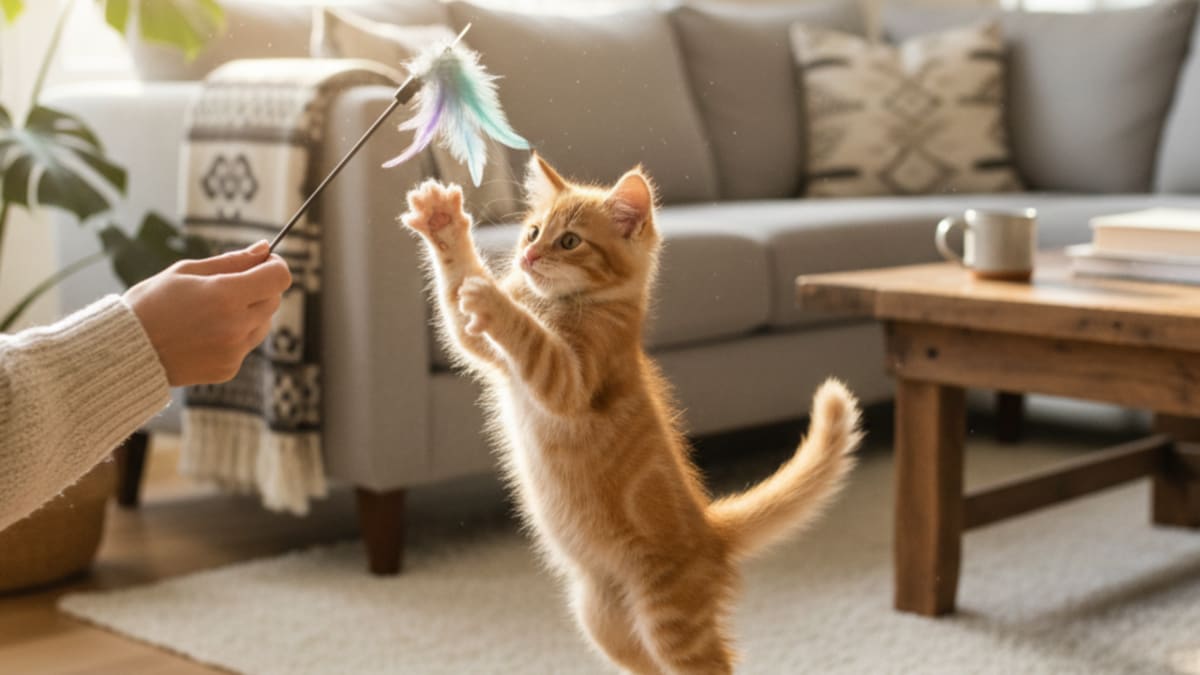
Kittens bite because they're playing, teething or overstimulated, and they learn quickly that biting hands gets a reaction. Stop it by ending play the moment teeth touch skin, redirecting to wand toys, scheduling daily play and never using hands as toys. Most kittens ease off as adult teeth arrive by about 6-7 months.
Play biting is normal kitten behavior: it's how they practice hunting and learn social limits. The problem starts when a kitten learns that human skin is a toy, because a sharp-toothed kitten that's allowed to bite becomes a cat that bites. The goal is to teach gentle play, not to punish. This guide explains why kittens bite, what works, what to avoid, a daily routine, how to handle overstimulation and when biting signals a problem. Track your kitten's stage with the cat age calculator.
Finish each session with a "catch" and a meal, so your kitten feels satisfied and calm.
Meals and portions for your kitten are on the cat feeding chart. Active play before meals mimics the hunt-eat-groom-sleep cycle and helps kittens settle.
Some kittens love petting for a short time and then bite. Watch the warning signs, keep sessions short, and stop before your kitten gets tense. Focus on the head and cheeks, and avoid bellies until your kitten is comfortable.
Most biting eases with consistency and age. See a vet if bites are suddenly worse, your kitten seems to be in pain, it bites when touched in certain places, or there's aggression toward people or other pets. A behaviorist can help with severe cases.
Call if you notice sudden aggression, limping, reluctance to be touched, drooling, bleeding gums or a change in appetite along with biting. Seek medical care for any deep or infected bite wounds on yourself.
Many settle by 6-7 months as adult teeth come in, but training is needed.
Kittens need to learn gentler play. Persistent hard biting or aggression should be discussed with your vet or a behaviorist.
Not recommended. Stay calm, stop play and redirect to toys.
It often helps by giving your kitten a play partner, but you'll still need to teach gentle play.
Prepare a separate room, swap scent, introduce through a barrier and learn when to slow down if either cat shows tension.
2 min readCreate an indoor setup your cat can explore, with safe hiding spots, scratching surfaces, supervised play and options for smaller homes.
3 min readTry a calm, dog-led walk with safe sniffing stops. Choose a route, use a comfortable pace and adapt the outing for your dog.
3 min read
