 PetCalcStudio

How to Introduce Two Cats at Their Own Pace
Prepare a separate room, swap scent, introduce through a barrier and learn when to slow down if either cat shows tension.
2 min readCare guide
Eight weeks is the classic age to bring a puppy home. Learn what a typical 8 week old puppy weighs, how much and how often to feed, how long it should sleep, a sample daily schedule, first vet visit and vaccine timing, potty training basics, safe socialization and what to do about biting and crying at night.
Educational information. Our editorial policy
An 8 week old puppy needs four small meals a day of a complete-and-balanced puppy food, 18-20 hours of sleep, frequent potty trips (every 1-2 hours while awake), a first vet visit within a few days and gentle, positive training. Keep it safe from unvaccinated dogs until your vet says it is protected, and socialize carefully in controlled settings.
Eight weeks is when most puppies leave their litter and arrive in new homes. It is exciting, exhausting and full of firsts: first night alone, first vet visit, first accidents on the rug. The habits you set in these early weeks shape your puppy's behavior and health for years. This guide explains what an 8 week old puppy is like, how much and how often to feed, how much sleep to expect, a sample daily schedule, first vet visits and vaccines, potty training, crate training, socialization, biting, safety and what to expect in the weeks ahead. To work out portions, use the dog food calculator by weight and age.
| Feature | Typical at 8 weeks |
|---|---|
| Weight | Varies by breed: toy breeds 1-3 lb, small 3-8 lb, medium 8-20 lb, large 15-25 lb, giant 20-30 lb |
| Teeth | All baby (deciduous) teeth are in, and they are sharp |
| Sleep | 18-20 hours a day, in short stretches |
| Bladder control | Very limited, about 1-2 hours while awake |
| Attention span | Very short, so keep training to 2-5 minute sessions |
| Learning | Highly receptive to new experiences, in a key socialization window |
| Immune system | Maternal antibodies are fading, so vaccines are essential |
Puppies grow fast and need frequent meals of a food made for growth.
A 5 kg (11 lb) puppy at 8 weeks.
Use the dog food calculator by weight and age for a quick estimate.
Young puppies sleep about 18-20 hours a day. They play hard for short bursts, then crash.
| Time | Activity |
|---|---|
| 6:30 am | Wake, potty immediately, then praise |
| 7:00 am | Breakfast, then potty |
| 7:30 am | Short play or training |
| 8:00 am | Nap in crate or pen |
| 10:30 am | Potty, play |
| 11:00 am | Lunch, then potty |
| 12:00 pm | Nap |
| 2:30 pm | Potty, short training |
| 3:00 pm | Meal, then potty |
| 4:00 pm | Nap |
| 6:00 pm | Potty, play, gentle socialization |
| 7:00 pm | Dinner, then potty |
| 8:00 pm | Calm play, last water |
| 10:00 pm | Final potty, bed |
| 2:00 am | Potty if the puppy wakes, quiet, no play |
Adjust to your own household, but keep the structure consistent.
Schedule a vet visit within the first few days, even if the breeder or shelter has given first vaccines. Bring any records.
| Age | Typical care |
|---|---|
| 6-8 weeks | First DHPP (distemper, adenovirus, parvovirus, parainfluenza), deworming |
| 10-12 weeks | DHPP booster, possibly leptospirosis, Bordetella, Lyme depending on location |
| 14-16 weeks | Final DHPP booster, rabies (by law at 12-16 weeks in many places) |
| 6-12 months | Spay or neuter timing, based on breed and vet advice |
Ask your vet about flea, tick and heartworm prevention suitable for puppies, and microchipping. Until your puppy has completed its vaccine series, avoid dog parks, pet stores and other places with unknown dogs. Many vets still encourage safe socialization in controlled settings, such as at home with healthy, vaccinated dogs and in clean, private spaces.
Puppies cannot hold their bladder long. A rough guide is one hour per month of age plus one, so an 8 week old puppy needs a break every 2-3 hours at most, and more often when awake.
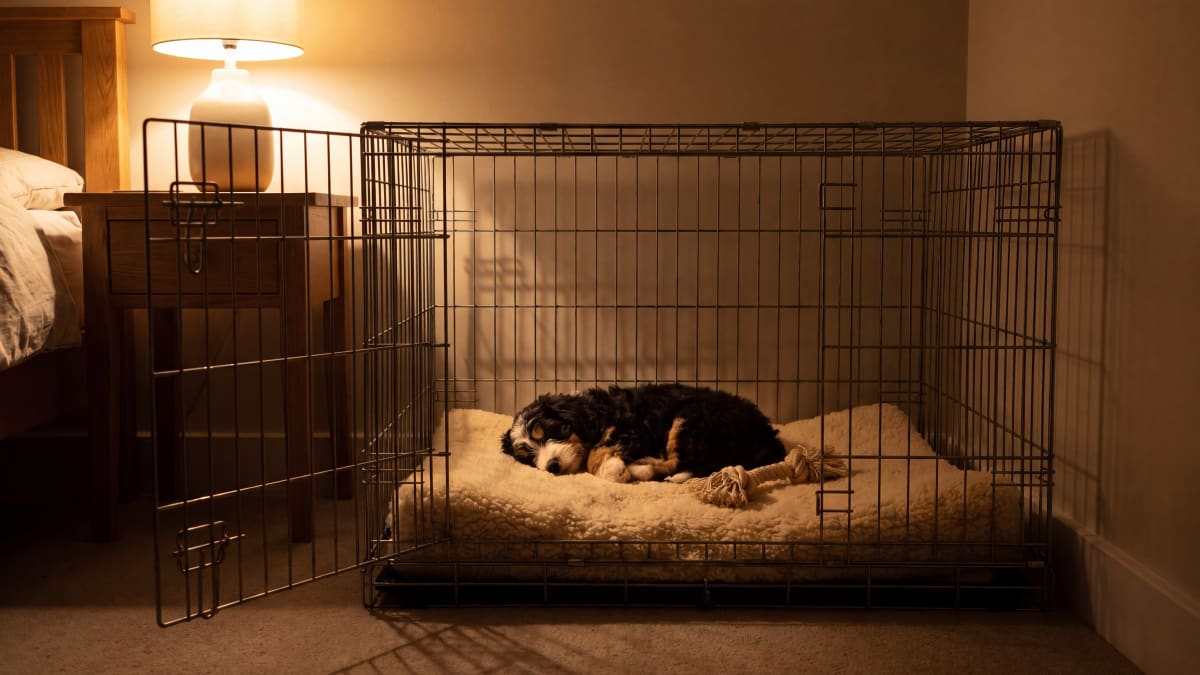
A crate gives your puppy a safe den and helps with house-training.
Crying is normal. Your puppy has left its littermates for the first time.
The window between about 3 and 14 weeks is crucial for building confidence.
Puppies explore with their mouths, and those baby teeth are sharp.
Keep sessions to 2-5 minutes, a few times a day, using tiny, soft treats from the daily food allowance.
For suspected poisoning, call the ASPCA Animal Poison Control Center at 888-426-4435 or the Pet Poison Helpline at 855-764-7661 (fees may apply).
Call your vet within the first few days for a health exam, and any time your puppy shows warning signs. Puppies can go downhill quickly, so do not wait if something seems wrong.
At 8 weeks, your puppy needs four measured meals, lots of sleep, frequent potty trips, careful socialization and a first vet visit. Keep training short and positive, protect your puppy until vaccinated and be patient. Calculate portions with the dog food calculator by weight and age.
Related: Best dogs for first-time owners and Smartest dog breeds, ranked.
Roughly three times its resting energy needs in calories per day, split into four meals. For a 5 kg puppy that is about 700 kcal, but check the food label and your vet.
About every 1-2 hours while awake and after meals, naps and play, with a break every 2-3 hours at most.
About 18-20 hours a day in short stretches.
In your own clean yard and safe settings, yes, but avoid dog parks and areas with unknown dogs until vaccinated. Ask your vet.
Typically the first DHPP, with boosters every 3-4 weeks until about 16 weeks and rabies at 12-16 weeks.
Keep the crate nearby, do a late potty trip, offer a safe comfort item and take the puppy out briefly when it wakes without playing.
Prepare a separate room, swap scent, introduce through a barrier and learn when to slow down if either cat shows tension.
2 min readCreate an indoor setup your cat can explore, with safe hiding spots, scratching surfaces, supervised play and options for smaller homes.
3 min readTry a calm, dog-led walk with safe sniffing stops. Choose a route, use a comfortable pace and adapt the outing for your dog.
3 min read
