 PetCalcStudio

How to Introduce Two Cats at Their Own Pace
Prepare a separate room, swap scent, introduce through a barrier and learn when to slow down if either cat shows tension.
2 min readCare guide
A 3 week old kitten without its mother needs kitten milk replacer every 3-4 hours, help staying warm, and gentle stimulation to pee and poop if it doesn't go on its own. Start offering a shallow litter box and get a vet check for deworming and health.
Educational information. Our editorial policy
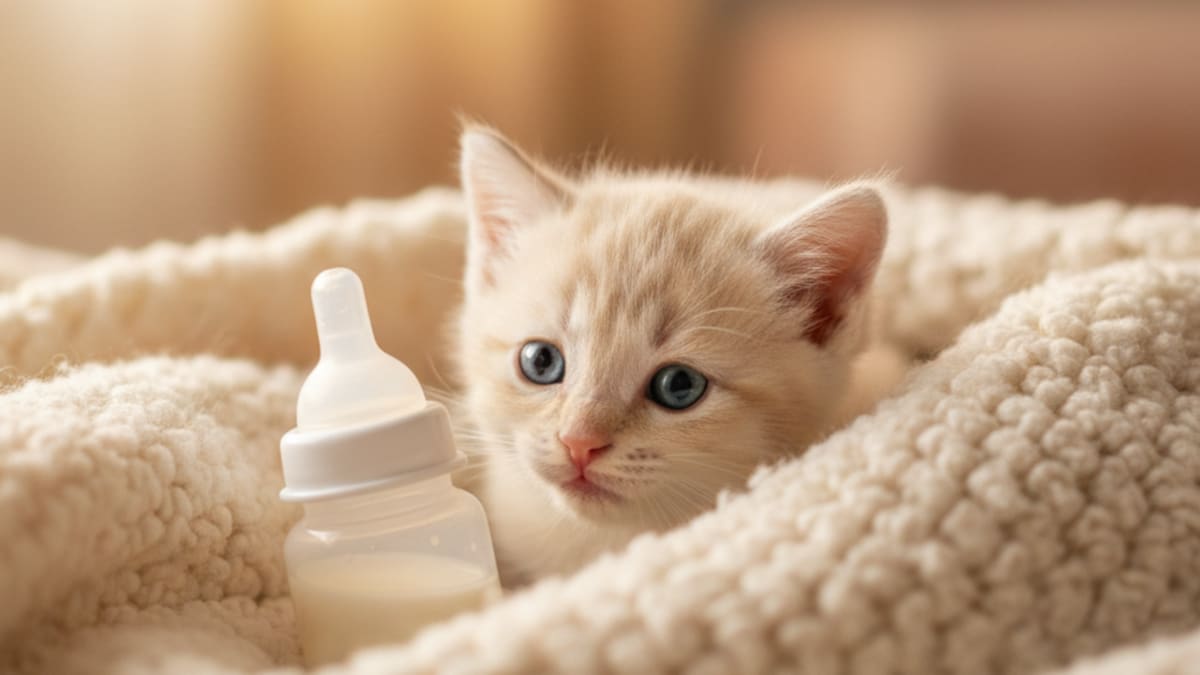
A 3 week old kitten without its mother needs kitten milk replacer about every 3-4 hours, help staying warm and, if it doesn't go on its own, gentle stimulation to pee and poop after meals. Offer a shallow litter box, and get a vet check for deworming and overall health.
Three weeks is a turning point: eyes are open, baby teeth are starting to show and the kitten is getting steadier on its feet. It's also a fragile age for orphans, since they still depend on milk, warmth and help with toileting. If you're caring for an orphan, contact a vet or an experienced rescue right away. This guide covers milestones, bottle feeding, toileting, warmth, hygiene, the first steps toward solid food and warning signs. Portion guidance scales with weight; see the cat feeding chart.
Use commercial kitten milk replacer, never cow's milk. Full instructions are in our guide to kitten milk replacer. The basics:
Follow the formula label. A common veterinary reference is roughly 8 mL of formula per ounce of body weight per day, divided across feedings. At three weeks, that's usually every 3-4 hours, and you may still need a night feed for the first days.
At 3 weeks, many kittens still need stimulation after meals. Gently wipe the genital and anal area with a warm, damp cotton ball or cloth until they go, then dry the area. Gradually add a shallow litter box with non-clumping litter or paper pellets, and place the kitten in after meals. Most kittens start using the box on their own between 3 and 4 weeks.
Bean weighs 340 g (12 oz).
Around 3.5-4 weeks, offer a dish of kitten wet food mixed with formula. See our 4 week old kitten guide for the weaning process.
Ask about:
Gentle handling for short sessions helps kittens grow into friendly cats. Keep sessions calm, support the whole body and let the kitten rest whenever it wants.
Call promptly if your kitten is cold, limp, refuses the bottle, has diarrhea, a swollen belly, breathing trouble, eye or nose discharge, or doesn't gain weight every day.
General guidance on this topic from veterinary organizations. This guide is educational and written by a non-veterinarian; check with your own vet before changing your pet's food, medication or care. Editorial policy
About every 3-4 hours with kitten milk replacer if orphaned, or on demand if nursing.
Many do. Stimulate gently with a warm damp cloth after meals until they go on their own.
A shallow dish of water can be offered, but milk replacer remains the main food.
Gruel can start around 3.5-4 weeks, with weaning largely complete by 8 weeks.
Prepare a separate room, swap scent, introduce through a barrier and learn when to slow down if either cat shows tension.
2 min readCreate an indoor setup your cat can explore, with safe hiding spots, scratching surfaces, supervised play and options for smaller homes.
3 min readTry a calm, dog-led walk with safe sniffing stops. Choose a route, use a comfortable pace and adapt the outing for your dog.
3 min read
