 PetCalcStudio

Senior Pet Vet Visit Checklist for Dogs and Cats
Prepare for a senior pet checkup with a simple record of mobility, appetite, weight, medications and questions for your veterinary team.
3 min readCare guide
Start with the teeth: all permanent teeth are in by about 6 months, yellowing and tartar build up from 1–2 years, and wear or missing teeth point to an older cat. Then check the eyes (cloudy lenses), coat and muscle to narrow the range. A vet can usually estimate within a few years.
Educational information. Our editorial policy
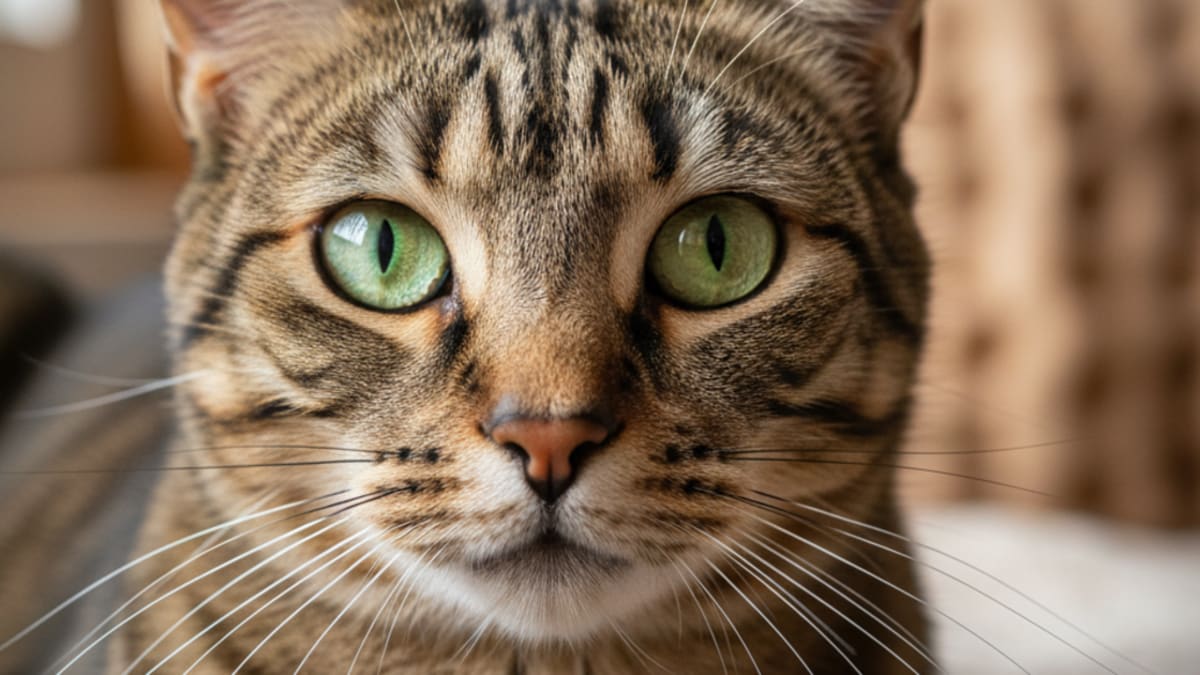
Start with the teeth: all permanent teeth are in by about 6 months, yellowing and tartar build up from 1–2 years, and wear or missing teeth point to an older cat. Then check the eyes (cloudy lenses), coat and muscle to narrow the range. A vet can usually estimate within a few years.
If you're trying to work out how to tell the age of a cat that came without paperwork, you're not alone. Rescues, strays and "the cat that moved in" are all mysteries. The good news is that a few clues, taken together, get you a useful range. Once you have a guess, our cat age calculator turns it into human years.
No single clue is perfect. Use all of these, then think in ranges:
A healthy 4-year-old and a stressed, underfed 8-year-old can look alike. That's why a vet exam beats guessing.
Teeth are the best tool you have, especially in the first year. Here's the general pattern:
| Age | What you'll see |
|---|---|
| 2–8 weeks | Baby teeth coming in. All 26 baby teeth by about 8 weeks |
| 3–4 months | Permanent incisors (front teeth) appear |
| 4–5 months | Permanent canines (fangs) come in |
| About 6 months | All 30 permanent teeth are in, bright white and sharp |
| 1–2 years | Slight yellowing, usually on the back teeth |
| 3–5 years | More tartar, some gum redness |
| 5–10 years | Noticeable tartar, worn tips, possible gum recession |
| 10+ years | Heavy wear, and some missing teeth |
Diet, genetics and dental care change all of this. A cat with a lifetime of dental cleanings can look younger than it is, and a cat with dental disease can look older.
Want a closer look at the teeth alone? See our cat teeth age chart.
A safety note: don't pry open a stray's mouth. Frightened cats bite. A gentle lip lift on a calm cat is fine, and a vet can do a proper exam.
Eyes. Kittens are born with blue eyes, which change to their adult color over the first few months. Clear, bright eyes suggest a young or healthy adult. A cloudy or bluish haze in the lens is common in older cats and is often harmless, but it can also be cataracts or other eye disease, so let a vet check.
Coat. Kittens have soft, fluffy fur. Young adults have dense, glossy coats. Older cats often have a coarser, thinner or greasy coat, since arthritis and dental pain can make grooming hard. Some cats gray a bit around the muzzle.
Muscle and weight. Young cats are lean and springy. Middle-aged cats often carry a little more weight. Very old cats can look bony along the spine and hips, with visible muscle loss.
Movement. Stiffness, hesitating before a jump, or sleeping most of the day can point to age, or to arthritis at any age.
If a stray shows up at your door:
How can you tell if a stray kitten is under 8 weeks? A few signs:
Kittens this young need warmth, special feeding and a vet or rescue's help. Don't feed cow's milk.
| Stage | Age | Typical clues |
|---|---|---|
| Kitten | Under 6 months | Baby or new permanent teeth, playful, small |
| Adolescent | 6–12 months | Clean white teeth, lanky, high energy |
| Young adult | 1–6 years | Slight tartar, glossy coat, muscular |
| Mature adult | 7–10 years | More tartar and wear, gaining weight |
| Senior | Over 10 years | Heavy wear or missing teeth, cloudy lenses, thinner coat, stiffness |
The stages follow the AAHA/AAFP Feline Life Stage Guidelines. For what changes in later years, see what age a cat is considered senior.
A vet looks at teeth, eyes, coat, muscle and joints, and may run bloodwork if the cat seems old. But even experienced vets say things like "probably 4 to 6 years." Cats age at different speeds, and health, diet and genetics muddy the picture.
Expect a range, and remember that it's fine to pick a "birthday" for your cat. Many rescues use a shelter-assigned date so you can track vaccines and checkups.
Let's say your vet says your rescue is about 6 to 10 years old. A common rule: 1 year = 15 human years, 2 = 24, then +4 for each year after that.
So your cat is roughly "40 to 56" in human terms. Plug in your own estimate with the cat age calculator, or compare pets with the pet age calculator. A healthy weight matters at any age, so try the cat BMI calculator too. And if you have a kitten, you may want to know when it will stop growing.
Any newly adopted stray or rescue needs a checkup. Call sooner if you see:
General guidance on this topic from veterinary organizations. This guide is educational and written by a non-veterinarian; check with your own vet before changing your pet's food, medication or care. Editorial policy
No. Vets can give a good estimate, often within a few years, but not an exact age. Teeth, eyes, coat and muscle all give hints, and health history can skew them.
Look at weight (under about 2 lb or 0.9 kg), teeth (baby teeth only) and behavior (wobbly, still nursing). Blue eyes are normal in young kittens. A vet or rescue can confirm and help with feeding.
Kittens' eyes start blue and change to their adult color within the first few months. After that, eye color stays the same. A cloudy or hazy look in older cats is a lens change, not a color change, and should be checked by a vet.
Often, yes. Indoor cats tend to have less wear and injury, though dental disease can still make a cat look older than it is. Use several clues, not just one.
Prepare for a senior pet checkup with a simple record of mobility, appetite, weight, medications and questions for your veterinary team.
3 min readThe 7-year rule was never based on biology. Learn the DNA methylation formula vets now use to convert your dog or cat's age into accurate human-year equivalents — adjusted for breed size and life stage.
7 min readPoinsettias are usually only mildly irritating to pets, but other holiday plants are far worse. Here is which plants to keep, which to move, and what to do if your pet chews one.

