 PetCalcStudio

Senior Pet Vet Visit Checklist for Dogs and Cats
Prepare for a senior pet checkup with a simple record of mobility, appetite, weight, medications and questions for your veterinary team.
3 min readCare guide
Most vets consider a cat senior from about 10 years old (the AAHA/AAFP Feline Life Stage Guidelines use over 10). That's roughly 56 in human years, and it's when twice-yearly checkups and routine bloodwork usually start.
Educational information. Our editorial policy
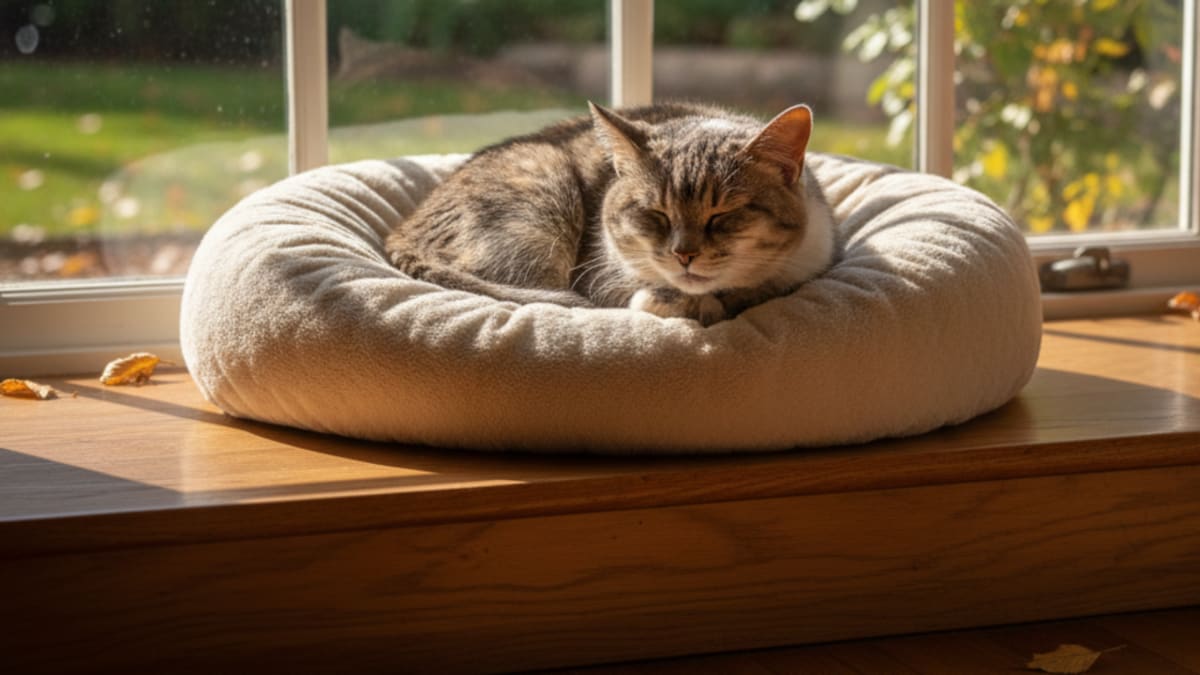
Most vets consider a cat senior from about 10 years old (the AAHA/AAFP Feline Life Stage Guidelines use over 10). That's roughly 56 in human years, and it's when twice-yearly checkups and routine bloodwork usually start.
So, what age is a senior cat, exactly? Ten is the line vets draw. But cats don't wake up on their tenth birthday with gray whiskers and a new personality. It's a gradual shift, and knowing the stages helps you catch changes early. To see your own cat's age in human years, use our cat years to human years calculator.
The American Association of Feline Practitioners (AAFP) and the American Animal Hospital Association (AAHA) publish life stage guidelines for cats. They call a cat a senior once it's older than 10. Some other sources start "senior" earlier, around 7, but the AAHA/AAFP guidelines call that stage "mature adult" instead.
Why does the label matter? Because it changes what your vet recommends: more frequent exams, routine bloodwork and closer tracking of weight. Those checks catch problems, like kidney or thyroid disease, before they're obvious at home.
Here are the stages as laid out in the AAHA/AAFP guidelines:
| Life stage | Age | What it means |
|---|---|---|
| Kitten | Birth to 1 year | Fast growth, vaccines, spay/neuter |
| Young adult | 1–6 years | Prime of life, stable weight and routine |
| Mature adult | 7–10 years | Slowing down a little, weight gain is common |
| Senior | Over 10 years | More frequent vet care, screening for age-related disease |
Keep in mind that these are guidelines. A cat's genetics, diet, dental health and lifestyle all shape how well it ages. If you're curious about the youngest stage, see when cats stop growing.
Cat-to-human age charts are approximations, but they give a feel for where your cat is in life. A common rule: the first year equals about 15 human years, the second brings you to about 24, and each year after that adds about 4.
| Cat age | Approx. human age |
|---|---|
| 1 | 15 |
| 2 | 24 |
| 4 | 32 |
| 6 | 40 |
| 8 | 48 |
| 10 | 56 |
| 12 | 64 |
| 14 | 72 |
| 16 | 80 |
| 18 | 88 |
| 20 | 96 |
Worked example: How old is a 12-year-old cat in human years?
Now try your own cat's age in the cat age calculator or compare pets with the pet age calculator. To see how cats compare to dogs, the pet age calculator handles both.
Aging shows up quietly. Watch for:
Don't write all of this off as "just old age." Many of these signs point to conditions your vet can treat.
Vet visits. The AAHA/AAFP guidelines suggest that senior cats visit the vet at least twice a year. Cats hide illness well, and problems can move fast.
Bloodwork and screening. Your vet may recommend bloodwork, a urinalysis and a blood pressure check at these visits. They help catch kidney disease, an overactive thyroid and diabetes, all of which are more common in older cats.
Diet. Senior cats don't all need "senior" food. Some need more calories because they lose muscle, and others need fewer because they've slowed down. Ask your vet before switching. Our cat feeding chart can help you check portions.
Weight. Weigh your cat monthly at home. Hold your cat and step on the scale, then subtract your own weight, or use a baby scale. A drop of even half a pound can matter in a 10 lb cat.
Comfort. Add a low-sided litter box, a step to the couch and soft bedding. Arthritis is very common in older cats, and it's often missed because cats don't limp the way dogs do.
If you're not sure how old your cat is, see how to tell the age of a cat.
Knowing what to watch for makes those twice-a-year visits more useful. Conditions that vets see more often in older cats include kidney disease, an overactive thyroid, diabetes, arthritis, dental disease and high blood pressure. Some cats also develop age-related changes in thinking, such as night-time yowling or getting lost in familiar rooms.
None of these is a given, and many can be managed well when they're caught early. That's the whole point of senior screening: bloodwork and a urine test can pick up changes before your cat looks sick.
A few simple tweaks help an older cat stay comfortable:
Any of these in a senior cat deserves a prompt call:
General guidance on this topic from veterinary organizations. This guide is educational and written by a non-veterinarian; check with your own vet before changing your pet's food, medication or care. Editorial policy
Yes, by vet standards a 12-year-old cat is a senior. That's roughly 64 in human years. Many cats stay healthy and active well past that, especially with regular checkups, a good diet and dental care.
Not by the guidelines. Indoor cats often live longer, but the senior label still starts at over 10 years. Don't delay senior checkups just because your cat lives indoors, since kidney disease, thyroid problems and arthritis affect indoor cats too.
At least twice a year, according to the AAHA/AAFP guidelines. If your cat has a chronic condition, your vet may want to see it more often.
There's no exact cutoff, but many vets talk about "geriatric" or "super-senior" cats from about 15 years on. At that stage, comfort and quality of life become a bigger part of every vet conversation.
Prepare for a senior pet checkup with a simple record of mobility, appetite, weight, medications and questions for your veterinary team.
3 min readThe 7-year rule was never based on biology. Learn the DNA methylation formula vets now use to convert your dog or cat's age into accurate human-year equivalents — adjusted for breed size and life stage.
7 min readPoinsettias are usually only mildly irritating to pets, but other holiday plants are far worse. Here is which plants to keep, which to move, and what to do if your pet chews one.
6 min read
