 PetCalcStudio

How to Feed Dogs and Cats Separately in a Shared Home
Set up separate feeding stations, measure each pet’s meals and monitor what they actually eat with a simple household routine.
3 min readCare guide
Plain blueberries are safe for dogs and make a low-calorie treat. A handful for a big dog or a few for a small one is plenty. Muffins, pie filling and sweetened products are not.
Educational information. Our editorial policy
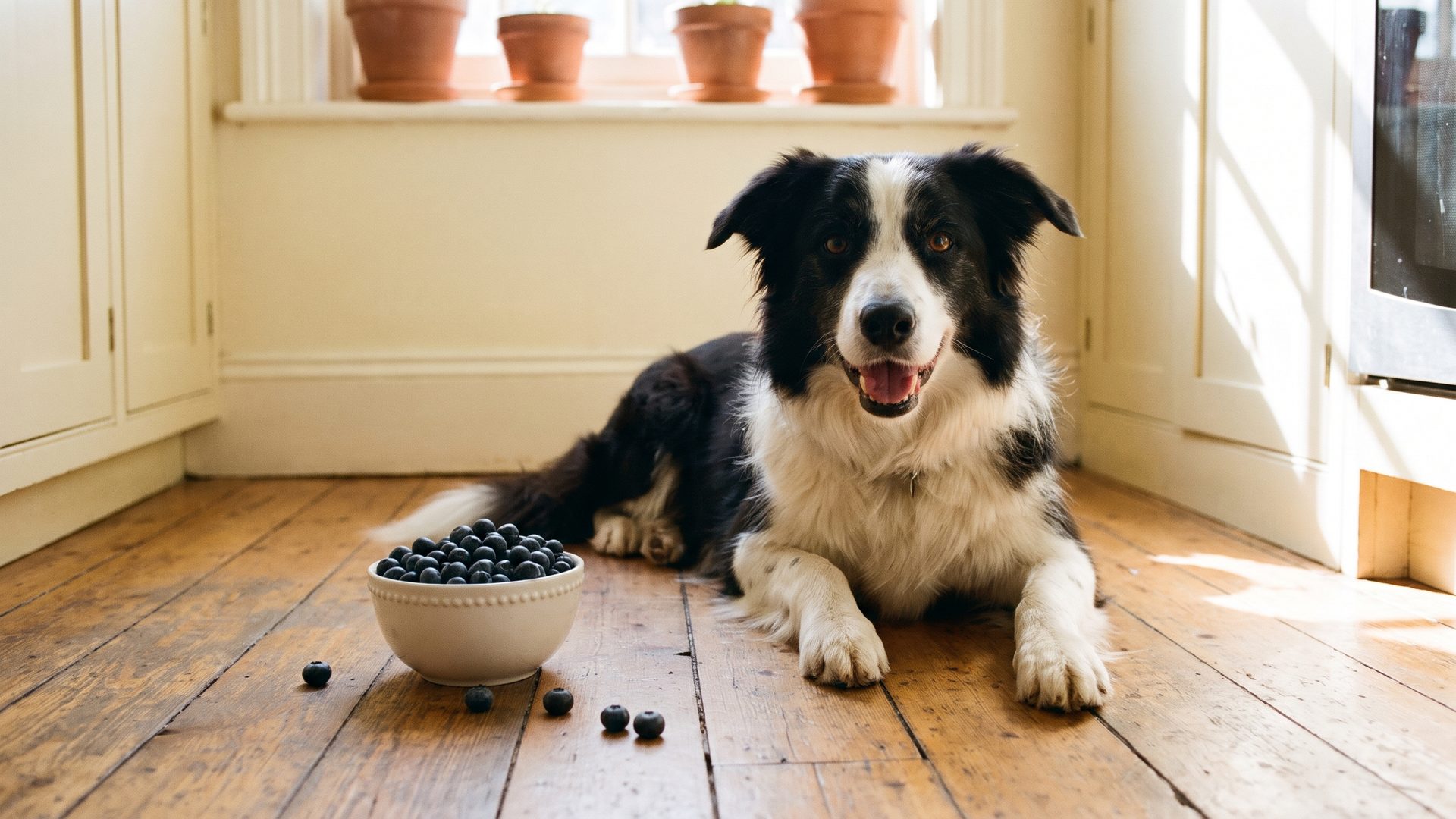
Yes, dogs can eat blueberries. Plain, fresh or frozen blueberries are safe for dogs, low in calories and a popular training treat. Most dogs can have a few every day. The only things to watch are portion size, choking in very small dogs, and blueberry products like muffins, pie and yogurt that bring in sugar, chocolate or xylitol.
| Form | Verdict | Why |
|---|---|---|
| Fresh, plain | Safe | Low calorie, fiber, vitamin C |
| Frozen, plain | Safe | Cool treat; supervise small dogs because they are hard |
| Dried, unsweetened | Small amounts | Concentrated sugar and calories |
| Blueberry muffins and pancakes | Skip | Sugar, fat, and sometimes chocolate chips or raisins |
| Pie filling and jam | Skip | Mostly sugar; may contain xylitol |
| Blueberry yogurt | Check the label | Sugar and sweeteners; some dogs are dairy sensitive |
| Blueberry-flavored dog treats | Check the label | Often fine, but count them toward daily calories |
Treats and extras should stay at about 10 percent of daily calories, a common veterinary rule of thumb. Blueberries are small and light on calories, which is why they work well as rewards. USDA FoodData Central puts raw blueberries at roughly 57 calories per 100 grams, and a single berry is around one calorie.
| Dog weight | Blueberries per day (starting point) |
|---|---|
| Under 10 lb (4.5 kg) | 2 to 3 |
| 10 to 25 lb (4.5 to 11 kg) | 3 to 6 |
| 25 to 50 lb (11 to 23 kg) | 6 to 10 |
| Over 50 lb (23 kg) | 10 to 15 |
These are conservative numbers, not a prescription. Introduce blueberries gradually. A sudden handful of fruit can cause loose stools in a dog that is not used to it. Use our dog food calculator to see how much your dog's regular food should be, and our dog calorie calculator to check how many treat calories fit in the day.
Blueberries contain fiber, vitamin C, vitamin K and plant pigments called anthocyanins. The American Kennel Club describes them as a healthy, low-calorie snack. Dogs make their own vitamin C and do not need extra, so the benefit is mainly a nutritious, low-calorie reward, not a supplement. They are a good swap for higher-calorie biscuits, especially for dogs that need to lose weight. If your dog is overweight, our dog BMI calculator and guide to dog calories for weight loss are a good place to start.
You may see claims that blueberries prevent cancer or reverse aging in dogs. Those are not proven in dogs. Treat blueberries as a snack, not a medicine.
Fresh blueberries are the simplest choice. Rinse them and remove stems. Mash a few for small dogs or puppies.
Frozen blueberries are a good summer treat and are often cheaper. They are firm, so they can be a choking hazard for small dogs and very fast eaters. Thaw them briefly or mash them for toy breeds.
Dried blueberries are concentrated, which means more sugar and calories per piece. Offer only tiny amounts of unsweetened dried berries. Many packages are sweetened, so read the label.
Muffins, pancakes and cereal. These often hide chocolate chips, raisins or nuts. Chocolate and raisins are dangerous. Use the chocolate toxicity guide or the grape and raisin toxicity calculator if your dog ate any.
Xylitol. Sugar-free jams, yogurts, gums and baked goods can contain xylitol, a sweetener that is very dangerous for dogs. Always read labels, and use the xylitol toxicity calculator if an exposure may have happened.
Blueberry pie filling. It is mostly sugar and can contain spices and thickeners. Skip it.
Yes, once they are eating solid food and have settled on their regular puppy food. Offer one or two crushed berries as a training reward. Puppies get most of their calories from complete puppy food, so keep fruit tiny. Our How much should I feed my dog? guide explains how to plan daily calories as your puppy grows.
Dogs with a history of kidney or bladder stones, diabetes or pancreatitis should only have fruit if their vet approves. Some dogs simply do not tolerate fruit well. Stop feeding blueberries if you see vomiting, diarrhea, itching or swelling, and talk to your vet.
Blueberries are one of the simplest training rewards because they are small and need no cutting for medium and large dogs. Keep a few in a bag in the fridge and hand them out one at a time. For enrichment, freeze a few in a shallow dish of water for a cooling ice puck, or press them into a lick mat. For picky dogs, mash a couple and stir them through regular food.
Avoid blueberry-flavored foods that list "natural flavor" with sweeteners, and check that dog treats you buy are made for dogs. If your dog gets the berries at the same time as other new foods, you will not know what caused an upset stomach, so add them separately.
A big pile of plain blueberries usually causes diarrhea or gas rather than poisoning. Offer water and call your vet if there is repeated vomiting, a painful belly or lethargy. If the berries were part of a muffin, jam or baked product, check the ingredient list for chocolate, raisins and xylitol, and call the ASPCA Animal Poison Control Center at (888) 426-4435 or the Pet Poison Helpline at (855) 764-7661. A consultation fee may apply.
Swap experiences with other owners on the PawTalk nutrition forum.
This guide is general education from the PetCalcStudio team, not veterinary advice. Sources: the American Kennel Club, the ASPCA and USDA FoodData Central. If your pet has eaten something harmful or seems unwell, contact a veterinarian or the ASPCA Animal Poison Control Center right away.
General guidance on this topic from veterinary organizations. This guide is educational and written by a non-veterinarian; check with your own vet before changing your pet's food, medication or care. Editorial policy
Yes. Plain fresh or frozen blueberries are safe for dogs and are a low-calorie treat when given in moderation.
As a starting point, 2 to 3 for dogs under 10 lb and 10 to 15 for dogs over 50 lb per day. Treats should be about 10 percent of daily calories.
Yes. They make a cool summer treat. They are hard, so small dogs and fast eaters should be supervised, or the berries should be thawed or mashed.
It is best to skip them. Muffins contain sugar and fat and may include chocolate chips, raisins or xylitol, which are harmful to dogs.
Yes, a few crushed berries are fine once your puppy eats solid food. Puppies should get most of their nutrition from complete puppy food.
No. Blueberries are not toxic, but too many can cause diarrhea or gas, and blueberry products can contain harmful ingredients such as xylitol or chocolate.
Set up separate feeding stations, measure each pet’s meals and monitor what they actually eat with a simple household routine.
3 min readSet up safe storage for dry pet food and opened wet food. Keep lot codes handy and learn what to do with leftovers and damaged packaging.
3 min readConvert cups to grams using your food’s own label. See worked examples, avoid scoop errors, and measure an existing feeding plan more consistently.
3 min read
