 PetCalcStudio

How to Feed Dogs and Cats Separately in a Shared Home
Set up separate feeding stations, measure each pet’s meals and monitor what they actually eat with a simple household routine.
3 min readCare guide
Plain fresh or dried unsweetened cranberries are safe for most dogs in small amounts. Sauce, juice, sweetened dried berries and trail mix are the problem. Here is how many by weight.
Educational information. Our editorial policy
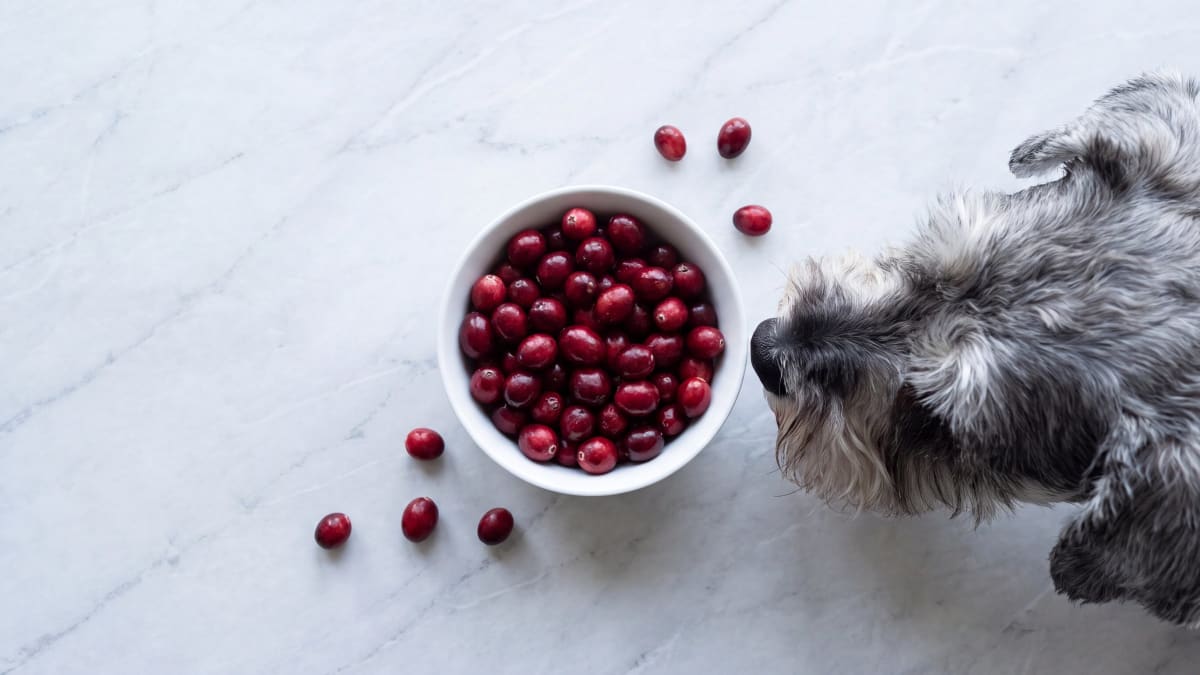
Yes, dogs can eat cranberries. Plain, fresh, frozen or unsweetened dried cranberries are not toxic and are fine as an occasional treat in small amounts. The problems come from what is added to them: cranberry sauce, juice, sweetened dried cranberries and trail mixes that include raisins, chocolate or xylitol.
| Form | Verdict | Why |
|---|---|---|
| Fresh or frozen, plain | A few, as a treat | Tart, low in calories, high in water and fiber |
| Dried, unsweetened | A few, small pieces | Concentrated, so keep the portion tiny |
| Dried, sweetened | Skip or very rare | Added sugar makes them calorie-dense |
| Cranberry sauce | Skip | Mostly sugar, sometimes orange peel, spices or alcohol |
| Cranberry juice or cocktail | Skip | Sugar, acidity and sometimes artificial sweeteners |
| Trail mix with cranberries | Never | Raisins, grapes, chocolate and nuts can be dangerous |
| Cranberry baked goods | Skip | Muffins and scones may hold chocolate chips, raisins or xylitol |
Treats and extras should stay at roughly 10 percent of your dog's daily calories, a common veterinary rule of thumb. For cranberries that works out to only a handful of berries, because tart fruit also upsets some stomachs when it is new.
| Dog weight | Fresh or frozen berries, per day (starting point) |
|---|---|
| Under 10 lb (4.5 kg) | 1 to 2 |
| 10 to 25 lb (4.5 to 11 kg) | 2 to 4 |
| 25 to 50 lb (11 to 23 kg) | 4 to 6 |
| Over 50 lb (23 kg) | 6 to 10 |
These are cautious starting points, not a prescription. Begin with one or two berries, wait a day, and watch for loose stool or vomiting before offering more. Use our dog food calculator to see what your dog's daily food allowance is, so you can fit treats around it.
Cranberries contain fiber, vitamin C and plant compounds such as polyphenols. Dogs make their own vitamin C and do not need extra, so cranberries are best thought of as a low-calorie, tart treat rather than a supplement. USDA FoodData Central lists raw cranberries at roughly 46 calories per 100 grams, which is modest, but sweetened dried cranberries are several times higher because of the added sugar.
You may have heard that cranberry helps with urinary tract infections. The evidence in dogs is limited, and a few berries from the kitchen are not a treatment. If your dog is straining to pee, going often, passing blood or licking at the area, that needs a vet visit, not a cranberry. Some vets do recommend specific cranberry or D-mannose supplements for certain cases, so ask yours before buying one.
Cranberry sauce. Canned and homemade sauces are mostly sugar. Some recipes add orange zest, cinnamon, nutmeg, port or other alcohol. A lick off a plate is unlikely to harm a healthy dog, but a bowl of it can cause diarrhea and pancreatitis in sensitive dogs.
Trail mix and "fruit and nut" blends. These often mix cranberries with raisins. Grapes and raisins can cause acute kidney injury in dogs, and even small amounts are worth treating as an emergency call. Read why in our guide to why even one grape is risky for dogs, or check an exposure with the grape and raisin toxicity calculator.
Sugar-free products. Some sugar-free cranberry juices, gummies and baked goods use xylitol, which is dangerous to dogs. Always read the ingredient list, and use the xylitol toxicity calculator if your dog may have eaten something sweetened.
Chocolate-covered cranberries. These combine two problems. Treat them as a chocolate exposure and use the chocolate toxicity guide to judge risk by weight.
Dogs with a history of kidney or bladder stones should ask their vet first. Some berries contain oxalates, and your vet may prefer a stricter diet. Dogs on a prescription diet should not get extras without a vet's approval.
Puppies can try one or two small pieces once they are eating solid food and their regular diet is settled. Their stomachs are more sensitive, and they need most of their calories from complete puppy food, so keep fruit to a few bites. If you are just starting, our How much should I feed my dog? and feeding charts help set the baseline first.
Cranberries are tart, so many dogs lick them and walk away. If yours is not interested, do not push it. Blueberries are usually more popular, and our guide to can dogs eat blueberries covers portions. Apples without seeds and seedless watermelon are other low-calorie options. Whichever fruit you choose, introduce one new food at a time and keep the portion small, because fruit sugar and fiber can loosen stools. Dogs that are overweight, diabetic or prone to pancreatitis should only have fruit extras that their vet has approved.
Storage matters too. Fresh cranberries keep for weeks in the fridge and freeze well, so you can portion a few into a bag and pull them out as needed. Throw out any that are soft, moldy or wrinkled.
A few extra plain cranberries usually cause nothing worse than a loose stool. Call your veterinarian, an emergency clinic or a poison helpline right away if your dog ate:
You can reach the ASPCA Animal Poison Control Center at (888) 426-4435 or the Pet Poison Helpline at (855) 764-7661. Both are staffed by veterinary professionals, and a consultation fee may apply. Do not induce vomiting unless a professional tells you to.
Swap experiences with other owners on the PawTalk nutrition forum.
This guide is general education from the PetCalcStudio team, not veterinary advice. Sources: the ASPCA, the American Kennel Club and USDA FoodData Central. If your pet has eaten something harmful or seems unwell, contact a veterinarian or the ASPCA Animal Poison Control Center right away.
General guidance on this topic from veterinary organizations. This guide is educational and written by a non-veterinarian; check with your own vet before changing your pet's food, medication or care. Editorial policy
Yes. Plain fresh, frozen or unsweetened dried cranberries are safe for most dogs in small amounts. Avoid sauce, juice, sweetened dried berries and trail mix.
As a starting point, 1 to 2 for dogs under 10 lb, up to about 6 to 10 for dogs over 50 lb, per day at most. Start with one or two and watch for an upset stomach.
It is best to skip it. Cranberry sauce is mostly sugar and may contain spices, orange peel or alcohol. A small lick is unlikely to harm a healthy dog, but do not serve it deliberately.
Unsweetened dried cranberries are fine in tiny pieces. Most dried cranberries are sweetened and calorie-dense, so they are a poor choice, and mixes often contain raisins, which are dangerous.
The evidence is limited, and kitchen cranberries are not a treatment. If your dog is straining to urinate or has blood in the urine, see a veterinarian. Ask your vet before using any cranberry supplement.
No. Cranberry juice is high in sugar and acid, and some products contain artificial sweeteners such as xylitol. Fresh water is the best drink for dogs.
Set up separate feeding stations, measure each pet’s meals and monitor what they actually eat with a simple household routine.
3 min readSet up safe storage for dry pet food and opened wet food. Keep lot codes handy and learn what to do with leftovers and damaged packaging.
3 min readConvert cups to grams using your food’s own label. See worked examples, avoid scoop errors, and measure an existing feeding plan more consistently.
3 min read
