 PetCalcStudio

How to Feed Dogs and Cats Separately in a Shared Home
Set up separate feeding stations, measure each pet’s meals and monitor what they actually eat with a simple household routine.
3 min readCare guide
Plain, cooked potato is not toxic, so a spoonful of plain mash is fine for most dogs. Butter, cream, garlic, onion, salt and gravy are the real problems. Here is what to skip.
Educational information. Our editorial policy
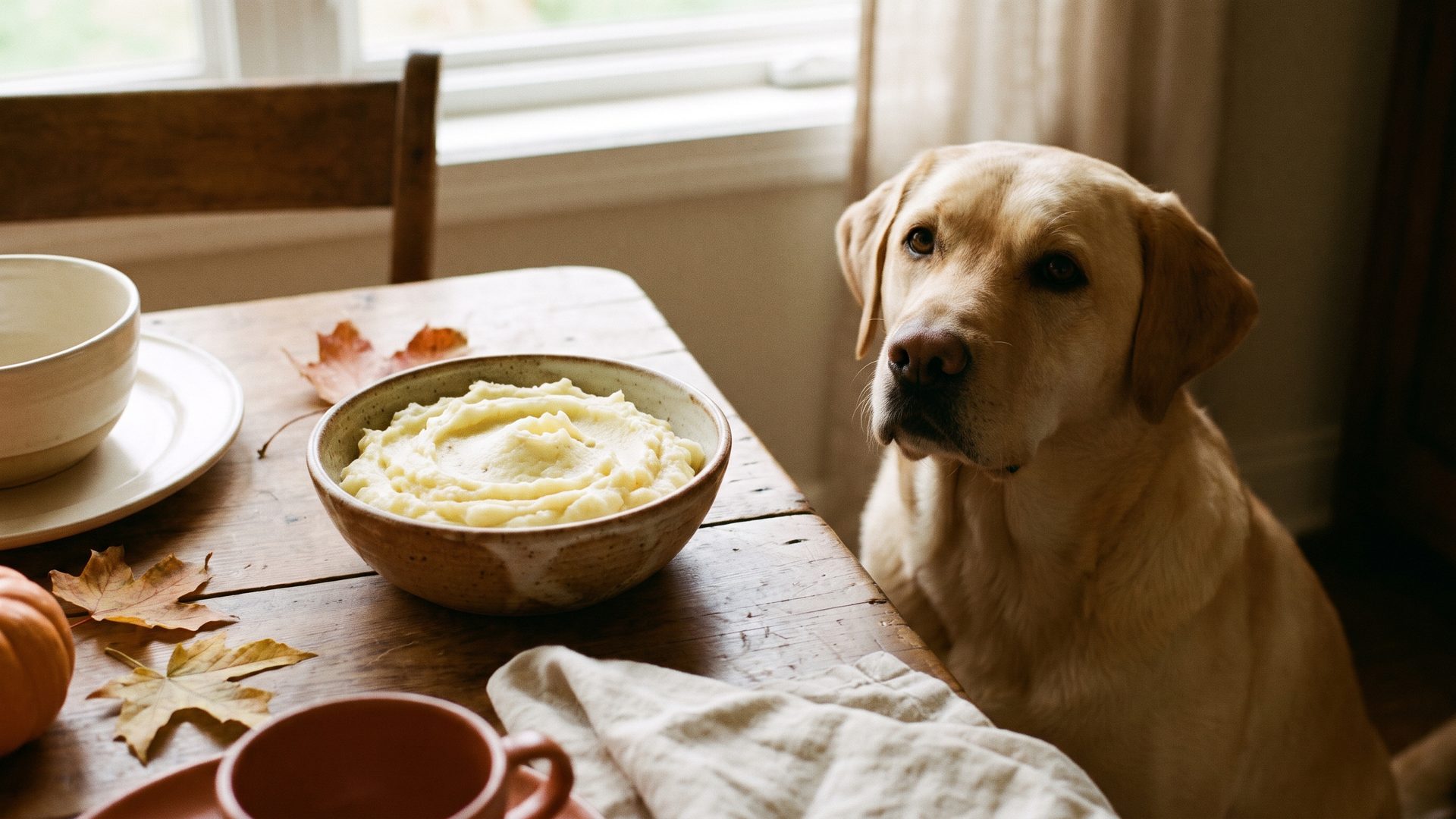
Yes, in small amounts. Plain, cooked potato is not toxic to dogs, so a spoonful of plain mashed potato is fine for most healthy dogs. The trouble is that almost nobody serves plain mash. Butter, cream, salt, garlic, onion and gravy turn it into a food that is poor for dogs, and some of those add-ons are genuinely harmful.
| Version | Verdict | Why |
|---|---|---|
| Plain boiled potato, mashed, no additions | A spoonful | Starchy carbohydrate, low in fat |
| Mash with a little butter or milk | Skip, or one lick | Fat and lactose can upset the stomach |
| Mash with garlic, onion, chives or leeks | Never | Allium vegetables can damage red blood cells |
| Mash with gravy | Skip | Salt, fat and often onion or garlic powder |
| Loaded mash (cheese, bacon, sour cream) | Skip | High fat, high salt, pancreatitis risk |
| Instant or boxed mash | Check the label | May contain salt, garlic powder and preservatives |
| Raw or green potato | Never | Contains solanine, which is toxic |
Keep treats and table extras to around 10 percent of your dog's daily calories. Potato is calorie-dense for its size, so the portion is small.
| Dog size | Plain mashed potato, occasional treat |
|---|---|
| Small (under 20 lb / 9 kg) | 1 teaspoon |
| Medium (20 to 50 lb / 9 to 23 kg) | 1 tablespoon |
| Large (over 50 lb / 23 kg) | 2 tablespoons |
Offer it as a topper on regular food rather than a separate helping, and use our dog food calculator to see how many daily calories your dog actually needs. Potato is also quite starchy, so it is a poor choice for dogs that are overweight or diabetic. Our guide to dog calories for weight loss explains how to fit extras into a diet plan.
Onion and garlic. Both belong to the allium family, along with leeks and chives. They can damage a dog's red blood cells and cause anemia. Powdered garlic and onion are more concentrated than fresh. Even small repeated amounts can add up, and signs may appear a day or more after eating. Use the onion and garlic toxicity calculator if you are unsure about an exposure.
Butter, cream and cheese. Many dogs do not digest dairy well, and the fat can lead to diarrhea. A sudden high-fat meal can trigger pancreatitis in some dogs, which is painful and often needs veterinary care. Dogs with a history of pancreatitis should avoid it entirely.
Salt. Restaurant and holiday potatoes are often heavily salted. Too much salt can cause vomiting and thirst, and in large amounts can be dangerous.
Gravy and toppings. Gravy brings more salt, fat and sometimes onion. Bacon bits and chives add further risk.
Raw or green potato. Potato skins that have turned green, as well as sprouts and raw potato, contain solanine, which can cause stomach upset and, in larger amounts, nervous system signs. Always cook potato and discard green parts.
Sweet potato is a good alternative when it is cooked and plain, and it adds fiber. Pumpkin puree (not pie filling) is another useful topper. For other Thanksgiving plate options, see our full guide to Thanksgiving foods dogs can and can't eat.
A tiny taste of plain mash is not harmful to a healthy puppy, but puppies have sensitive stomachs and need complete puppy food for growth. It is a poor use of their calorie budget. If your puppy raids a plate of loaded mash, watch for vomiting, diarrhea or a painful belly, and call your vet if you see them.
If you want your dog to share the holiday meal, plain green beans, a spoonful of plain pumpkin puree and a few cubes of cooked turkey breast are better choices than mash. Keep the portion to a few bites and serve it in your dog's own bowl so guests can see what is allowed. For a size-by-size plate, see our Thanksgiving foods guide.
Dogs cannot read ingredient lists, so the easiest rule is to set aside your dog's portion before seasoning or butter goes in. Scoop a spoonful of the plain boiled potato into a bowl first, then finish the family version. That one habit prevents most of the garlic, butter and gravy problems vets see after holiday dinners. Ask guests not to share from their plates, and keep leftovers sealed and out of reach.
For plain mash, expect at most a loose stool. Call your veterinarian, an emergency clinic or a poison helpline promptly if your dog ate:
Contact the ASPCA Animal Poison Control Center at (888) 426-4435 or the Pet Poison Helpline at (855) 764-7661, and have the ingredient list and your dog's weight ready. Do not make your dog vomit unless a professional tells you to. A consultation fee may apply.
Swap experiences with other owners on the PawTalk nutrition forum.
This guide is general education from the PetCalcStudio team, not veterinary advice. Sources: the ASPCA, the American Kennel Club and Pet Poison Helpline. If your pet has eaten something harmful or seems unwell, contact a veterinarian or the ASPCA Animal Poison Control Center right away.
General guidance on this topic from veterinary organizations. This guide is educational and written by a non-veterinarian; check with your own vet before changing your pet's food, medication or care. Editorial policy
Yes, in small amounts. Plain mashed potato with no butter, salt, garlic or onion is fine for most healthy dogs. Most holiday or restaurant mash is not plain, so be careful.
A lick will not harm most dogs, but butter and cream add fat and lactose that can cause diarrhea and, in some dogs, pancreatitis. Plain mash is the better choice.
No. Garlic, onion, chives and leeks can damage a dog's red blood cells. If your dog ate a meaningful amount, contact a veterinarian or poison helpline.
Check the label. Instant mash often contains salt, garlic powder and preservatives. Plain potato you cook yourself is a safer option.
Cooked potato is a source of carbohydrate and some vitamins, but it is not necessary. It is starchy, so it is best kept small, especially for overweight or diabetic dogs.
Yes. Plain, cooked sweet potato is a popular dog-friendly option and adds fiber. Skip butter, sugar, marshmallows and spices.
Set up separate feeding stations, measure each pet’s meals and monitor what they actually eat with a simple household routine.
3 min readSet up safe storage for dry pet food and opened wet food. Keep lot codes handy and learn what to do with leftovers and damaged packaging.
3 min readConvert cups to grams using your food’s own label. See worked examples, avoid scoop errors, and measure an existing feeding plan more consistently.
3 min read
