 PetCalcStudio

How to Feed Dogs and Cats Separately in a Shared Home
Set up separate feeding stations, measure each pet’s meals and monitor what they actually eat with a simple household routine.
3 min readCare guide
Plain, cooked, skinless turkey is safe for cats in small portions. Skin, bones, deli slices and anything with onion, garlic or heavy seasoning are not. Here is how much and which cuts.
Educational information. Our editorial policy
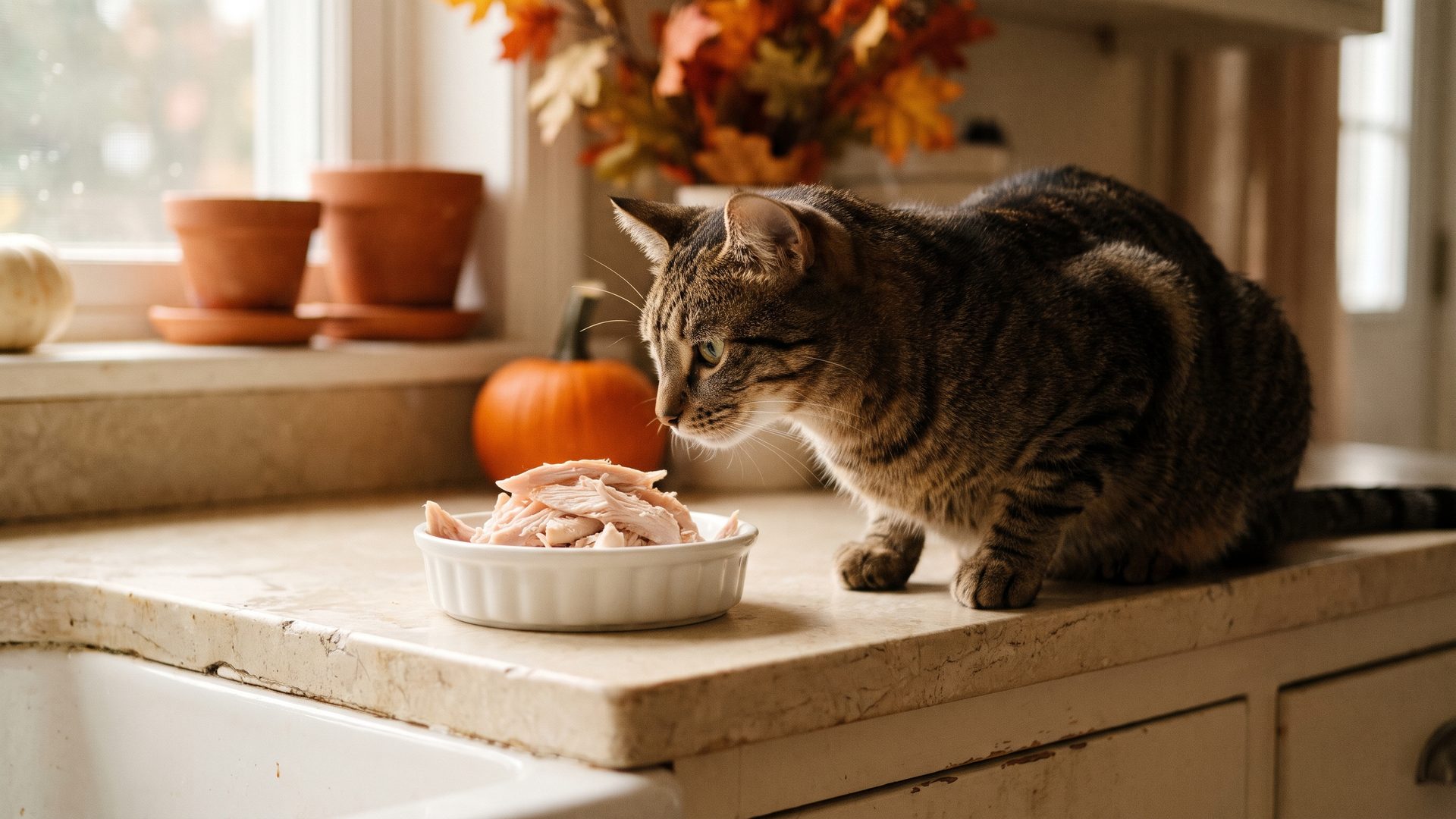
Yes, cats can eat turkey. Plain, cooked, skinless turkey with no bones or seasoning is a safe, high-protein treat for most healthy cats, and cats are natural meat eaters. The risks come from skin, bones, deli meats, gravy and anything cooked with onion, garlic or lots of salt and butter.
| Turkey type | Verdict | Why |
|---|---|---|
| Cooked breast, skinless, plain | Safe, small portions | Lean protein with little fat |
| Cooked dark meat, skinless | Occasional | Tastier but fattier |
| Turkey skin and drippings | Skip | Very fatty; can trigger stomach upset or pancreatitis |
| Cooked turkey bones | Never | Splinter and can injure the mouth, throat or gut |
| Raw turkey | Not recommended | Salmonella and other bacteria risk for cats and people |
| Deli or lunch-meat turkey | Skip | High salt and preservatives |
| Seasoned or stuffed turkey | Skip | Onion, garlic, herbs and salt |
| Turkey with gravy | Skip | Salt, fat and often onion or garlic powder |
| Plain turkey baby food | Check the label | Must contain no onion or garlic powder |
Treats and extras should make up no more than about 10 percent of a cat's daily calories. A typical 10 lb (4.5 kg) indoor adult cat needs roughly 200 to 250 calories per day, so treats get about 20 to 25 calories. Cooked skinless turkey breast is around 130 to 150 calories per 100 grams, according to USDA FoodData Central, which means:
For most cats, a few small shreds or a few pea-sized cubes, once or twice a week, is plenty. Use our cat calorie calculator to find your cat's daily calories and our cat food calculator to see how much of their normal food to give around treats.
Turkey is protein-rich and lean, and many commercial cat foods use it. That does not mean turkey makes a meal. Cats need nutrients such as taurine, vitamin A and specific fatty acids in the right balance, and a diet of plain meat is not complete. Cornell Feline Health Center and other veterinary sources emphasize feeding a complete and balanced cat food as the main diet. Think of turkey as a treat or a tempting topper for a cat that is picky or recovering from illness, always after checking with your vet.
Bones. Cooked bones turn brittle and can splinter. They can cut the mouth or throat, or lodge in the stomach or intestines. Even small turkey bones are a risk to cats. If your cat swallowed a bone, call a veterinarian even if they seem fine at first.
Skin and drippings. The fat load can cause vomiting, diarrhea or pancreatitis. Cats also tend to hide pain, so a painful belly can be easy to miss. See our guide to signs your cat is sick for what to watch for.
Onion, garlic and chives. Cats are especially sensitive to allium vegetables, which can damage red blood cells. Stuffing, gravy and seasoned turkey often contain them. This is the biggest reason to keep holiday turkey from the table.
Salt and deli meat. Lunch-meat turkey and smoked turkey contain high sodium. Too much salt is hard on small bodies.
Cats with kidney disease, pancreatitis, food allergies or on a prescription diet should only have extras approved by their vet. Cats with a history of urinary problems may also be on a controlled diet. If your cat is diabetic, protein-based treats are often easier to fit in than starchy ones, but check with your vet first. Our guide to diabetic cat food and portions covers how vets think about carbohydrates.
A treat of turkey is a nice way to share a holiday, but it should not change what your cat eats day to day. Cats do best on a consistent, complete and balanced food, and sudden changes can cause stomach upset. If your cat leaves their normal food after getting turkey, resist giving in. Offering plain turkey every time your cat refuses a meal can teach them to hold out for it.
If you are unsure how much wet or dry food your cat needs, our wet food feeding guide explains portions by weight. Cats that eat very little for more than a day should see a vet, since loss of appetite can be an early sign of illness in cats.
Call your veterinarian, an emergency clinic or a poison helpline if your cat ate turkey with onion or garlic, a bone, a large amount of fatty skin, or if there is vomiting, lethargy, a painful belly or loss of appetite. You can contact the ASPCA Animal Poison Control Center at (888) 426-4435 or the Pet Poison Helpline at (855) 764-7661. A consultation fee may apply. Do not induce vomiting in a cat unless a professional tells you to.
Swap experiences with other owners on the PawTalk nutrition forum.
This guide is general education from the PetCalcStudio team, not veterinary advice. Sources: the ASPCA, Cornell Feline Health Center and USDA FoodData Central. If your pet has eaten something harmful or seems unwell, contact a veterinarian or the ASPCA Animal Poison Control Center right away.
General guidance on this topic from veterinary organizations. This guide is educational and written by a non-veterinarian; check with your own vet before changing your pet's food, medication or care. Editorial policy
Yes. Plain, cooked, skinless turkey with no bones or seasoning is safe for most cats in small portions as a treat.
It is best to avoid it. Deli and lunch-meat turkey is high in salt and often contains preservatives and flavorings. A tiny occasional piece is unlikely to hurt, but plain cooked turkey is better.
No. Cooked bones can splinter and injure the mouth, throat or digestive tract. If your cat swallowed one, call a veterinarian.
A few pea-sized pieces or about a teaspoon of shredded turkey once or twice a week is plenty for most cats. Treats should stay around 10 percent of daily calories.
Kittens need complete kitten food for growth. A tiny taste of plain cooked turkey is not harmful, but it should not replace their regular diet. Ask your vet for guidance.
Raw turkey can carry Salmonella and other bacteria that can make cats and people sick. Cooking it plain is the safer approach unless your vet has set up a specific raw diet.
Set up separate feeding stations, measure each pet’s meals and monitor what they actually eat with a simple household routine.
3 min readSet up safe storage for dry pet food and opened wet food. Keep lot codes handy and learn what to do with leftovers and damaged packaging.
3 min readConvert cups to grams using your food’s own label. See worked examples, avoid scoop errors, and measure an existing feeding plan more consistently.
3 min read
